Africa-Press – Uganda. One year after government reclaimed electricity distribution from Umeme Limited, the Uganda Electricity Distribution Company Limited (UEDCL) is walking a delicate line between early operational stability and long-standing structural pressures within Uganda’s power sector.
The March 31, 2025 transition marked a fundamental shift in sector governance, ending a 20-year private concession and returning the last-mile distribution function to the state.
For Managing Director Paul Mwesigwa, the first year has largely been about stabilisation rather than transformation.
“The first year has been about stability—keeping the lights on while we fix inherited network weaknesses,” Mwesigwa says, describing a period defined by continuity of service and urgent system maintenance.
Operationally, UEDCL reports a steady start, growing its customer base to 2.7 million and delivering over 236,000 new connections within the year.
The utility remitted Shs132.5 billion in taxes and paid Shs1.71 trillion to the Uganda Electricity Transmission Company Limited for bulk power purchases, while staffing levels have nearly reached full establishment.
Energy purchases rose by 6 percent, signalling rising demand, while a 14 percent tariff reduction translated into more than Shs250 billion in savings for consumers—an outcome that has provided some relief in a high-cost electricity environment.
However, sector analysts argue that these gains largely reflect short-term operational efficiencies rather than deep structural change in electricity pricing.
Louis Namwanja Kizito notes that distribution improvements alone cannot significantly alter tariffs, pointing to entrenched cost drivers within generation.
“The real cost pressures sit upstream in generation financing, power purchase agreements, and capacity charges,” he explains, underscoring the limits of what distribution reforms alone can achieve.
This structural reality is evident at the consumer level. In Kampala’s Kisenyi area, maize mill operator Bilal Matono Kato says electricity remains both costly and unreliable despite the transition.
His experience reflects a broader sentiment among small and medium enterprises that while policy changes are visible, the day-to-day economics of power consumption remain largely unchanged.
Meanwhile, demand for electricity continues to surge, now exceeding 1,200 megawatts, placing increasing strain on a distribution network that was already operating near its limits.
UEDCL inherited infrastructure characterised by ageing assets, limited redundancy in key load centres, and persistent technical and commercial losses.
System outages, vandalism and illegal connections continue to undermine reliability, highlighting the scale of the challenge ahead.
Mwesigwa acknowledges that demand growth is outpacing the network’s ability to absorb it, warning that significant capital investment is no longer optional but urgent.
In response, UEDCL has outlined a $994 million investment plan over the next five years, aimed at reinforcing and expanding the grid, deploying smart metering technologies, reducing losses, and reconfiguring the network to improve load management and reliability performance.
Uganda’s broader power sector ambitions add further urgency to this transition. With installed generation capacity currently estimated at between 2,000 and 2,100 megawatts, the country is targeting an expansion to 22,000 megawatts by 2040.
This aggressive growth trajectory raises critical questions about whether transmission and distribution infrastructure can scale in tandem to evacuate and deliver the additional power efficiently.
Without coordinated investment across the entire electricity value chain, there is a risk of creating stranded capacity—where generation exists but cannot be effectively transmitted or distributed to end users.
This underscores the importance of aligning generation expansion with network readiness and demand growth strategies.
One of the more understated successes of the transition has been the continuity of service.
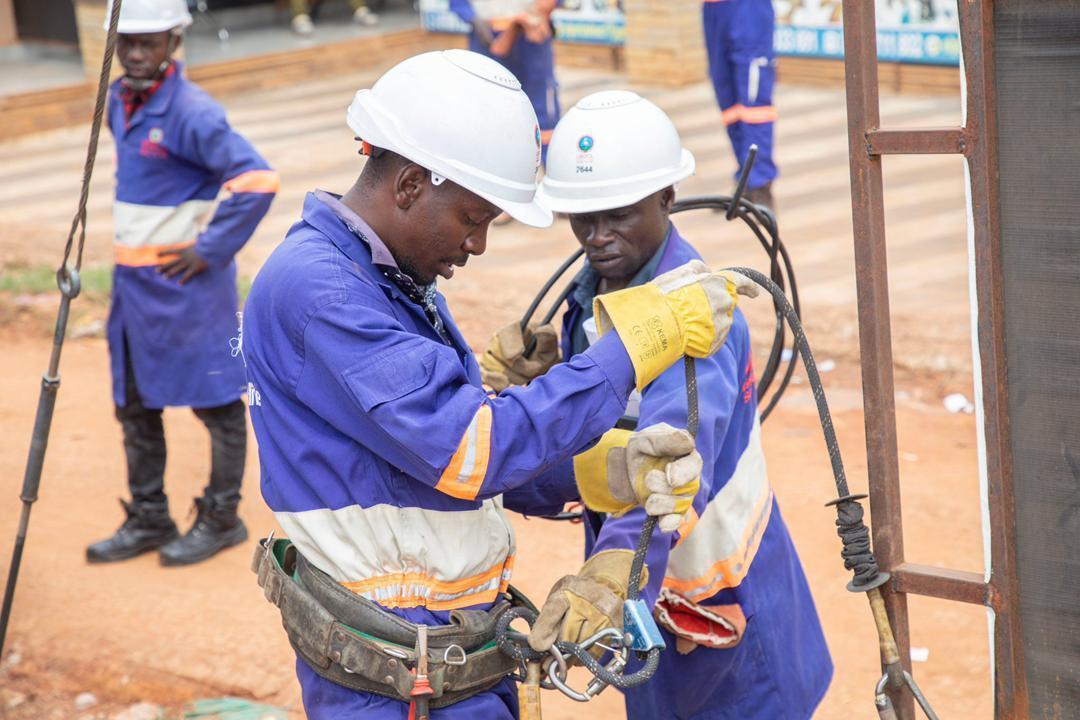
UEDCL retained former Umeme service centres and maintained operational staffing structures, ensuring minimal disruption to billing systems, customer service and outage response mechanisms.
This continuity has helped cushion consumers from the typical shocks associated with large-scale sector reforms.
Ultimately, UEDCL’s first year reflects a utility in transition rather than one that has fully transformed the sector.
Stability has been achieved, but systemic inefficiencies and cost pressures remain deeply embedded.
The next phase will depend heavily on the execution of its investment programme and its ability to modernise the distribution network in line with rising demand.
As Mwesigwa puts it, “We have stabilised the system. Now the real work begins—building a network that can support Uganda’s future demand.”
These milestones bring into focus the legacy left behind by Umeme. Distribution losses by the private listed firm were cut from about 33 percent to 16 percent while it handled nearly all electricity distributed in the country.
Its departure came with friction, as government paid about $118 million in a buyout—significantly lower than earlier claims by Umeme, with the possibility of arbitration still looming.
One year on, the fundamentals of the sector remain largely unchanged. Demand continues to rise, infrastructure gaps persist, and outages and vandalism continue to test the resilience of Uganda’s electricity distribution network.