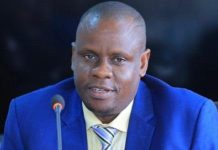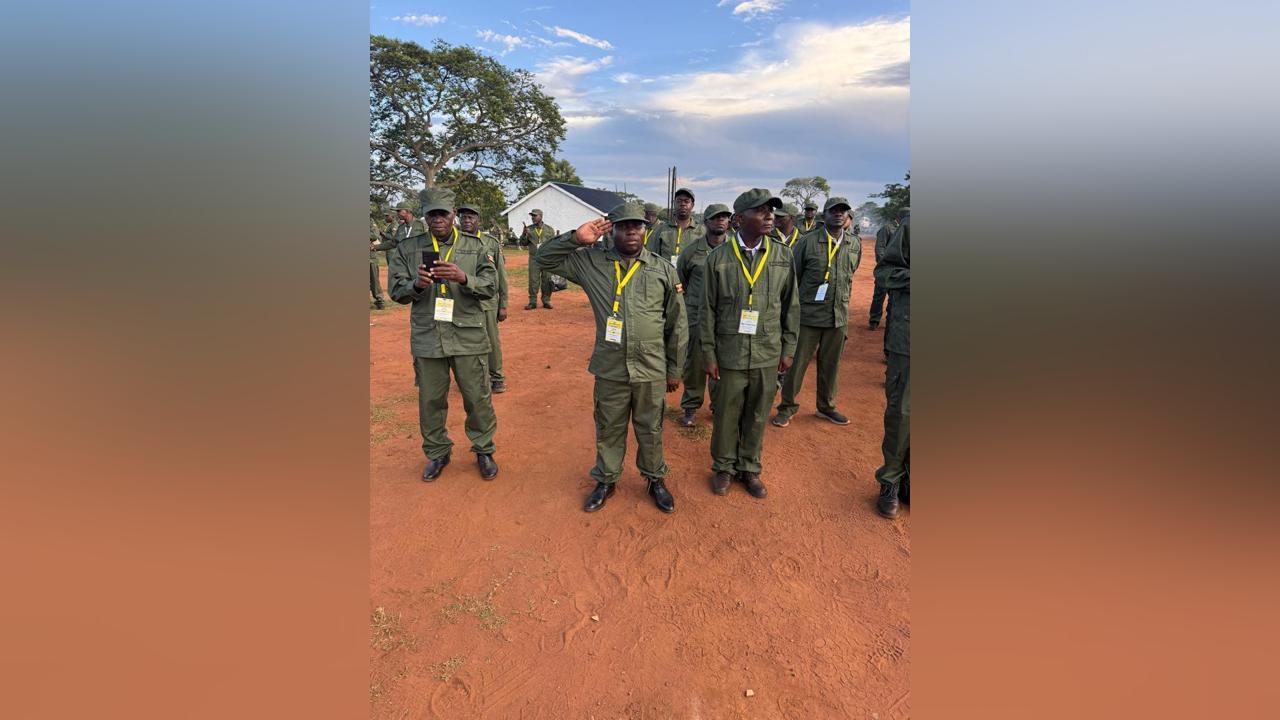
Africa-Press – Uganda. Kassanda South MP Abdul Bisaso has said the recent address by President Museveni to NRM Members of Parliament in Kyankwanzi has reshaped his understanding of leadership and public service.
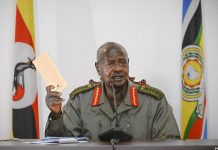
The President, who is also the NRM national chairman, on Wednesday lectured newly elected MPs to the 12th Parliament as he officially opened the retreat.
Speaking after the session, Bisaso described the experience as a moment of clarity, noting that while many leaders often encounter concepts like ideology, philosophy, and strategy in academic settings, they rarely grasp their full meaning until confronted with practical guidance.
“We are here to be realigned on our responsibilities as new MPs,” he said. “Many times, we study these things in class and think we have understood them, but today’s address has helped us truly grasp them and see how they apply to the development of our country.”
Bisaso emphasized that the training has strengthened his commitment to representing ordinary citizens. He reaffirmed that his role is to serve the “local person,” adding that the lessons from Kyankwanzi will directly translate into improved service delivery.
“I have learnt a lot. The people of Kassanda South should expect better services as a result of this ideological orientation. We are preparing ourselves to serve them more effectively,” he said.
He also highlighted the broader purpose of the retreat, describing Kyankwanzi as a center for practical leadership training.
“When we come to Kyankwanzi, it is about learning how to run the country,” Bisaso noted, expressing optimism that the knowledge gained will benefit voters across the constituency.
He added that he is hopeful the training will not only transform individual leaders but also positively impact the communities they serve.
Addressing the NRM MPs, President Museveni called on leaders across the continent to prioritise Africa’s strategic security, warning that without unity and technological advancement, the continent risks continued vulnerability in a rapidly evolving global order.
“There is another mission of strategic security. Africa was first of all ravaged by the slave trade for 400 years… then after that it was colonialism,” Museveni said.
He warned that while other regions lost their indigenous populations entirely, Africa narrowly avoided a similar fate.
“Other people who were colonised disappeared. If you go to Australia, you won’t find the original people—they were decimated. Africa being colonised was very risky… but somehow we survived.”
Museveni said that survival should now translate into a long-term commitment to safeguarding the continent.
“One of the historical missions is never again for Africa to be threatened or marginalised.”
The President criticised post-independence leaders for failing to fully pursue political integration, arguing that economic cooperation alone is insufficient.
“When we got independence, people got relaxed,” he said. “We had to get independence and unite for an African federation. But we forgot about political integration.”
While praising initiatives such as the East African Community and the African Continental Free Trade Area, Museveni said if well implemented, they will lead to prosperity for Africans.
“They will solve the problem of prosperity if well implemented. They will, however, not solve the problem of strategic security. How can Africa defend itself against all threats?”
Museveni contrasted Africa’s limited capabilities with global powers, highlighting gaps in defence and technological reach.
“Some countries like the United States operate in four spheres—on land, at sea, in the air and in space—but we are not there,” he said. “We are just on land or sea.”
He pointed to advances in space exploration as a symbol of widening inequality.
“As we speak, some satellite of the United States is going around the moon, but for us we are here… This is very dangerous.”
In a pointed remark, he added: “We want to go to the moon to ask, ‘What are you doing there?’ The moon is common property, but we are here dancing while other people are up there looking at us.”
The President emphasized the distinction between ordinary supporters and leaders within the party, urging MPs to go beyond surface-level understanding of the movement.
“You are now not only followers of the NRM but leaders. A follower may support some aspects of the movement without going deep into its beliefs, but a leader must understand the ideology, philosophy and strategy,” he noted.
He likened the retreat at Kyankwanzi to a “seminary,” where leaders are equipped with deeper ideological grounding.
President Museveni further explained that ideology involves diagnosing societal problems, just as a doctor diagnoses a patient.
“The political leader must carry out a diagnosis of society—identify the problems, understand the people and then prescribe solutions,” he said.
On philosophy, he said leaders must understand human nature and motivations, while strategy involves applying correct methods to address societal challenges.
The President also stressed that prosperity must be built through production, not dependency.
“Prosperity does not come from begging or corruption. Every adult must produce a good or a service and earn from it,” he said.
He highlighted the importance of markets, warning against identity-based politics that limit trade.
“If we emphasize religion and tribes, some of your products will not be bought. That is why we said we should love Uganda first,” he explained.
This, he said, informed the NRM’s principle of patriotism, which later expanded to Pan-Africanism due to the limitations of local markets.
The Kyankwanzi retreat, according to both the President and participating MPs like Bisaso, is not about changing the movement’s course but reinforcing its foundational principles.
For Bisaso, the training represents a critical moment of ideological realignment—equipping leaders with clarity and purpose without altering the core mission of service.
“It is not about changing who we are,” he implied, “but understanding better how to serve.”
For More News And Analysis About Uganda Follow Africa-Press