Africa-Press – Uganda. Human rights advocate Miria Matembe has warned that the proposed Protection of Sovereignty Bill, 2026 could significantly harm Uganda’s economy, undermine constitutional rights, and disrupt family livelihoods, particularly those dependent on diaspora support.
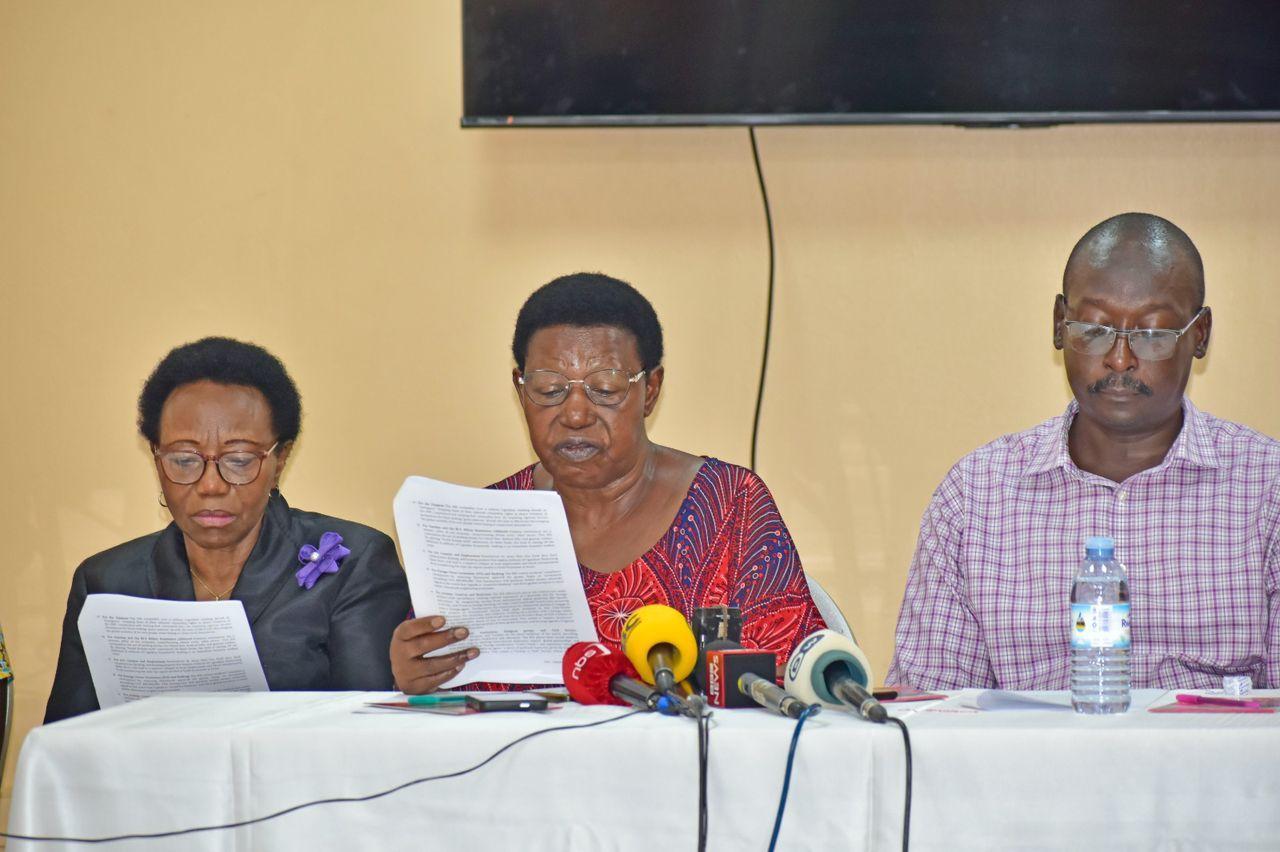
Matembe was speaking to the media on Thursday in Kampala, where she criticised key provisions of the Bill, describing it as overly restrictive and potentially damaging to Uganda’s global standing and internal socio-economic stability.
She said the proposed legislation resembles stringent foreign agent laws seen in countries such as Russia, rather than more limited regulatory frameworks like the Foreign Agents Registration Act in the United States.
According to Matembe, the Bill introduces sweeping criminal penalties, including lengthy prison sentences and heavy fines, for individuals and entities deemed to have foreign links—measures she warned could alienate international partners.
Such provisions, she argued, risk triggering what she termed “aid fatigue,” potentially reducing development assistance and affecting delivery of public services.
“The implications of this bill go beyond regulation; they threaten the quality of life of ordinary Ugandans,” Matembe said.
A major concern, she noted, is the Bill’s treatment of Ugandans living abroad. Provisions that classify members of the diaspora as “foreigners,” she said, contradict the 1995 Constitution of Uganda, which recognises citizenship rights, including dual nationality.
She warned that additional requirements, such as mandatory income disclosures for Ugandans seeking employment abroad, could discourage international labour mobility and economically isolate the country.
Matembe also highlighted the potential disruption of diaspora remittances—one of Uganda’s largest sources of foreign exchange—as a critical risk.
“This bill criminalises the act of sending money for school fees, medical bills and general welfare,” she said, cautioning that many families could face sudden financial distress.
She added that remittances support small businesses and construction projects that sustain millions of jobs, warning that any disruption could trigger widespread job losses and economic contraction.
The Bill’s requirement for ministerial approval of foreign grants, loans, or investments exceeding Shs400 million also drew sharp criticism.
Matembe described the provision as a “bureaucratic choke point” that could discourage foreign direct investment and disrupt financial systems, including mobile money services widely used across the country.
She further raised concerns about the impact on Uganda’s creative sector, warning that artists earning income from international digital platforms risk being labelled as foreign agents, exposing them to severe penalties including imprisonment, heavy fines, or even loss of citizenship.
Religious institutions, she added, could also face intrusive state oversight despite their reliance on foreign support to provide essential services such as education and healthcare.
Matembe criticised provisions allowing warrantless inspections, describing them as a threat to privacy and freedom of worship.
On the economic front, she argued that discouraging foreign investment and reducing remittance inflows would shrink the tax base, worsen fiscal pressures, and potentially lead to increased taxation in the 2026/27 financial year.
Retired Diplomat and human rights activist Edith Grace Ssempala echoed similar concerns, focusing on the Bill’s potential impact on families and rural communities.
Ssempala said the proposed classification of diaspora Ugandans as “foreigners” or “agents” would disproportionately affect ordinary citizens who depend on support from relatives abroad.
“This does not concern just middle-income people. It concerns everyone,” she said. “In my village, I know very poor families who depend on their children abroad.”
She noted that Ugandans working in countries such as the United Kingdom, United States, and Malaysia provide critical financial support that sustains households across the country.
Ssempala questioned the rationale behind labelling such individuals as foreign actors, arguing that it unfairly penalises citizens supporting their families and undermines national cohesion.
“Are they now going to be agents, or foreigners?” she asked. “It is self-defeating, and one cannot understand the motivation. There is no logic.”
She warned that the impact of the Bill would extend beyond urban centres, hitting rural areas hardest, where remittances often fund education, healthcare, and daily survival.
Both activists called on the Parliament of Uganda to reject the Bill, urging lawmakers to consider its broader implications on economic stability, constitutional rights, and social welfare.
Matembe also called on the media to play a greater role in simplifying and scrutinising the proposed law to ensure public understanding, while urging the diaspora to engage international partners and defend their rights.
“To Ugandan citizens, this is your country,” she said, encouraging public participation through petitions and direct engagement with legislators.
She concluded that the Bill signals a shift away from participatory governance toward centralised control, warning that it threatens democratic principles enshrined in Uganda’s legal framework.
“Uganda’s sovereignty belongs to its people, not state agents,” Matembe said. “This bill must be rejected in its entirety.”
For More News And Analysis About Uganda Follow Africa-Press