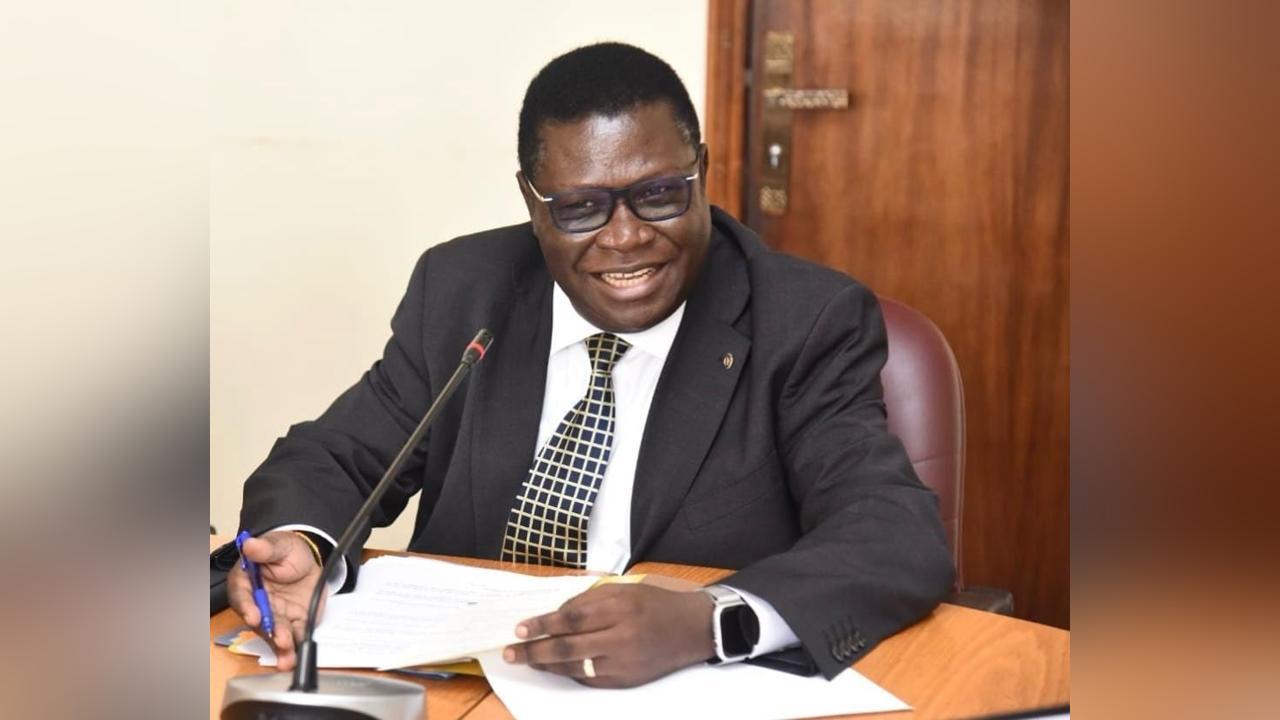
Africa-Press – Uganda. Justice and Constitutional Affairs Minister Norbert Mao has framed his Speakership ambition as a fight against corruption, arguing that real reform must begin within Parliament’s leadership.
Justice and Constitutional Affairs Minister Norbert Mao has positioned his bid for the Speakership as a central pillar in Uganda’s anti-corruption drive, arguing that meaningful reform must start from the highest levels of Parliament.
Speaking to journalists at the NRM retreat at the National Leadership Institute in Kyankwanzi, Mao said the office of Speaker is critical to restoring accountability and strengthening oversight in governance.
He argued that Uganda cannot effectively fight corruption if the very institution mandated to enforce accountability is itself weakened by impunity.
“If the NRM is serious about fighting corruption, then it must start at its headquarters,” Mao said.
Mao added that while President Yoweri Museveni has consistently identified corruption as a major national challenge, the real test lies in confronting it within Parliament.
He described the House as the “headquarters of corruption,” insisting that leadership change at that level would demonstrate genuine political commitment to reform.
“Right now, the headquarters of corruption is in Parliament. Changing its leadership is the best place to begin,” he said.
Framing his candidacy as a reform-driven initiative rather than a personal political contest, Mao stressed that his ambition is aimed at changing systems rather than individuals.
He also distanced himself from personal attacks on current Speaker Anita Among, instead presenting his bid as a principled intervention in governance.
“I have no personal problem with Anita. I love Anita Among, but I love Uganda more,” Mao said.
He argued that the Speakership is not merely a procedural role, but a powerful institution capable of enforcing discipline, transparency, and accountability within Parliament.
According to Mao, a strong and reform-minded Speaker could reset parliamentary standards, strengthen oversight mechanisms, and restore public confidence in the legislature.
He further suggested that the ruling National Resistance Movement (NRM) will ultimately be judged by voters on how seriously it tackles corruption within its own institutions.
He said the next elections would serve as a referendum on whether the party’s anti-corruption rhetoric is matched by action.
By linking his Speakership bid to the anti-corruption agenda, Mao is seeking to elevate the race beyond parliamentary politics, framing it as a broader test of Uganda’s governance and accountability trajectory.
For More News And Analysis About Uganda Follow Africa-Press