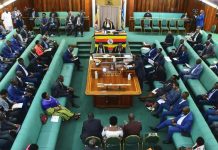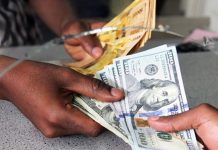
Africa-Press – Uganda. A fresh political debate has emerged following the Kyankwanzi retreat, where President Yoweri Museveni reportedly urged leaders to intensify the fight against corruption, even as reports circulated that each attending National Resistance Movement (NRM) Member of Parliament received 100 million shillings.
The juxtaposition has drawn criticism from opposition leaders and sections of the public, who say the reported disbursement contradicts the anti-corruption message delivered during the same gathering.
National Unity Platform (NUP) Secretary General David Lewis Rubongoya has been among the most vocal critics, describing the reported payments as a “bonanza” that weakens public trust in government commitments to accountability.
“It is difficult to take the anti-corruption message seriously when such actions follow immediately after,” Rubongoya said.
He argued that the development reflects a broader systemic concern in which political consolidation and loyalty are prioritised over national development needs.
Rubongoya also raised concerns about unequal enforcement of laws, particularly in urban planning and environmental protection, alleging that while ordinary citizens face strict penalties, influential actors often evade scrutiny even in cases involving construction in protected areas such as wetlands.
According to him, this selective enforcement reinforces perceptions that the rule of law is applied unevenly.
The controversy has also revived broader public debate on political financing in Uganda, with attention shifting to the gap between declared incomes of public officials and the scale of spending observed during political events.
For critics, the central concern goes beyond the amounts involved to questions of transparency—specifically the source of funds, justification for allocations, and alignment with national priorities.
Rubongoya also pointed to challenges in the conduct and funding of local council (LC) elections, arguing that limited resources undermined grassroots democratic processes. He suggested that funds reportedly used at the retreat could have supported electoral administration and service delivery.
Beyond political circles, the debate has resonated with citizens facing persistent challenges in education, healthcare, and infrastructure. Many observers point to the contrast between these service delivery gaps and high-level political expenditures as a source of growing public frustration.
The developments have further intensified scrutiny of governance priorities, with calls for stronger accountability mechanisms and greater consistency between anti-corruption rhetoric and state practice.
For More News And Analysis About Uganda Follow Africa-Press