Africa-Press – Uganda. Uganda’s Protection of Sovereignty Bill, 2026, now before Parliament, has triggered one of the most intense public debates around legislation in recent years, drawing sharp criticism even before it reaches the voting stage.
Tabled by State Minister for Internal Affairs Gen David Muhoozi, the bill proposes a sweeping framework to regulate foreign influence in Uganda’s civic, economic, and digital space.
At its core is the creation of a broad legal category, “agents of foreigners”, covering individuals, organisations, and even Ugandans abroad whose activities are financed, directed, or influenced by external actors.
The draft extends to digital platforms, placing online activism, advocacy, and civic engagement within its scope. It introduces mandatory registration with a state department under Internal Affairs, extensive vetting of applicants, and strict financial controls, including a cap of roughly Shs400 million in foreign funding per year without ministerial approval.
It also creates new criminal offences. These include “economic sabotage”, defined as publishing information deemed to weaken the country’s economic viability, as well as influencing government policy or mobilising opposition to it without Cabinet clearance.
Penalties run as high as 20 years in prison for individuals and multi-billion-shilling fines for organisations.
Supporters within government argue the bill is necessary to shield Uganda from foreign interference and covert influence operations.
Officials have framed it as part of a broader effort to assert national sovereignty and regulate external actors operating within the country.
Opposition to the bill has, however, been immediate and wide-ranging. Civil society organisations warn that its provisions could significantly restrict freedoms of expression, assembly, and association, particularly given its reach into digital activity.
Legal analysts have raised concerns about vague drafting, especially around the definition of “economic sabotage”, which lacks clear thresholds and could be open to broad interpretation.
Critics argue this creates the risk of criminalising legitimate journalism, research, or public commentary.
Economists and development practitioners have also flagged the potential impact on investment and donor-funded programmes.
The funding cap, disclosure requirements, and approval processes could complicate or deter external financing, particularly in sectors such as health, education, and infrastructure that rely heavily on international partnerships.
Despite that resistance, the political conditions in Parliament strongly favour passage.
The ruling National Resistance Movement holds a commanding majority, with more than 350 MPs, alongside a significant bloc of independents who typically vote with the government. That numerical advantage alone makes it difficult for opposition voices to alter the outcome of a final vote.
That majority has already been consolidated. At a retreat in Kyankwanzi, NRM MPs pledged to support the bill, effectively settling the party’s position before formal debate begins.
In Uganda’s legislative process, such decisions often determine outcomes well in advance of proceedings on the floor.
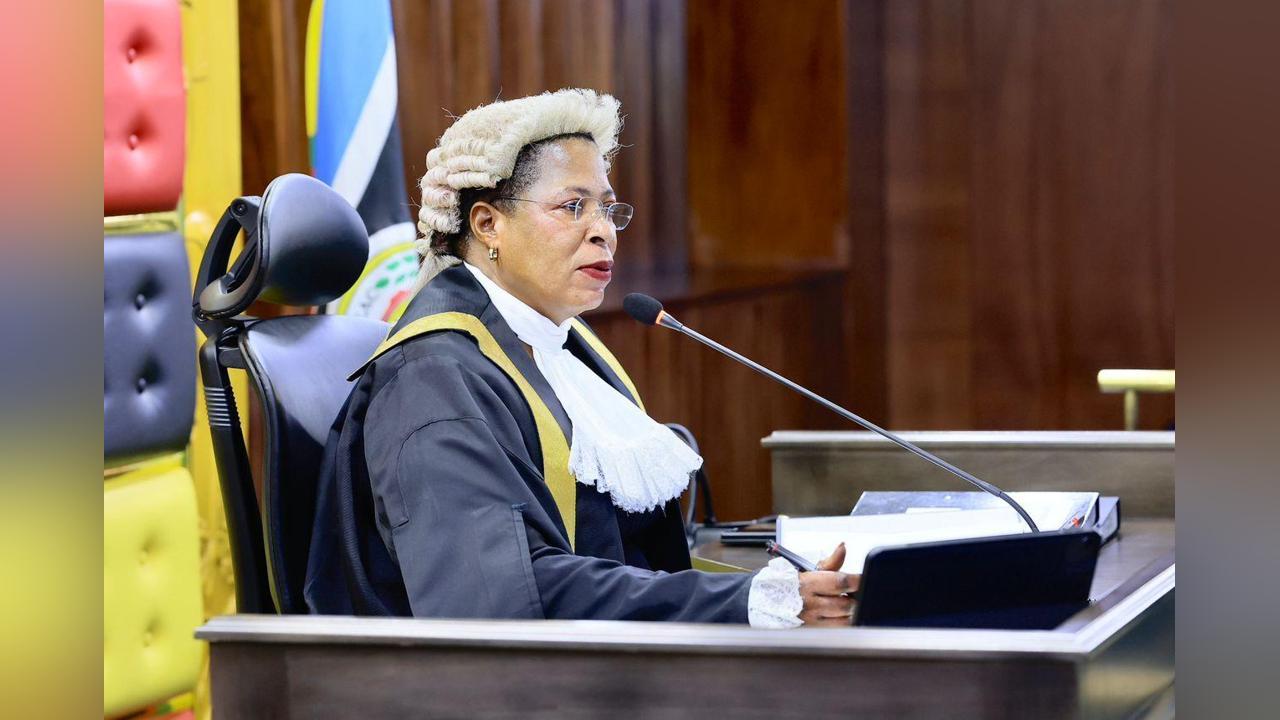
Parliamentary leadership further strengthens the government’s hand. Speaker Anita Among has presided over a period in which government-backed legislation has moved with limited resistance.
Her handling of the House has been cited by Yoweri Museveni as a key reason for endorsing her continuation in the role, alongside Deputy Speaker Thomas Tayebwa.
That endorsement signals continuity in how Parliament is managed, particularly on sensitive or high-priority bills. Within ruling party circles, Among is seen as effective in organising legislative outcomes, combining procedural control with political coordination to secure support when required.
Internal dynamics within the broader political establishment also appear to have stabilised around the bill. Chief of Defence Forces and PLU chairman Gen Muhoozi Kainerugaba, who had previously made public remarks about corruption in Parliament that were widely interpreted as criticism of its leadership, has since shifted position and publicly backed Anita Among for Speaker.
His stance has also seen many of his allies in Parliament rally behind Among over Norbert Mao.
Timing may also play a role. As the current parliamentary term approaches its end, some legislators are unlikely to return after the next election. In such circumstances, political incentives can shift, with party alignment and immediate considerations often outweighing longer-term accountability concerns.
Taken together, these factors leave little doubt about the direction of travel.
While the Protection of Sovereignty Bill faces sustained criticism outside Parliament, the balance of power within it suggests the legislation is likely to pass, with the remaining question centred on whether lawmakers will amend its most contentious provisions or adopt it largely unchanged.
Source: Nilepost News
For More News And Analysis About Uganda Follow Africa-Press