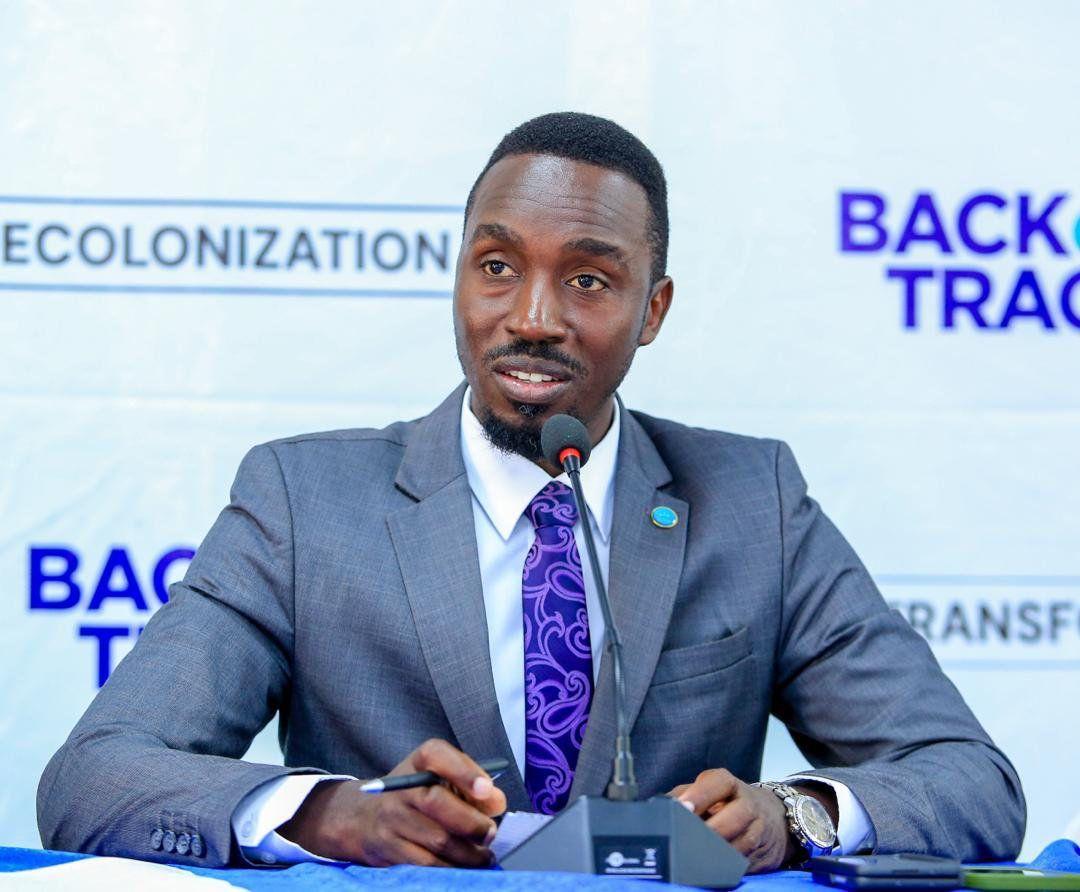
Africa-Press – Uganda. TheUganda Law Society has described the proposed National Sovereignty Bill, 2026 as “not protection, but a constitutional coup,” rejecting arguments by National Resistance Movement Director of Legal Affairs Enoch Barata that the legislation is necessary to safeguard national autonomy.
In a rebuttal released in response to Barata’s article published on April 20, ULS vice-president Anthony Asiimwe argued that the bill undermines the Constitution by transferring sovereignty from the people to the executive without public consent or a required national referendum.
Asiimwe noted that members of the legal profession, civil society, and the general public have raised urgent concerns over both the content of the bill and the manner in which it is being advanced, particularly during a closing parliamentary session and without broad public awareness.
At the centre of Asiimwe’s argument is the assertion that the proposed law violates foundational principles enshrined in the Constitution.
He emphasised that sovereignty is constitutionally vested in the people—not the government—and warned that the bill would effectively transfer that power to the executive branch while excluding voters who were not consulted during recent elections.
“The Bill does not protect sovereignty. It reallocates it to government authorities by granting sweeping powers to determine ‘government interests’ and penalise dissent,” Asiimwe said, adding that the creation of a powerful executive-controlled structure, including a proposed Department of Peace and Security, risks suppressing legitimate democratic expression.
Asiimwe further contended that any legislation altering the structure or locus of sovereignty must be subjected to a national referendum, as required under constitutional provisions, particularly Article 260(2).
He maintained that failure to do so renders the bill “unconstitutional, null, and void.”
He also criticised the bill against established international legal benchmarks, arguing that the proposed measures fail widely recognised tests of proportionality and necessity in limiting fundamental rights such as freedom of expression and association.
He referenced standards such as the R v Oakes test and principles established in R v Big M Drug Mart Ltd.
Citing global human rights principles, including United Nations Human Rights Committee General Comment 34 and reports by former UN Special Rapporteur Maina Kiai, Asiimwe warned that the bill’s provisions are overly broad and grant excessive discretionary power to the executive, potentially criminalising legitimate criticism, restricting civil society activity, and curtailing political participation.
He also noted that restrictions on foreign funding for NGOs could violate international protections on freedom of association.
Asiimwe rejected comparisons made by Barata to foreign legal frameworks in jurisdictions such as the United States, European Union, Canada, Australia, and Singapore, arguing that those systems are more narrowly tailored, transparent, and subject to judicial oversight, unlike the expansive and punitive scope of Uganda’s proposed law.
He pointed to longstanding concerns about civic education and public access to constitutional information, particularly among rural populations, noting the state’s failure to fully implement obligations to provide translated versions of the Constitution and sustained civic education.
“The people of Uganda cannot meaningfully exercise sovereignty if they are excluded from understanding and participating in constitutional processes,” he said.
In his article, Barata defended the National Sovereignty Bill as a necessary response to evolving global threats, including foreign interference through digital platforms, funding mechanisms, and transnational networks.
He argued that similar laws in other jurisdictions demonstrate the legitimacy of Uganda’s approach and stressed the importance of safeguarding national autonomy in a changing geopolitical landscape, citing examples such as the Foreign Agents Registration Act and regulatory frameworks in the European Union and other countries.
Asiimwe called for broader public engagement and constitutional adherence in addressing concerns about foreign influence.
“The question is not whether sovereignty should be protected but whether it can be defended without undermining the constitutional rights and democratic foundations that define it.”
Source: Nilepost News
For More News And Analysis About Uganda Follow Africa-Press