Africa-Press – Uganda. Nigerian billionaire businessman Aliko Dangote has commended Uganda’s decision to ban the export of unprocessed minerals, saying the policy will push African countries to prioritise value addition instead of relying on raw commodity exports.
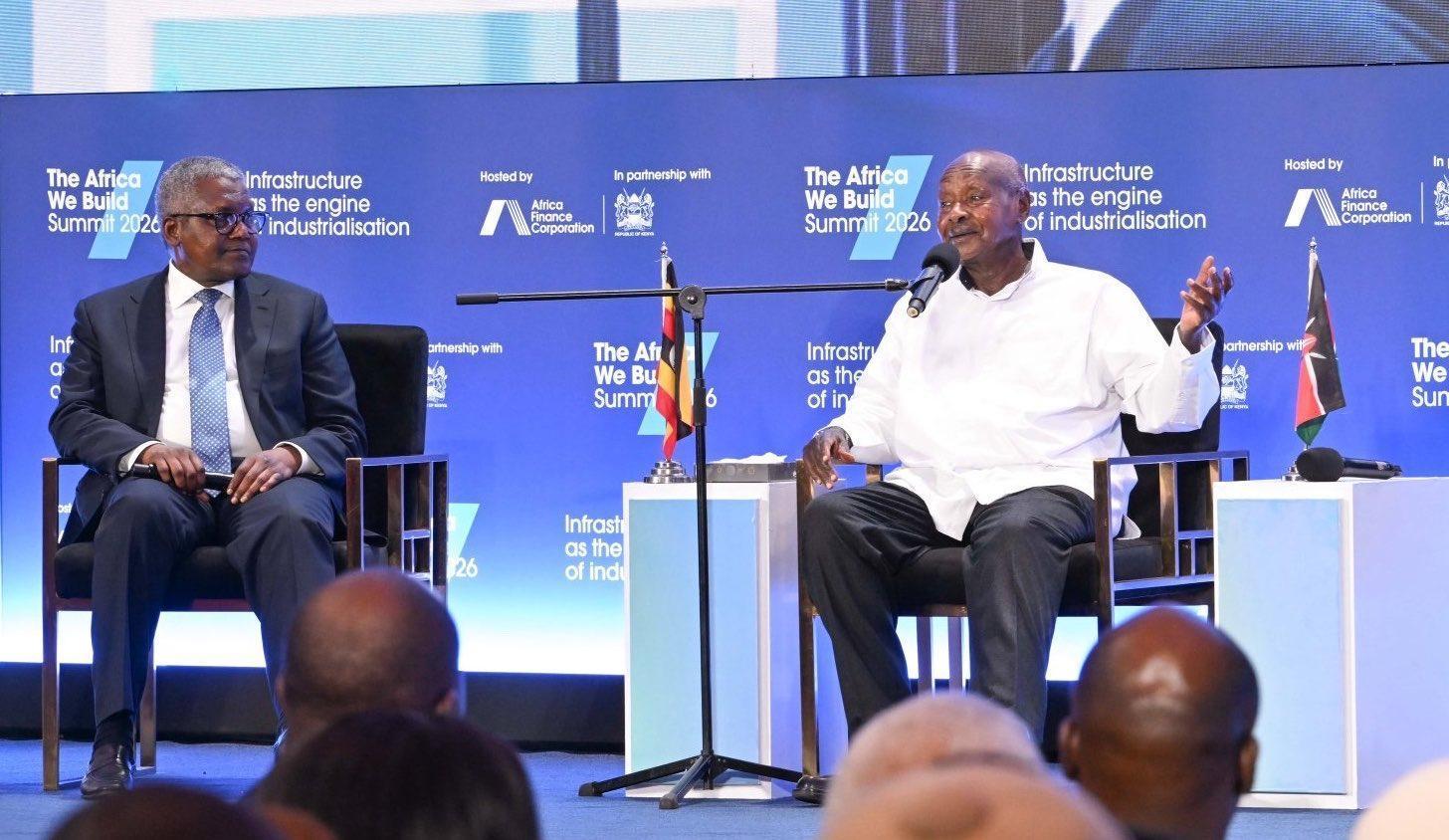
Speaking at the ongoing Africa We Build Summit in Nairobi, attended by regional leaders and investors, Dangote said Africa has the capacity to process its own natural resources and should no longer depend on exporting raw materials for foreign manufacturing.
He specifically praised President Museveni for the directive banning the export of unprocessed minerals such as iron ore, gold, and tin, arguing that such policies would attract investment into local industries.
“I must really thank president of uganda for taking this bold move stopping the export of raw minerals. They (investors) will be forced they will come and produce why do you want to take the raw material then you bring it back,” he said.
Dangote added that African economies are now better positioned than before, citing improved financial systems and human capital development as key enablers for industrial growth.
“We too, we have educated people. We have big financial institutions. It’s not like before. Things have changed,” he said.
He further pointed to Africa’s experience with large-scale industrial projects as evidence that ambitious manufacturing ventures are achievable with the right political and financial commitment.
“I can give commitment to the two presidents that were here. If they will support the refinery, we’ll build the identical one that we have in Nigeria, 650,000 barrels. So the discussions are still early, though, but the three of you, it seems like you’re trying to make this work. It will work.”
The remarks were made during discussions at the Africa We Build Summit, which has brought together policymakers and investors focused on industrialisation and infrastructure development across the continent.
Uganda has recently enforced its ban on the export of unprocessed minerals as part of a broader strategy to promote local value addition, expand manufacturing, and create jobs. The policy is also intended to strengthen the country’s industrial base.
However, the move has raised concerns among artisanal miners, many of whom previously depended on raw mineral trade for their livelihoods.
Dangote, who is expanding his industrial investments across Africa, said the continent must embrace self-sufficiency in production, warning that continued dependence on imports weakens long-term economic growth.
His comments add to an ongoing continental debate on how African governments can balance resource nationalism, investment attraction, and industrial development while building stronger manufacturing economies.
For More News And Analysis About Uganda Follow Africa-Press