Africa-Press – Uganda. When Covid-19 first hit the world, it revealed that many societies had successfully obscured widespread social inequities. Covid-19 made visible a form of embarrassing social inequities. But these were known as deliberate outcomes of public policies that had developed over centuries in capitalist countries.
Social inequities anywhere call for immediate action to address the structural and systemic facets that make them thrive. Specifically, the situation with Covid-19 called attention to the redistribution of social, cultural, economic, and political resources – all of which are determinants of health. It called for less commodification and stratification of society but more of decommodification and destratification.
The pandemic response should have been driven by a unified global sense of urgency to save humanity from its indignation, suffering, encountering unnatural deaths, and not to entirely commercialize or profit from it!
In Uganda, we saw how some people reaped big from the streams of Covid-19 prevention monies.
When Rudolf Virchow introduced the concept of social medicine in 1848 in his report entitled: “The report on the typhus epidemic in Upper Silesia”, he had studied the developments in Upper Silesia that led to a frequent typhus epidemic and concluded that the people there suffered because they lacked education, liberty, and democracy. Those people lacked civic engagement and decision-making power and were quite impoverished. Virchow recommended that the treatment of the typhus epidemic was not pharmaco-medicine, rather a “full and unlimited democracy”.
It follows since then that there is a causal link between oppression on people with the overall standards of health of the oppressed. People who lack political or civil rights tend to be at a high risk of getting sick and dying young.
This observation, which is beyond the scope of this article, has been an obsession of many social epidemiologists for decades.
In Uganda, the history and patterns of oppression are easily traced to how power is appropriated and maintained violently within a tribal cabal. Every post-colonial regime that ascended to power – except for Idi Amin – enacted its constitution as a procedural tool or standards by which to cling to power. Where the constitution is tested and fails, these regimes reverted to the strong arms of colonial laws to perpetuate oppression. The constitution has not served Ugandans beyond a regime. As such, there is no guarantee that subsequent grabbers of power will not oppress and exploit Ugandans.
The current regime’s oppression is characteristically corrupted and violent. It is driving the young Ugandan population into various vulnerabilities leading to an early and unnatural death. Most are resigning too soon to fate while the desire to flee Uganda has peaked. Sizeable others are disinterested in matters of governance or accountability owing to the politicization of everyday social spaces complemented by crude violence – torture, deforming, humiliation, and death.
The monopoly of power has transformed this regime into the most reliable source of morbidity and mortality outside tropical diseases, epidemics, and pandemics.
I believe Friederich Engel referred to such unconscionable conduct of the regime in which the masses are led to die maliciously through deliberate policy decisions, as social murder.
Covid-19 has demonstrated that Uganda’s health care system is far from its potential to contain a pandemic. Understandably, the colonialist and subsequent post-colonial governments did not design the healthcare system to handle pandemics. Rather, healthcare was part of the colonial social policy package designed to incentivize participants in the colonial rule and economy. Subsequent post-colonial regimes maintained a healthcare system that would respond to the health needs of all Ugandans in line with the WHO 1946 constitution. The current regime has for decades, embarked on undermining and dismantling it. It prefers the proliferation of a predatory private health sector most accessible by regime loyalists in the same fashion as the colonialists’.
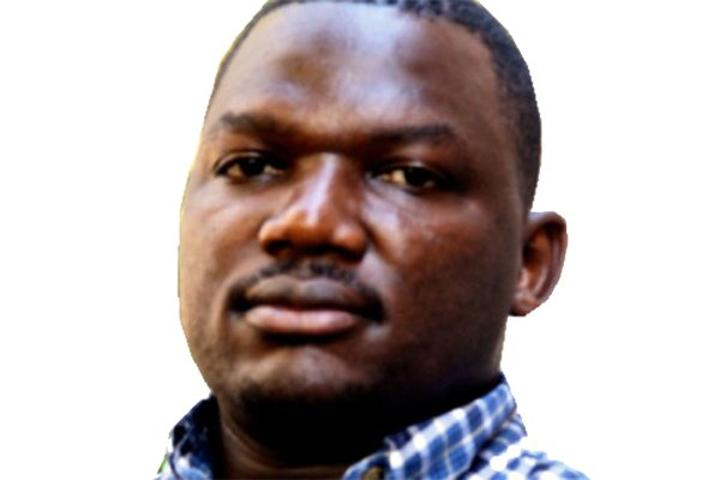
Morris Komakech
[email protected]