Written by Faridah N Kulumba
Africa-Press-Uganda Uganda welcomed 2021, differently from other years due to the fact that the country was still under lockdown as a measure to cub Covid-19 pandemic which has affected the country since March 2020. There was no fire wax no celebrations, but the country was under campaign pressure, preparing for general elections which took place in January.
Political highlights
*Campaigns-* According to Human Rights Watch the campaign was characterized by widespread violence and human rights abuses, including killings by security forces, arrests, and beatings of opposition supporters and journalists, and the disruption of opposition rallies. Access to social media was severely limited before and several days over polling day.
Accusation
Murithi Mutiga, a Horn of Africa specialist at Crisis Group reported that Ugandan opposition figures accused the authorities of deliberately restricting political freedoms by citing coronavirus risks to ban political rallies.
*Denial-* Even by the low standards of recent Ugandan elections, the 2021 election cycle stood out for the brazenness of official attempts to intimidate the opposition and the ferocity of the police response to protests, but the government denied the accusation.
General elections
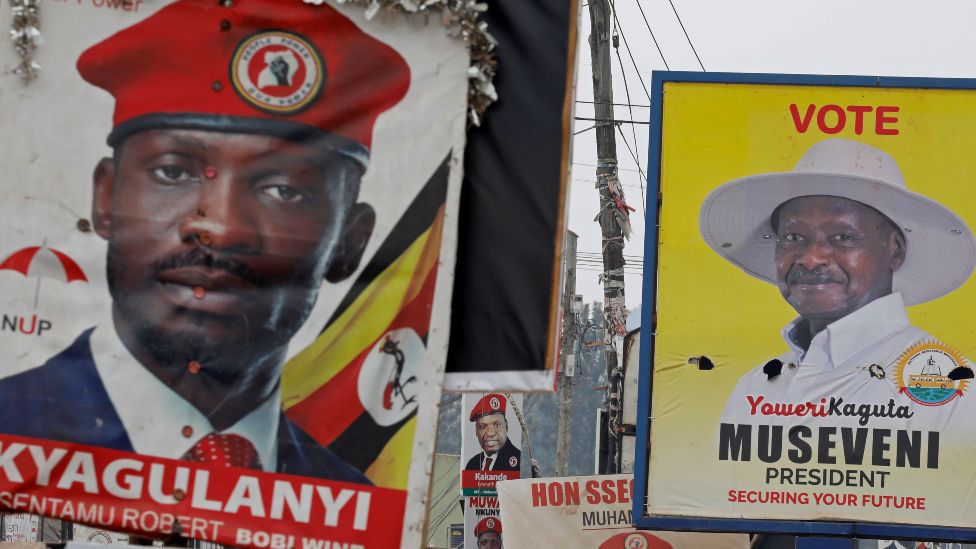
Uganda held the elections on 14 January 2021, to elect the President and the Parliament. The Electoral Commission announced Incumbent President Yoweri Kaguta Museveni Tibuhaburwa, who has ruled the country since 1986, as the winner with 58.64% of the votes although the US State Department qualified the electoral process as “fundamentally flawed and Africa Elections Watch said they observed irregularities.
Petition
On 1st February 2021, the runner-up in Uganda’s Jan, presidential polls Robert Kyagulanyi alias Bobi Wine, of the National unity platform petitioned the Supreme Court challenging election results. He wanted the court to declare the election null and void of the incumbent President Museveni, on the ground that the election was neither free nor fair, and was marred with gross irregularities, violence, and outright rigging.
Petition withdrawal
In March Bobi Wine withdrew the petition from the Supreme court citing bias, Impartiality of the court, and the uncomfortable composition of the judges chosen to hear the petition.
U.S sanctions
On Friday 16 April 2021, the United States announced visa restrictions to Ugandan government officials whose actions they believe interfered with the electoral process which undermined democracy and respect for human rights, during January presidential elections. The media statement which was released by Antony Blinken the US Secretary of State said that the government’s actions represented a downward trajectory for democracy and respect for human rights, and opposition candidates who were arrested and held illegally without charge.
Economic highlights
*The second lockdown* – The Ugandan economy is recovering from a sharp contraction due to the COVID-19 shock that had slowed growth to its slowest pace. The second total lockdown lasted from June to September, border closures except for essential cargo, and the spillover effects of the disruption in global demand on Ugandan exports, remittances, and foreign direct investments. The services sector was particularly hard hit, with activities in key sectors like education and accommodation and food services largely curtailed for most of the year.
Trade ban
This year Uganda lost billions of money after Kenya government banned some products from Uganda. In January 2021, the Kenya government through Dr. Obadiah Njagi, the Director of Veterinary Services banned all the Importation of chicken carcasses, meat, and eggs, and that this was done to support Kenyan producers to recover from the trade disruptions in their livestock by Covid-19 pandemic since last year, And again in March, Kenya added maize and chicken on the list of banned exports from Uganda.

Inauguration
In October, Air Arabia, the Middle East, and North Africa’s first and largest low-cost carrier (LCC) operator inaugurated its direct flight between Uganda and Sharjah. The airline’s introduction to the aviation sector will boost business for Ugandans. Ugandans practice agriculture hence producing different products that have a market in the UAE but face difficulty in transporting them because of logistics.
Security highlights
Crimes- Crime has become a growing problem in Uganda in recent years. Rising violent crime mostly against locals but also affecting foreign expatriates poses a great risk of death and injury in the country.
Panga terror
In August, more than 20 people were hacked to death in the different areas of greater Masaka in Uganda as machete-wielding men started a new episode of attacks. They never revealed their intent to kill, but on breaking into homes, they hacked to death occupants and vanished without taking possession of any items. Close to 70 suspects were arrested over the attacks, and charged with terrorism.
Bombings
On November 16, the ISIL (ISIS) claimed responsibility for the attack, which killed seven people, including the three bombers, and injured dozens. One police officer was among the four others killed and 27 of the 37 wounded were also police officers.
According to Ugandan police seven suspects were killed and 106 people detained during operations by the security services linked to three suicide bombings in the Ugandan capital, Kampala.
Joint forces
Uganda and the Democratic Republic of Congo launched a joint operation in December 2021, against the Allied Democratic Forces (ADF), an armed group allied with Islamic State. Uganda blamed the ADF for a triple suicide bombing on Nov. 16, which killed seven people.
ADF
The ADF began as an uprising in Uganda but has been based in Congo since the late 1990s. It pledged allegiance to Islamic State in mid-2019 and is accused of killing hundreds of villagers in frequent raids over the past two years.