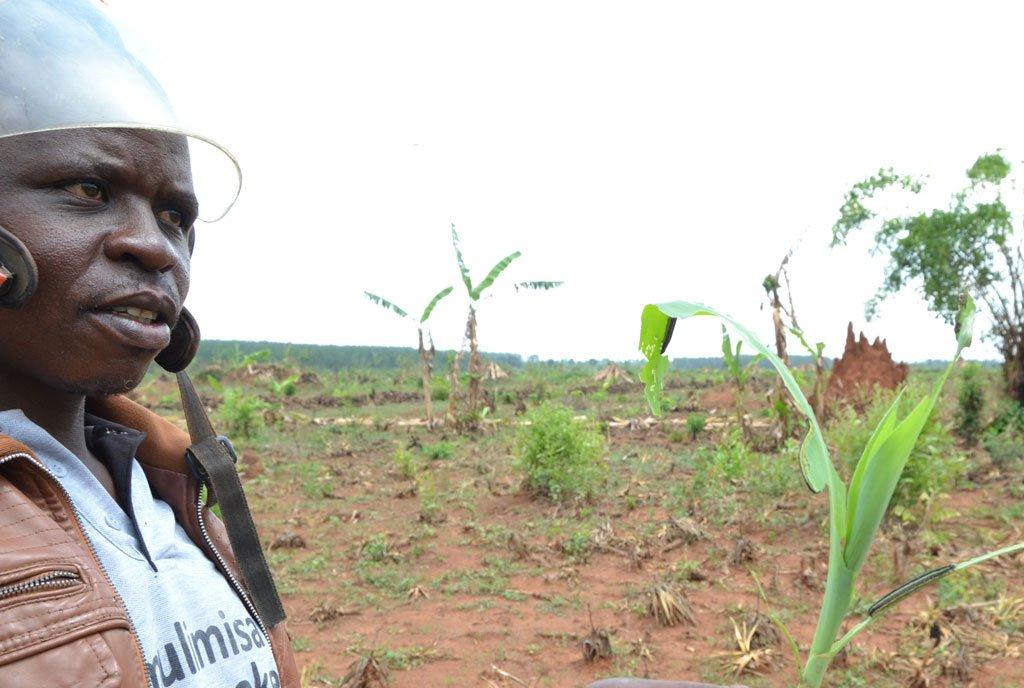
Africa-Press – Uganda. A section of livestock farmers in the greater Luweero districts of Nakaseke, Nakasongola and Luweero have rejected the application of the Cypermethrin 5EC insecticide against the African armyworms for fear of animal poisoning.
The farmers claim that—while the Cypermethrin insecticide has been tested and approved as an effective weapon in the fight against the destructive African armyworms ravaging crops—the free range grazing arrangement many of them prefer makes animal poisoning a clear and present danger.
“We are dealing with local farmers that own cows, but do not own the land where the animals graze. Only a few farmers have established farms that can afford the paddock system to protect the animals from the pasture that has been sprayed,” Mr Joseph Nabimanya, a farmer at Kinyogoga Sub-county in Nakaseke District said.
Mr Enock Nyongole, a livestock farmer and Member of Parliament for Nakaseke North, reckons “our extension staff should help the farmers devise better ways of managing the African armyworms without causing panic.”
In Nakasongola District where the African armyworm has invaded and destroyed farm fields at Lwabyata, Lwampanga and Wabinyonyi sub-counties, the livestock farmers believe that the Cypermethrin could trigger another second disaster for farmers. Most of the farmers are smarting from a four-month dry spell that saw a number of their animals starve to death.
“We shall let the African armyworms naturally disappear when the rains intensify. We do not have money to buy the barbed wire rolls for the farm paddocks,” Mr Adam Ssekugabane, a livestock farmer in Lwampanga Sub-county, told Saturday Monitor.
But Mr Sam Kigula, the Nakasongola District chairperson, is optimistic that once the rains intensify in Uganda’s cattle corridor, the African armyworms will disappear.
At Wakyato Sub-county in Nakaseke District, where more than 120 acres of the grazing fields have been destroyed by the African Armyworms, a section of the farmers told Saturday Monitor that they are not amenable to digging deep into the pockets to purchase barbed wire for setting up paddocks.
Their area lawmaker, Allan Mayanja (Nakaseke Central) says they should be guided on how best the animals can survive without emphasising the use of paddocks.
Trail of destruction
While addressing Parliament last week, Prime Minister Robinah Nabbanja revealed that the invasion of African armyworms has spread to nearly 40 districts.
She added that the government has procured 23,000 litres of Cypermethrin 5EC to fight the caterpillars.
Some of the affected districts include Mukono, Wakiso, Katakwi, Bukedea, Bugweri, Mityana, Kiryandongo, Nakapiripirit, Luweero, Bulambuli, Kiruhura, Oyam and Nwoya. The most affected crops are coffee, maize, millet, sorghum, wheat, sugarcane and well as pastures.
Ms Nabbanja advised the farmers to use a dosage of 100-120 millilitres of the insecticide in 20 litres of water for effective use.
About armyworms
Armyworms are caterpillar pests of grass pastures and cereal crops. They are the only caterpillars that growers are likely to encounter in cereal crops, although occasionally native budworm will also attack grain when underlying weed hosts dry out.
Armyworms mostly feed on leaves, but under certain circumstances will feed on the seed stem, resulting in head loss. The change in feeding habit is caused by depletion of green leaf material or crowding.
For More News And Analysis About Uganda Follow Africa-Press