By Gabriel Buule & GLORIA IRANKUNDA
Africa-Press – Uganda. Ruth Kugumikiriza, a 45-year-old mother of nine, felt helpless when she received news that a speeding truck had left her son with a fractured leg. There was no partner to turn to as her husband left their marital home a decade ago.
More devastating was the fact that the single mother could neither read nor write when she attempted to file a case with the police.
She said that the officers at Kyenzige Police Post in Kagadi “deliberately kept using English much as I asked to speak to a person who would understand my local dialect.”
While the offender had been arrested and his truck towed to the police post, one officer made it clear to Ms Kugumikiriza that her case would face challenges with in the next 14 days if she failed to find a lawyer. To get a lawyer, Ms Kugumikiriza needed to hop onto a public service vehicle and brave a nearly two-hour journey from Kagadi to Fort Portal.
She yielded with reluctance and against her better judgment to leave her hospitalised son and make the journey spanning a little over 100 kilometres. In Fort Portal, she eventually found a lawyer at Legal Aid. Whereas he could benefit from the services of a translator familiar with Ms Kugumikiriza’s local dialect, she could not sigh with relief. The lawyer was persistent in his demand for money and much more.
“The man took me to some room and asked for sex,” Ms Kugumikiriza told Saturday Monitor, adding that she had borrowed money from relatives to make the trip to Fort Portal.
Eventually, the back and forth led to nowhere and surgeons had to amputate the leg of Ms Kugumikiriza’s son. Ms Kugumikiriza, who dropped out of school in Primary Six and was married aged 17, blamed the misfortune of his son on her inability to have a mastery over the English language.
Clearly, she is not alone. Mary Nakayima, a resident of Keicumu Village in Kyenzige, says she has always missed out on development programmes because she can neither read nor write.
“Sometimes you can have an idea on a specific matter, but then you get frustrated because you do not know how to speak English,” the Primary Two drop-out told Monitor in an interview.
Beneficiaries
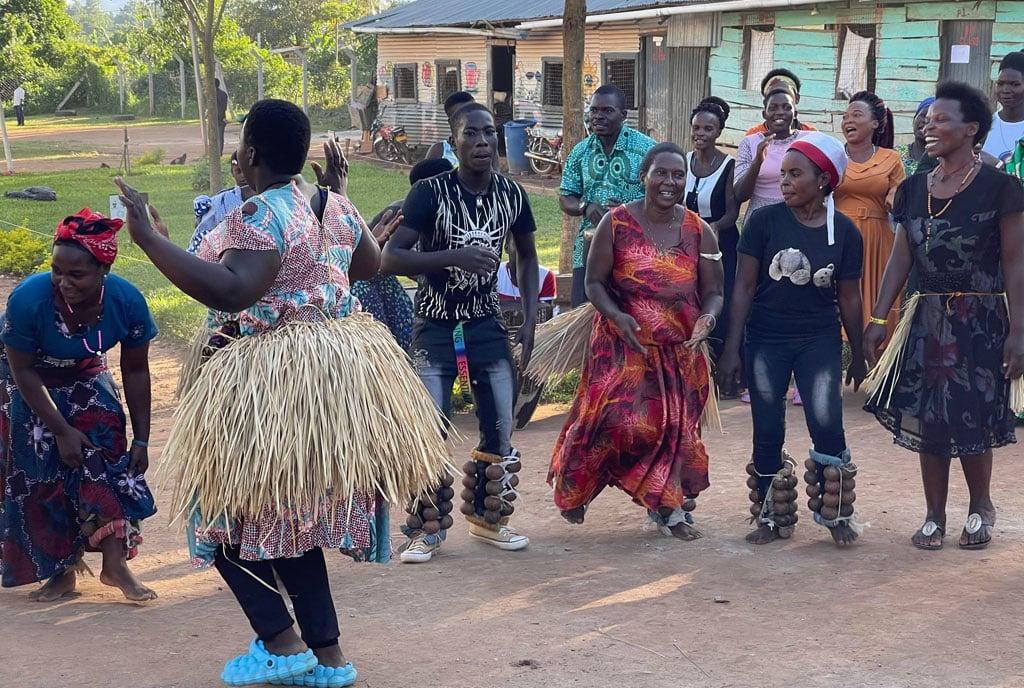
Both Ms Kugumikiriza and Ms Nakayima are beneficiaries of a mass adult literacy programme organised by Maisha School, an education facility for the underprivileged under charity organisation Maisha Holistic Africa Foundation in Kagadi.
Ms Kugumikiriza says the rich benefits of the programme are already manifesting.
“I can now count money, write and read a sales agreement with ease. I have also gained confidence unlike before when anyone would frustrate me with English,” she discloses, adding, “I have self-esteem and freedom to seek for answers.”
Ms Milly Nassolo Kikomeko, the director-in-charge of Legal, Women and Children Affairs at Maisha Holistic Africa, explains that the programme is meant to equip women—especially single and young mothers—with skills to tackle social challenges.
“The course depends on what one wants to learn. It can be reading, writing, and counting,” she told Monitor, adding that “it takes two years for a learner to graduate.”
The programme that commenced in 2020 also comes with other benefits such as mental health support, counselling, farming skills, among others.
“Women in Kagadi are given legal advice, counselled to give them hope and self-esteem to deal with social challenges in addition to basic education that ranges from language, mathematics and soon computer [studies] will be introduced,” Ms Kikomeko notes.
She further reveals that women in Kagadi are deprived of their rights by people who thrive off their illiteracy and ignorance.
“For the time we have been here, we have learnt we can sustain our families. Now my children also go to school and I am able to fend for them through small projects like smallholder farming, tailoring and poultry,” Ms Kugumikiriza beams.
Lofty goals
The programme has attracted 76 learners most of whom are single mothers and widows. The first batch of finalists comprised 55 women.
Mr Robert Kikomeko, the founder member and co-director of Maisha, told Monitor that the target is to educate 1,000 women by 2030.
“This is not just basic education,” he says, “we are equipping our society with knowledge to curb land grabbing, domestic violence, among others.”
Mr Kikomeko adds that if a woman is able to read and write, they will never indulge in dubious land transactions and hence tackle land grabbing.
He further explains that the more women are equipped with agricultural skills, the more they use their land and fend for their families.
At the inauguration of the project in Kyezige in Kagadi, Ms Night Better—a village councillor of Kasokero in Kyenzige Town Council—explained that single mothers need hope to better their life.
“We are glad that women in our area are getting life skills and adult literacy and this is going to make them more productive,” she told Monitor.
Mr Ivan Bwowe, a lawyer, says education is a human right that everyone must gain access to. He urges the government to consider localising public programmes and access to justice so as to benefit everyone.
For More News And Analysis About Uganda Follow Africa-Press