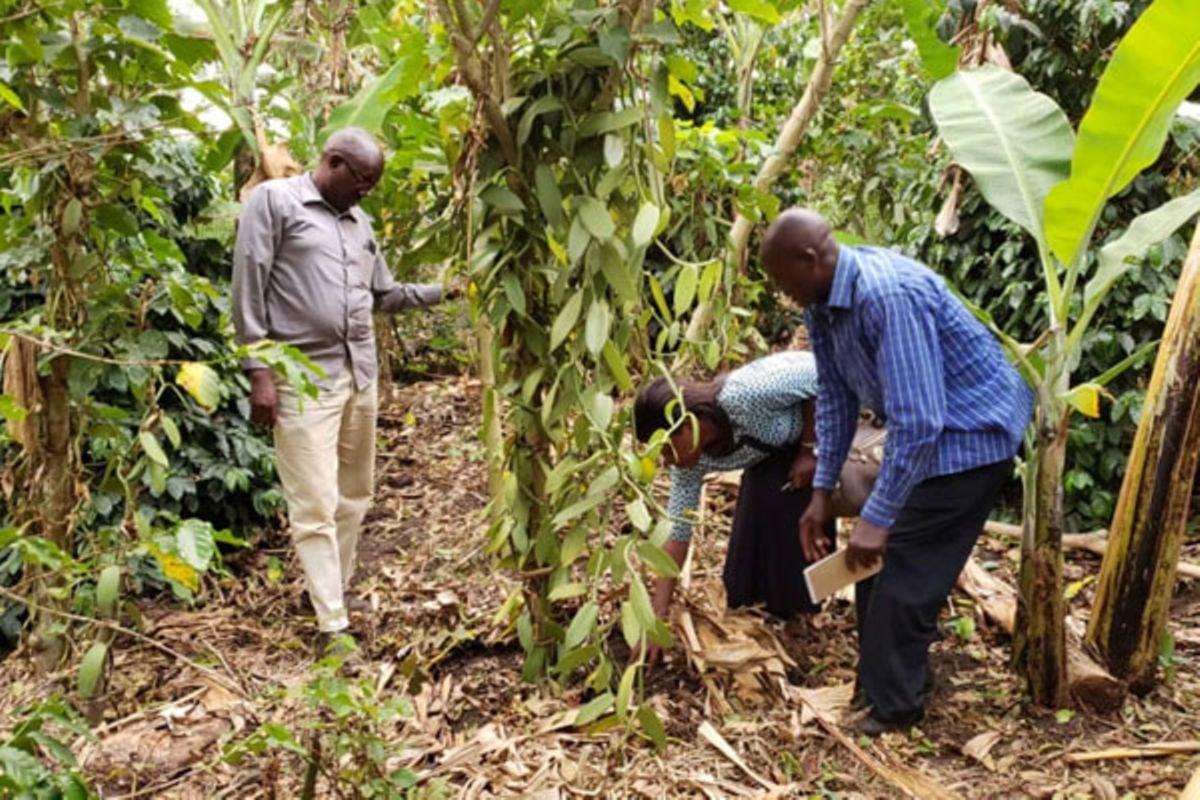
Africa-Press – Uganda. Vanilla farmers have asked government to stabilise the fluctuating price of the high value export crop.
A kilo of vanilla in some districts, such as Kyotera, is currently being bought at Shs10,000, down from Shs50,000 a year ago. There are, however, fears that the prices may drop further in the coming weeks.
Last month, the Ministry of Agriculture set July 17 as the official date for harvesting the crop, but some farmers began much earlier, reasoning that their crops were being stolen by armed thieves.
According to Mr Vincent Arinaitwe, a vanilla farmer in Katerera Village, Rubirizi District, the government has not done enough to help farmers.
“They have failed to regulate prices. How do they announce July 17 as harvesting time without declaring the price? I started growing vanilla when a kilogramme was at Shs300,000, it kept reducing to Shs200,000, Shs150,000 and now we are selling a kilo at Shs30,000,” he says.
Mr Arinaitwe says vanilla farmers on average pay Shs800,000 per private guard throughout the entire six-month season.
He says during the previous season in January, traders purchased the farmers’ produce on credit, and they are yet to receive payment.
“When we asked for our money, they told us that vanilla was too much in the market and ours was of low quality,” he adds.
Farmers say this time, the available vanilla may not reach the market, as traders are rarely observed actively seeking it in the village, as in the past.
“By this time many traders would be coming around to buy vanilla, but we are not seeing them. A kg used to sell at Shs40,000, but I think this time it might cost as low as Shs20,000 because many farmers have a lot of vanilla in their gardens,” he says.
In Greater Masaka, farmers criticised Agriculture State Minister Fred Bwino Kyakulaga for his announcement of the harvesting date without mentioning the prices at which vanilla will be purchased. This, they said, has created an opportunity for speculators to exploit farmers.
Mr Ronald Katongole, a vanilla farmer in Bbaale Village in Kyotera District, says some middlemen have started buying vanilla at between Shs10,000 and Shs15,000 per kilo yet farmers injected a lot of money to look after the crop.
“Due to variations in climatic conditions, we have ripe beans in our gardens and harvesting has already begun, but they [middlemen] are giving low prices compared to past seasons,” he says.
Last Friday, a mob in Buyinja Village, Masaka District, lynched Edward Matovu, 30, upon discovering him in possession of two bags of vanilla beans. The mob suspected that he had stolen the beans from Luzinga, a neighbouring village.
Mr Sowedi Sserwada, the chairperson of Kibinge Farmers’ Cooperative Society, suggests that farmers should be equipped with skills of preserving the beans so that they can store them in case prices are low.
“Unlike coffee, vanilla is not easily preserved and I think the government should come on board and equip farmers with skills needed,” he says.
Mr Aga Ssekalala Junior, the director of UVAN Limited, says the price of vanilla has not yet been set. He adds that there is a general fall in vanilla prices on the world market due to good harvests from major producing countries such as Madagascar.
“I think farmers shouldn’t lose hope just because of dipping prices, this is not the first time it is happening, but I am sure those with quality vanilla will have leverage,” he says.
Mr John Musinguzi, a farmer from Karugutu Town Council in Ntoroko District, says he has confidence in the quality of his vanilla, stating that if no calamities such as hailstorms occur, he is likely to have a good harvest.
“I don’t expect the lowest price per kilo to be below Shs10,000, we have good vanilla and expect better returns,” he says.
Mr Alex Muhindo, a farmer from Ntoroko District, says some farmers’ gardens have in the past weeks been attacked by pests while others have been raided by armed thugs.
“These thieves are aware that the market for vanilla will soon open, we are now sleeping in our gardens in these remaining days to the harvesting date,” he says.
In Kasese District, the significant drop in the vanilla prices has raised concern about their livelihoods and financial sustainability.
Mr Yoweri Muhindo Kibira, who owns 1.5 acres of land in Buswagha Village, Kitabu Sub-county, expects to harvest approximately 150 kilogrammes of vanilla from his farm. However, even if he manages to obtain the full harvest, he estimates earning only Shs750,000.
“This amount [Shs750,000] falls short of covering the costs I have incurred, including hiring a guard for seven months at a cost of Shs100,000 per month,” he said.
Mr Selevano Muyonga, another vanilla farmer from Mughete Village in Kitabu Sub-county, blames government for setting unfavourable harvest time which has exacerbated the situation.
Mr Muyonga says the vanilla beans have already started dropping off the plants, indicating that it is past the ideal harvest time.
“I am wondering why the government extended the harvest date to July 17 this season when it used to be around July 5. This delay in harvest could result in even further price reductions and a loss in quantity harvested,” he adds.
Mr Archangel Kule, the manager of Mughete Nyakabaale Vanilla Farmers’ Cooperative Society, describes the current situation as a challenging time for vanilla exporters.
“As a cooperative, we had invested significant resources in the farmers through training and advance payments. However, given the current prices of the cash crop, it is unclear how the farmers will be able to repay these loans,” he says.
What the farmers say
According to Mr Peter Musisi, the chairperson of Vanilla farmers in Masaka, faults government for failure to consult farmers on the right time for harvesting.
“Some farmers are counting losses because July 17 is late for farmers and vanilla is already drying from gardens and this will cause some losses,” he says.
Mr James Mbogo, a farmer from Suggu-Kirangira Village, Buikwe Sub-county in Buikwe District, says setting a harvesting date is a dis-service to many farmers since their gardens get ready at different intervals.
“We protest the government policy of setting the harvesting date yet our gardens do not get ready at the same time. We call upon government to consider farmers’ views before taking decisions pertaining to our business,” he says.
In response, Mr Kyakulaga says Uganda has a liberalised economy where government cannot intervene to regulate prices of commodities. He, however, says government will instead come up with a deliberate policy that encourages value-addition.
“Government can’t have a solution for vanilla dipping prices right now since it is mainly produced for international market, we are considering development of cottage industries that use vanilla as a raw material so that farmers can add value and target both local and international markets,” he adds.
On the rampant theft of vanilla, the minister says government will take punitive action against farmers found selling vanilla before the harvest date, saying this practice compromises the quality of the vanilla beans.
“We also set official date for harvesting as a way of avoiding immature vanilla to come to the market,” he adds.
Background
Vanilla is harvested biannually during June to August and December to January.
The majority of Uganda’s premium black gourmet vanilla is exported to European markets, while the extract grades are sold to the United States.
In 2020, Uganda exported vanilla worth $13.3m (about Shs49 billion). Madagascar is the leading producer and exporter of vanilla to the international market with 1,200 to 2,000 metric tonnes exported in a single season.
In the mid-90s, vanilla became the leading source of income for many households in the districts of Mukono, Buikwe, Mpigi, Luweero, Bundibugyo and Kasese, but some abandoned the crop due to fluctuating prices and thieves who raid their gardens.
For More News And Analysis About Uganda Follow Africa-Press