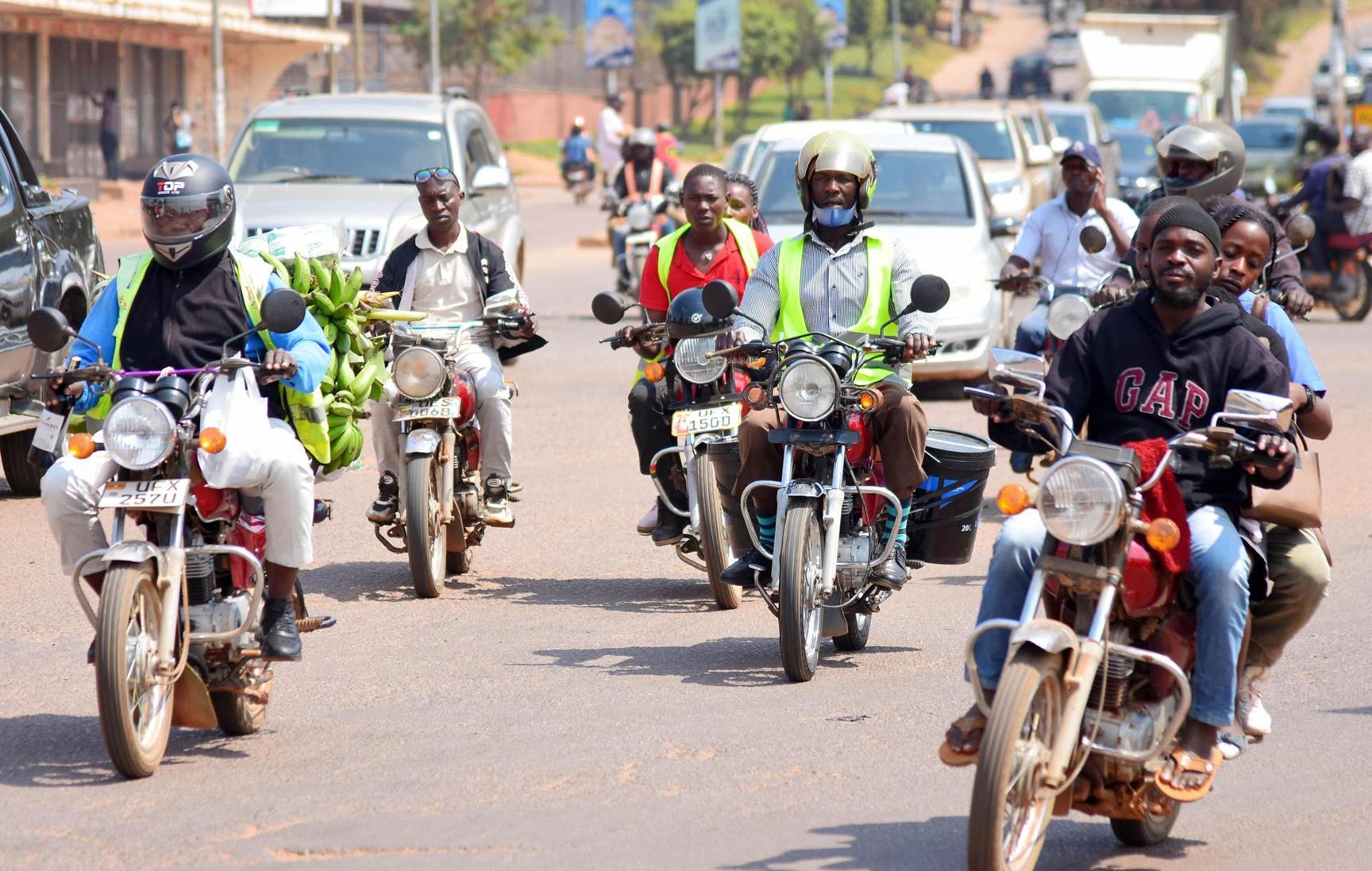
Africa-Press – Uganda. Boda bodas who acquired motorcycles through a credit arrangement organised by Tugende Uganda and have failed to service the loans, have started losing their rides, leaving them jobless.
Insiders said Tugende ramped up repossession of the motorcycles, which they sell to other riders to recover outstanding monies, after its United States-based parent financer, Goldfinch, set an October deadline for repayment of its $5m (Shs18.6b) loan.
The money was originally borrowed by Tugende Kenya, but it is now jointly owed with Tugende Uganda which received $1.9 million (Shs7b) out of the disbursement to shore up its finances haemorrhaged by years of unsatisfactory business performance.
“As a business, we have had a rough time due to a number of factors, but we are working with all our lenders to see how we can handle [things] going forward. In fact, some of them have already [agreed] to restructure the loan,” Tugende Uganda Corporate Affairs Manager, Mr Charles Mwanguhya, said yesterday.
This followed an update by Goldfinch to investors that in addition to the inter-country cash transfer of cash being anomalous, the financial health of Tugende Uganda was in a worse situation than it was made to believe.
The creditor noted that it was highly probable that the Uganda portfolio of the business was not in a position to repay its loan given that it was performing poorly and its balance sheet had deteriorated over time.
It remained unclear how many of the 29,000 active clients of Tugende Uganda have arrears, or lost their motorcycles through repossession.
Information on the company website shows that some 22,000 individuals – separate from the 29,000 – who acquired motorcycles through Tugende Uganda credit arrangement have fully paid back.
Established as a for-profit social enterprise in 2012, the company proclaims its purpose as closing the credit gap for small businesses in Africa by enabling informal entrepreneurs to “own income-generating assets, build a verifiable digital credit profile and earn future growth opportunities through the Tugende digital platform”.
It is headquartered in the Kampala outskirt of Ntinda from where its 800 employees have served 52,000 clients in total, and the company says it acted as a partner and catalyst financer of value-added services and new opportunities.
According to beneficiaries, the company structures its credit facility to enable borrowers to first pay up the interest over time, and clear the principal when the loan matures.
For Tugende Uganda, and its Kenya cousin, the date for servicing all of the $5m (Shs18.6 billion) to Goldfinch is due in two months, catching both entities without enough money to pay back.
Whereas spokesman Mwanguhya declined to discuss how many of their clients had defaulted or how much they owed, he did say repossession of the motorcycles from non-compliant riders was underway.
Tugende Uganda, he said, plunged into trouble following business blues over the past three-and-a-half years.
It was unclear if the lockdown during which passenger service motorcycles were banned, with the government only allowing riders carrying merchandise to operate, was to blame.
Mr Mwanguhya said talks to resolve the crisis were ongoing, and he struck an optimistic tone that a solution might be within sight.
In its update made some 13,000 kilometres away, in the US, Goldfinch told investors that the situation with Tugende Uganda was “much worse than we were initially led to believe”.
“Over the past six months [since February], we’ve been working closely with the Tugende team to support their fundraising efforts and, ultimately, the resolution of their covenant breach,” the creditor noted in the briefing.
It added: “In this time, and in our discussions with various stakeholders, it has become clear that the situation in Tugende Uganda is much worse than we were initially led to believe.”
The Uganda and Kenya subsidiaries operate under a holding company, Tugende Global, domiciled in Mauritius.
Sources that spoke on condition of anonymity to discuss sensitive business information, indicated that chances of raising the required cash through repossessions were slim because the recovered motorcycles were being sold at lower prices than the amounts owed by defaulters.
In addition, some of the borrowers already negotiated the principal sum downwards, technically called writing down the loan.
Mr Frank Mawejje, the Kampala District boda boda chairman, yesterday told this newspaper that many riders who get motorcycles on credit decline to pay pack, causing problems for financing firms.
“We have a bad culture of not wanting to pay back loans. But even financing companies do a number of mistakes that land them in trouble,” he said, claiming that some charge double the market rates for a new motorcycle.
Without saying whether he was a member of Tugende Uganda, or applying his comments to the company, Mr Mawejje said some of the creditors charge Shs8m-Shs10m per motorcycle, and want full repayment within one to two years, which pushes some of his colleagues to default.
The problems in Uganda, and Kenya notwithstanding, Goldfinch announced that it had already hired a tier one law firm to pursue its business claims and protect its assets.
What riders say…
‘‘I got my motorcycle from Post Bank at a loan of Shs6.5m. I paid Shs1m as the first deposit and then I started paying Shs78,000 weekly. It took me one and a half years to complete the motorcycle loan. I didn’t get many challenges in clearing the loan. The problem with these boda boda riders is that they don’t want to pay their weekly deposits,’’ Richard Muteebi
‘‘I lost my motorcycle after paying Shs6.5m in a period of nine months. The motorcycle was valued at Shs9m and I was given a loan period of two years and six months. I was supposed to pay a weekly deposit of Shs75,000. Along the way, the police took my motorcycle for over a week. The company went to police and cleared the fines and took it back,’’ Johnson Tuwwesigye
‘‘Every time you miss paying the weekly money, you attract fines and when the motorcycle is taken back, you have to first clear all the money for the missed period and in addition to paying a week or two in advance. So you find these conditions are very tough, making some of us to abandon the motorcycles and lose our money,’’ Peter Kuwaya
‘‘Personally, I didn’t acquire my motorcycle through a loan, but I have seen my colleagues who are struggling to pay the loans for their motorcycles. Some of them make little income, which cannot sustain their needs in addition to paying weekly deposits for the loan. Some of my colleagues pay between Shs85,000 and Shs110,000 weekly,’’ George Omeja
‘‘I got my motorcycle in 2021 after Covid-19 lockdown through a loan. The main challenge I got while paying my loan was the accumulated fines I got after failing to pay the money every week. My motorcycle loan was valued at Shs7.8 million, but I ended up paying Shs8.2 million. Some of our colleagues end up giving up the motorcycles,’’ Robert Tenywa
‘‘The problem with some of our young riders is the bad habits such as taking drugs and alcohol. They end up using all their money and forget to pay the loan on time. When their motorcycles are taken, it becomes very difficult for them to reacquire them and they resort to criminality and rob other riders,’’ Fred Mukisa
‘‘I was given 104 weeks to clear my motorcycle loan which I started three weeks ago. The problem with the companies is information denial during the acquisition process. In my case, I fell sick and I requested the company to pause my loan payment. They told me I had to go through a process, but they didn’t tell me this when I was acquiring the motorcycle,’’ Richard Bamuletere
For More News And Analysis About Uganda Follow Africa-Press