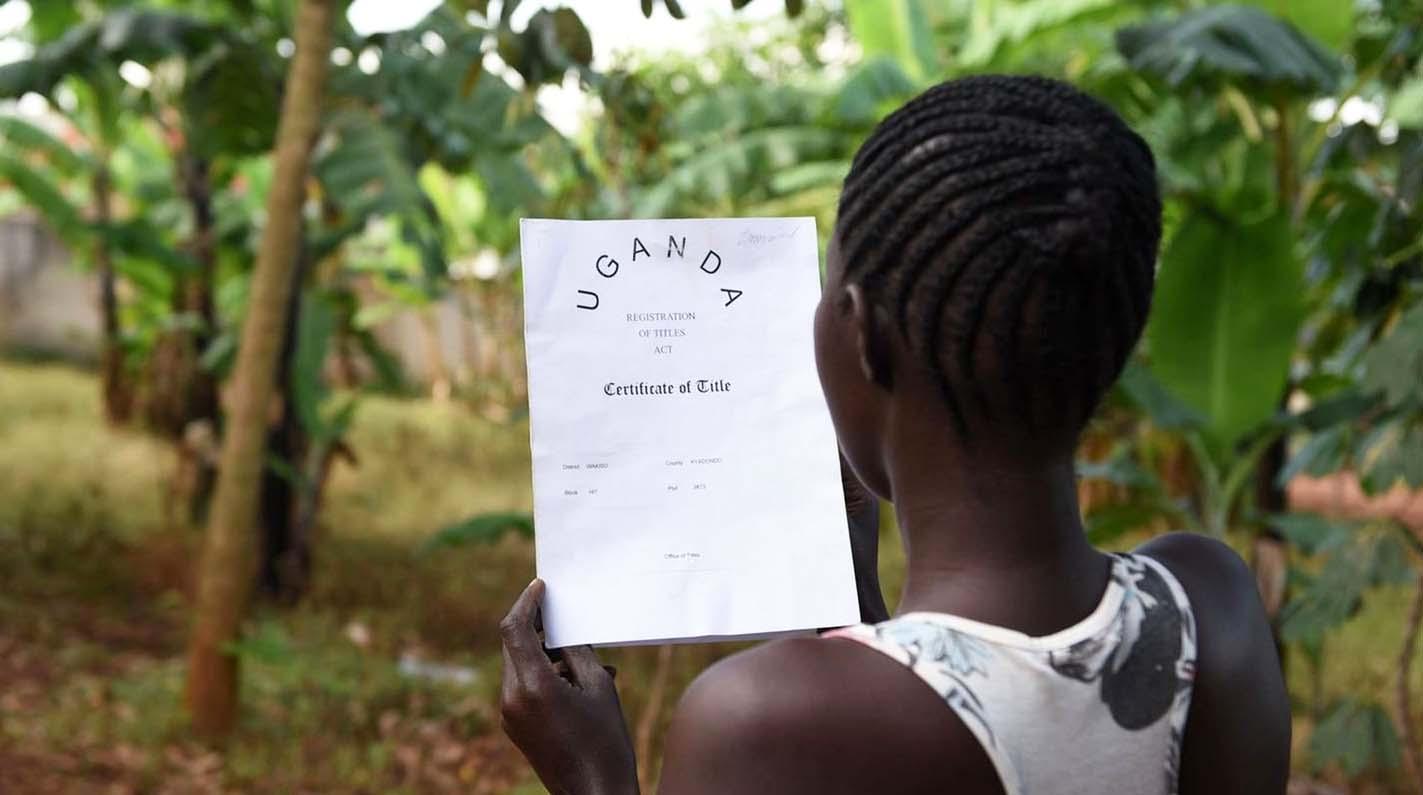
Africa-Press – Uganda. A new law is in the offing and upon enactment, will hold property on behalf of others including the dead in trust.
Being drafted by the Uganda Law Reform Commission, the proposed law dubbed “Trust law” is aimed at curing the current scattered pieces of legislation which confuse users, especially those with no legal background.
A trust is a relationship that arises wherever a person (called the trustee) holds property for the benefit of some other persons, who are termed beneficiaries, in such a way that the real benefit of property accrues, not to the trustee, but to the beneficiaries or objects of trust.
“The current legal framework governing trusts is scattered in different pieces of legislation. Further, many people have a rudimentary understanding of their rights and duties under the trust, which makes implementation difficult. We believe that the answer to these problems is to lay in simplifying and codifying the general principles of trust law,” Mr Sam Kiriaghe, the lead consultant, said yesterday in Kampala during a stakeholder meeting.
He added: “A study conducted by the Uganda Law Reform Commission revealed that trust law in Uganda is outmoded and does not address contemporary issues, which would enable a trustee to effectively carry out their duties, restricts the powers to invest and delegate.”
Mr Kiriaghe also said Uganda has recently seen the emergency of commercial trusts being created for purposes of collective investment.
According to the Uganda Law Reform Commission, the current legal framework does not define the concept of trust and that the approach to defining a trust has been derived from courts of law and text book authors.
Ms Alexandria Sewali, the head of Legal and Engineering at Stanbic Bank, asked the consultant team to incorporate a provision in the new law that allows a trustee to pull out of the arrangement.
Ms Sewali reasoned that currently, there is no law that allows the trustee to pull out.
Makerere University law don Robert Kirunda, one of the discussant of the day, said there is apparently no law that allows a trustee to abandon their roles once appointed.
Speaking on behalf of the private sector, Mr Dan Twebaze, the managing director of Twed Property, urged the Uganda Law Reform Commission not to rush with the drafting of the law if they are to get a good law at the end of the day.
“Government creates an environment for us to create value and in private sector. It’s about creating value for the good of the society. If you build a hotel, people will come and take tea. So, we need to understand that relationship and see how to work together,” Mr Twebaze said.
He added: “Anything good you want, you have to sweat. Let’s ensure we engage the process, agree to disagree and pay the experts. Let the consultants go to all the jurisdictions and make sure that at the end of the day, we have the best. We are happy with the work of the Uganda Law Reform for taking the lead and we are happy to support them,” he added.
He also promised to fund the next three consultative stakeholder meetings to ensure that wide-ranging views are sought out to enrich the new law.
Mr Kenneth Rutaremwa, the principal legal officer at the Commission, said the views gathered from the stakeholders’ meeting yesterday, will be included in the final drafting of the new law.
When asked how different is the trust law from the succession law, Mr Rutaremwa said the succession law is about dividing the property of the deceased while the new trust law will be about ensuring the continuity of the estate of the deceased with the trustee looking after it.
Definitions
According to the Uganda Law Reform Commission, the current legal framework does not define the concept of trust and the approach to defining a trust has been derived from courts of law and text book authors.
For More News And Analysis About Uganda Follow Africa-Press