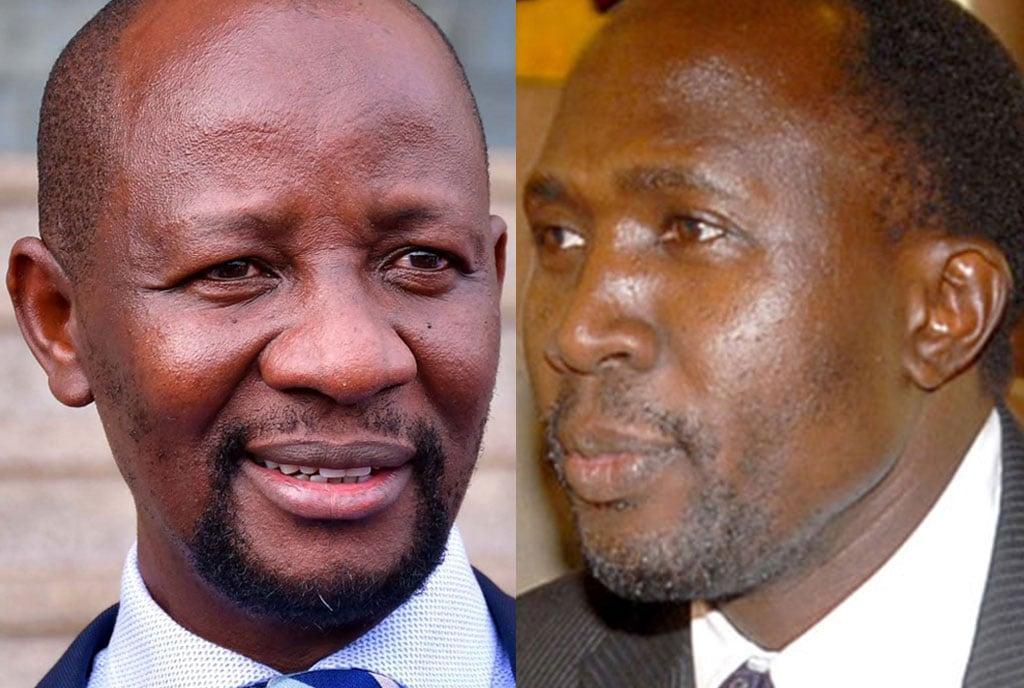
Africa-Press – Uganda. Parliament is holding the opposition Forum for Democratic Change (FDC) up to its own rules governing appointment of officials, indicating yesterday that it will stick with its recognition of Mr Ibrahim Ssemujju Nganda as the party whip.
That position will come as another blow to the embattled FDC secretary general, Mr Nathan Nandala Mafabi, who has twice written to the Speaker seeking to replace Mr Ssemujju without success.
It also comes barely 24 hours after Speaker Anita Among replied to Mr Mafabi’s August 7 letter naming Mawokota South MP Yusuf Nsibambi as the new whip.
A House spokesman said Mr Mafabi’s response to the Speaker’s concerns — that the change was not made with the blessing of the necessary FDC party organ — was lacking.
As a result, Mr Ssemujju remains the FDC whip until a harmonised position is communicated to the House, according to Mr Chris Obore, who is director of public affairs at Parliament.
He said Parliament finds itself in a state of confusion regarding who to believe.
“Mafabi initially wrote to the Speaker without providing evidence of the party organ meeting. Now, with evidence in hand, his account contradicts what the party MPs presented in their petition,” Mr Obore said.
“Given that the Speaker is not privy to the party’s internal procedures, let the petitioners and the party leadership convene to present a harmonised position. They should refrain from involving the Speaker in their internal affairs,” he added.
On Monday, August 16, Ms Among wrote to Mr Mafabi, declining the removal of the Kira Municipality legislator as FDC whip after a petition filed by nine members of the party caucus in Parliament contested his unilateral removal, contending that it lacked approval of FDC’s National Executive Committee (NEC).
The Speaker, therefore, advised Mr Mafabi to provide evidence that the requisite FDC organs had collectively agreed to replace Mr Ssemujju.
And it was to this letter that Mr Mafabi responded yesterday, asserting that the working committee of his party’s NEC possesses the authority to appoint leadership within Parliament.
“Ssemujju was appointed by the 169th working committee on May 26, 2021, under minute 2.26052021 as the party whip. Nsibambi was similarly appointed by the same committee on August 7, 2023, according to minute 3.07082023.” Mr Mafabi said in a letter dated August 17.
He referred to provisions of Article 22 in the FDC constitution, which, he said, constitutes the working committee of NEC. That article is, however, silent on whether the working committee holds equivalent status to NEC.
Mr Mafabi argued in his letter that the nine MPs who petitioned Ms Among misinterpreted the situation and misled the Speaker. “Madam Speaker, we followed all internal procedures, adhered to the party constitution, and abided by the Political Parties and Organisation Act, as amended,” he wrote.
FDC constitution
Whereas Article 22 of the FDC constitution indicates that there shall be a working committee of NEC, which body shall act as the cabinet of the party, the provision is silent about the appointment of parliamentary leadership.
The three organs that were cited in the August 14 petition by nine legislators also do not have the explicit mandate to elect parliamentary leaders.
According to Article 21(6), NEC receives reports from the working committee, the National Council meets once a year to approve the party budget, while the delegates conference meets every 3 years to elect members of NEC.
For More News And Analysis About Uganda Follow Africa-Press