By Anthony Wesaka
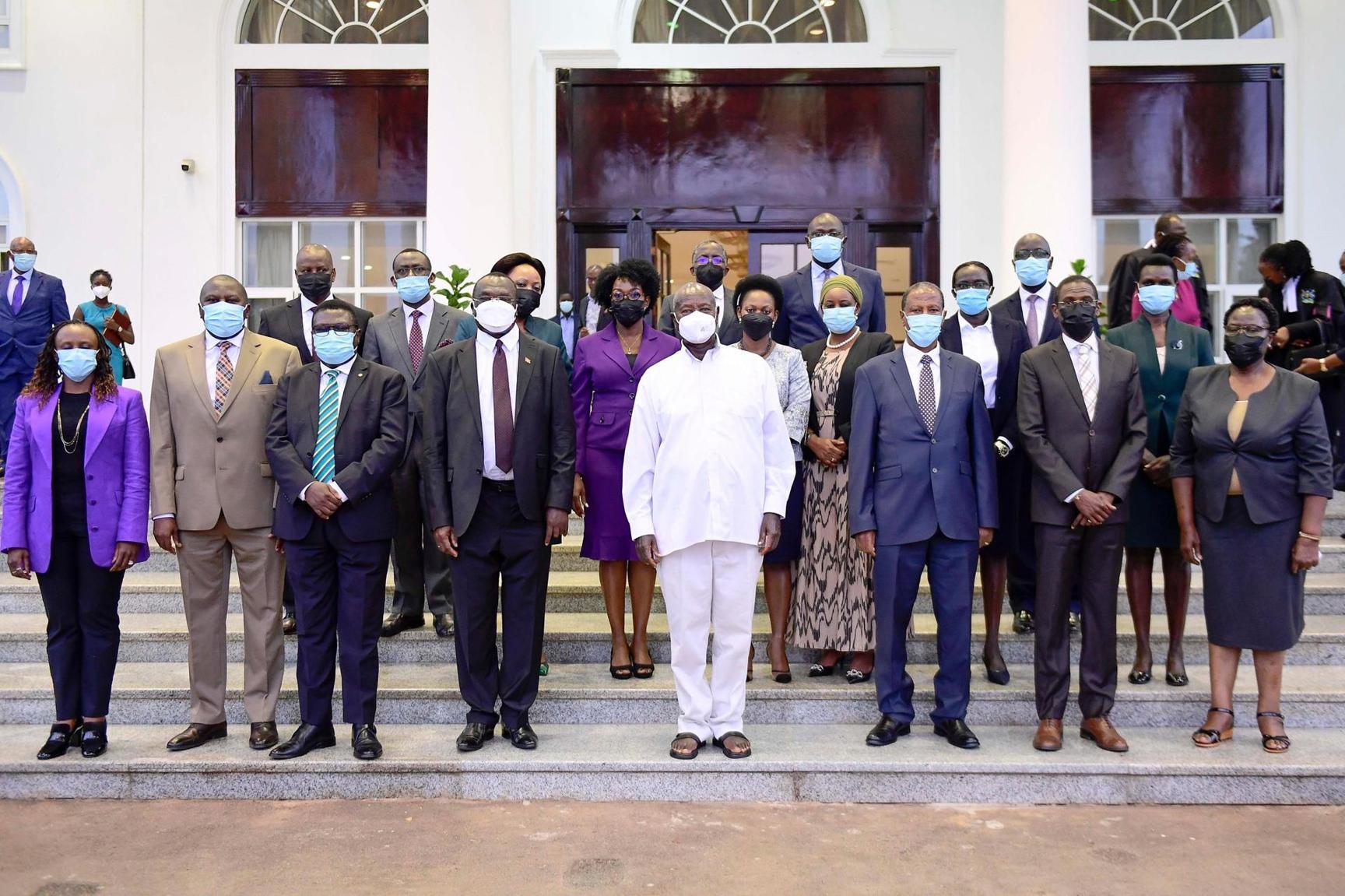
Africa-Press – Uganda. The eleven Acting High Court judges, who took the oath of allegiance yesterday at State House Entebbe, have a number of tasks to handle and hurdles to tackle. These include case backlog, absenteeism, and corruption, among others.
Case backlog
Case backlog has been a perennial problem that the Judiciary has been grappling with for long. The new entrants come at a time when the case backlog is estimated at more than 45,000.
A case becomes backlog when it has not been heard and determined in two years.
Absenteeism, late coming
Absenteeism is another big issue in the Judiciary. Some judicial officers especially those operating upcountry, don’t work on Mondays and Fridays, meaning, they only work for three days in a week.
Friday is used by some judicial officers, to travel back to the city or to their families whatever the scenario may be while Monday is used to travel back to the duty station. This kind of arrangement has frustrated court users as those whose cases fall on those days, are never considered.
Also, some judicial officers are found of going to court late and leave early too, yet they are expected to hear cases from 9am to at least 5pm.
Corruption
Corruption, whether “perceived” or “real”, is the talk in the temple of justice. As the new judges come on board, Grade One Magistrate Musa Ammaari Ssemwogerere was apprehended for reportedly impersonating and writing final exams at the Law Development Centre (LDC) for a female student.
He is currently on remand after he was charged with two counts of forgery, and one count of impersonation.
Recently, Chief Justice Alfonse Owiny-Dollo cautioned magistrates that those found engaged in corruption schemes will be dismissed. He said being employed in the Judiciary lately is very competitive due to the good remuneration but leaving due to integrity issues, is easy.
The Judiciary has been ranked among the top most corrupt institutions by anti-corruption agencies in recent reports.
Yesterday, President Museveni advised the acting judges to be transparent.
He said: “…don’t be tempted by any shortcuts because I have been watching people from the 1960s who made mistakes when they got power. Don’t contaminate your future.”
Delivery of judgments
The new entrants come to office at a time when judicial officers take so long to deliver judgments.
According to the Judiciary Practice Guidelines, a decision should be delivered within a period of 60 days.
But on average, a case takes a minimum of four years to be decided. This has made the litigants lose hope in getting timely justice.
Dispute resolution
The acting judges are expected to promote the use of alternative dispute resolution mechanisms (ADR) such as mediation and plea bargaining. Leaders in the Judiciary are optimistic that ADR will reduce the case backlog significantly.
In June, President Museveni in his remarks at the high-level national summit on ADR in Kampala, pledged that his government would support the Judiciary to widely use of ADR to quickly resolve legal disputes in courts.
According to Mr Museveni, traditional conflict resolution techniques such as mediation, adjudication, reconciliation, and negotiation, which Africans employed in the past, offered great prospects for peaceful co-existence and harmonious relationships in post-conflict periods.
“Government will support the Judiciary to expand the use of alternative dispute resolution. This will help to rejuvenate the traditional systems of dispute resolution,” Mr Museveni said in his remarks read out by his Vice, Ms Jessica Alupo.
Last week, the Chief Justice while presiding over the swearing-in ceremony of 96 Grade One magistrates called for resolution of cases that have dragged on for long. He reasoned that the current argumentative system of hearing cases is leading to case backlog.
“The Judiciary continues to be the forum of choice for dispute resolution but the adversarial system, which is full of complexity, cannot on its own, deal with increased case filing and case backlog,” Mr Owiny-Dollo said.
He added: “The Judiciary is, therefore, prioritising alternative dispute resolution in criminal and civil cases as a cheaper, affordable, convenient and faster mechanism for resolution of disputes.”
For More News And Analysis About Uganda Follow Africa-Press