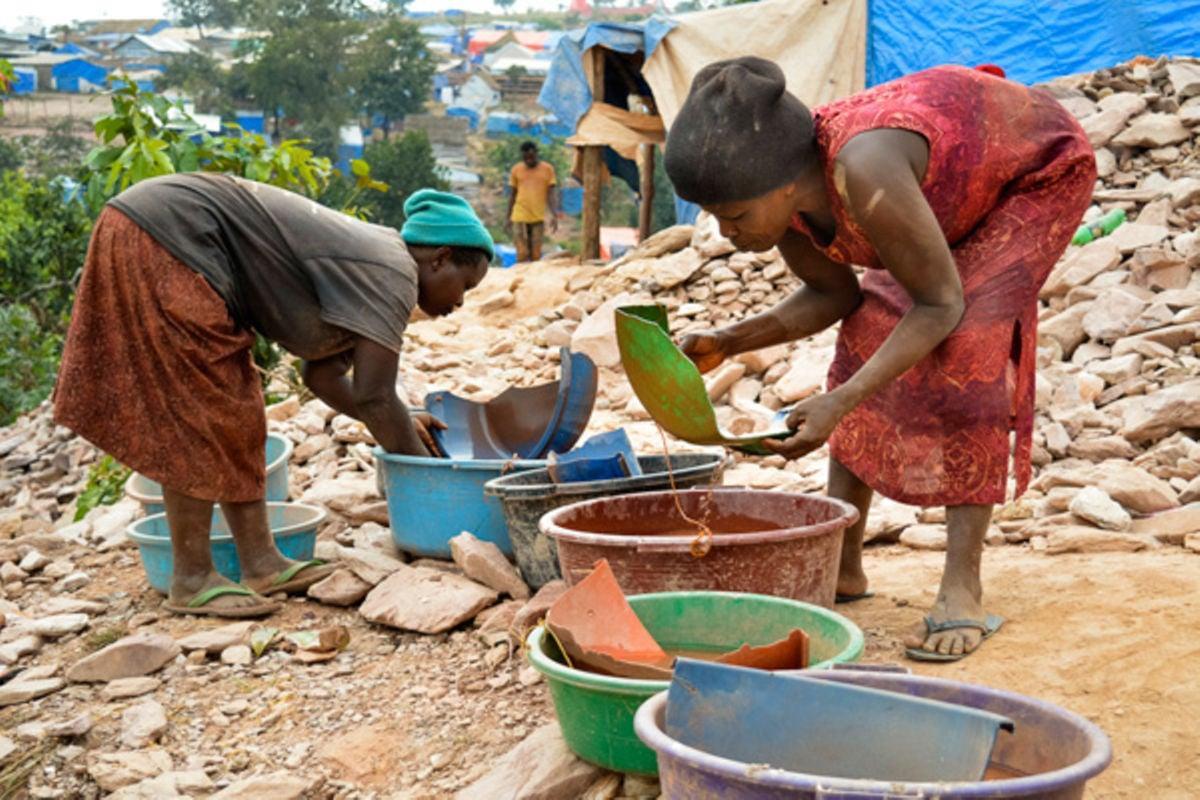
Africa-Press – Uganda. The full impacts of the extraction of rare earth elements in Uganda’s nascent mining belt are starting to be felt. The questioning of the so-called social licence to operate that mining companies are so desirous of becomes increasingly strident with each passing day.
While presiding over the belated International Youth Day national celebrations at Kigezi High School’s playground in Kabale Town last Friday, President Museveni addressed himself to anti-mining unrest threatening to boil over in mineral-rich areas. Uganda’s licensing laws have always been called into question for requiring no surface rights agreements to green-light exploration and its attendant outcomes.
The Mining and Mineral Act, 2022, which came into force on October 28, 2022, is expected to go to great lengths to ensure that operations are not carried out with weak regulatory pressure. It is, however, safe to say that no-one is holding their breath. Certainly not the artisanal miners. State support is still expected to be slow in coming as extractive companies, whilst exploring and mining mineral-rich areas, continue to leave local communities subservient to land grabs and environmental damage.
While addressing locals in Kigezi Sub-region that teems with iron ore deposits, Mr Museveni last Friday said that exploitation was made manifest in extractive companies skipping over the benefits of value addition. The President reasoned that the wisdom of exporting iron ore at $47 per tonne squats on quicksand when taken together with the fact that the importing countries “get about $600 per tonne after processing it.”
We could not agree more with Mr Museveni. The pursuit for mining-led development, however, should not leave the country blind to the brutally cold realities of the extractive industry. For starters, it is vitally important that we do not gloss over the tracts of the country that are left uninhabitable by the mining of key raw materials. We should be alive to the fact that the production and disposal processes of the extractive industry in Uganda, much like elsewhere, are every inch environmentally destructive.
Empirical evidence, for one, points to mining processes for rare earth minerals generating huge volumes of toxic and radioactive material. What do the manufacturing processes of extractive companies plying their trade in Uganda look like? Are they predisposing the country to ecological destruction?
With extractive processes the world over rendering groundwater unfit for consumption and arable land contaminated by heavy metals, environmental protections have to be more than tightened on the fine print of the Mining and Mineral Act, 2022.
While economics backs the focus on monetary resources, with a 2018 study indicating that regulation of the extractive industry in time-honoured fashion can translate into a three percent contribution to Uganda’s gross domestic product, people should in our assessment be pivotal to the thinking. This includes their health and wellbeing. These should not be treated like a footnote as the current state of affairs suggests.
For More News And Analysis About Uganda Follow Africa-Press