Africa-Press – Uganda. Stakeholders including district production officers and engineer have been asked to be professional and transformative while implementing the National Oilseeds Project.
The National Oilseeds Project is one of government’s initiatives of supporting farmers involved in oilseeds production, value addition and infrastructure development for market linkage including community Access Roads.
The seven year project(July 2021- July 2028) is jointly implemented by the Ministry of Agriculture Animal Industry and Fisheries (MAAIF) and Ministry of Local Government (MoLG).
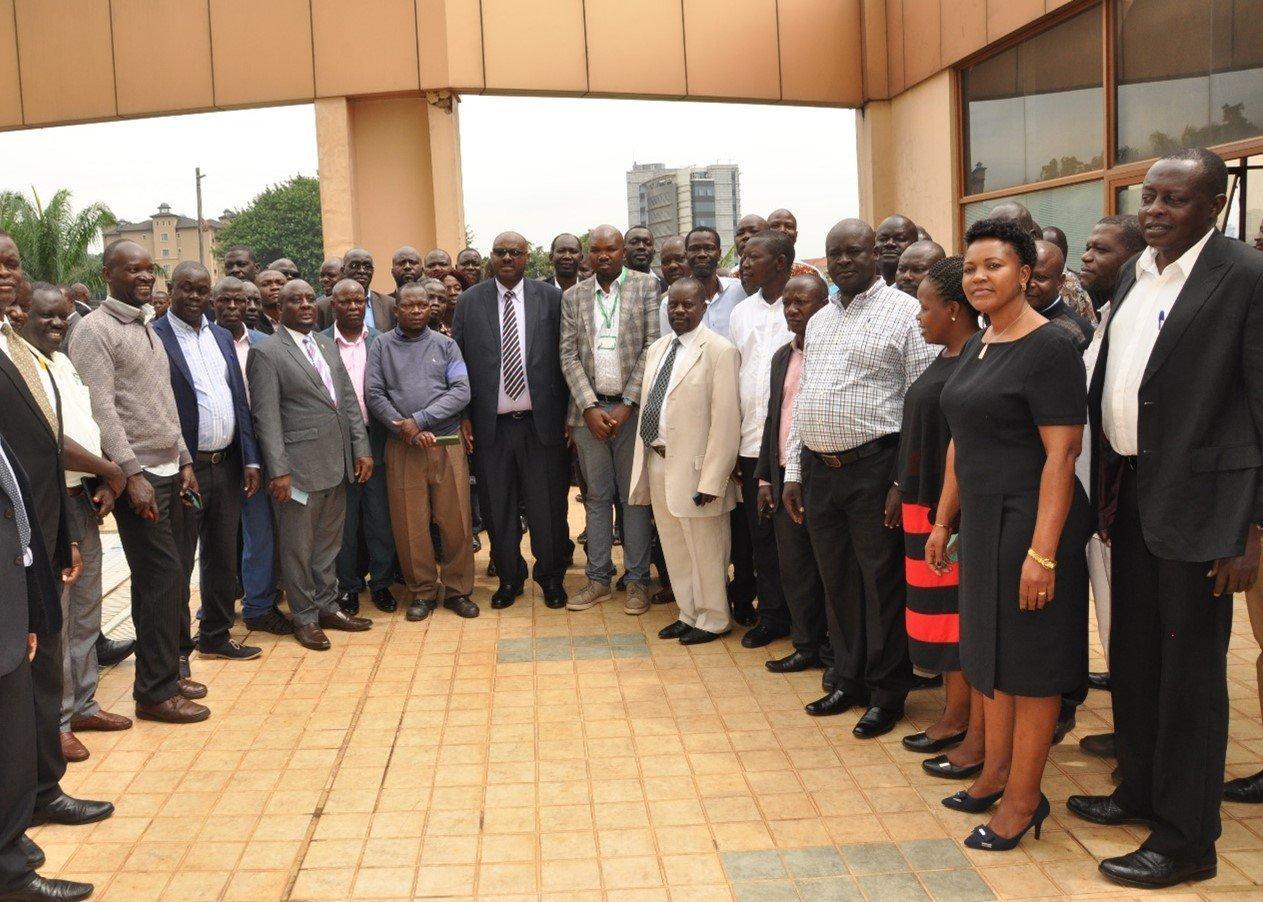
Speaking during a planning and review workshop for district production officers and engineers from the oilseed production district chain, the Ministry of Local Government Permanent Secretary, Ben Kumumanya said the project involves building resilient infrastructure that promotes sustainable industrialization and foster innovation along the oilseeds value chain.
He asked key stakeholders in the project to be professional, exhibit expertise and direct the road of social transformation, adding that the project will also help to transform the 39 percent from subsistence to cash economy.
The Ministry of Local Government Permanent Secretary urged the group to effectively continue supporting decentralization policy which was crafted as a means to modify, reform, and improve local governance in order to improve service delivery and local development in Uganda.
The National Oilseeds Project is designed to build on the successes of the predecessor project, the Vegetable Oil Development Project (VODP) Phase 2 which took place from (2010-2018).
The total funding of the project is $160,805,000 which is being financed by International Fund for Agriculture (IFAD), OPEC Fund for International Development (OFID), Heifer International, Kuehne Foundation, Ugandan government, private sector and beneficiaries.
The National Oilseeds Project came at a time when the country is implementing NDP III whose goal is “increased household incomes and improved quality of life of Ugandans”.
The NOSP is poised to invest in approaches to reduce challenges faced by smallholders and meet government’s priorities for the commercialisation of smallholder farmers and the agricultural sector.
The project focuses on increased production and productivity of oilseeds, and the by-products (especially oil cake) through appropriate input use, mechanisation and effective private-sector led extension, build and strengthen smallholders in becoming parity players in the sector improve the accessibility of credit to the sector and and ensure that road networks directly support the sector by increasing ease of access to and from communities.
NOSP plans to upgrade and rehabilitate a maximum of 2500km of community access roads in the 81 districts to district class III climate resilient roads.
The project approaches and investments will commercialise the oilseed sector by capacitating and empowering the smallholder farmers in the oilseeds sub-sector.
This will result in Uganda lowering the trade deficit through increased export of both raw and processed oilseeds and the by-products, improving foreign exchange and most importantly, improving the wealth and welfare of smallholders in Uganda.
The National Oilseeds Project is concentrating on four main crops that include sunflower, soya beans, groundnuts and simsim production.
A total of shs240 billion has been earmarked for investment in community access roads in 81districts.
The market linkage infrastructure component is going to deliver 2,500 kilometers of community access roads.
The project manager Christopher Gumisiriiza says it will support farmers increase production of oil seed crops because of the need of vegetable oil in the country.
He said the Agriculture Ministry will support farmers with improved seed, and technologies that are able to add value to the oil seed.
The project coordinator Yassin Ssendawula from the Ministry of Local Government said that “NOSP will also undertake research and development support to production of new improved oilseed varieties under NARO and Makerere University. Further investments will be done in value chain for high quality animal feed processing facility, small and medium scale on farm irrigation with 200 irrigation schemes, provision of tractors under auxiliary farm services promotion scheme, construction of 60 post-harvest bulking centres in the 6 hubs and provision of extension services to oilseed farmers”.
For More News And Analysis About Uganda Follow Africa-Press