Africa-Press – Uganda. High-value agricultural products are increasingly becoming susceptible to money laundering without being detected. The result has been the loss of much-needed tax revenue.
The shift to high-value cash crops has since become a new loophole that launderers are exploiting with ease to further trade-based money laundering (TBML), according to a recent study titled: Trade-based money laundering: A global challenge – authored by Global Financial Integrity, Fedesarrollo, Transparency International Kenya and ACODE.
Financial Action Task Force (FATF) defines TBML as disguised proceeds of crime, which involves the movement of value through trade in an attempt to legitimise the illegal origin.
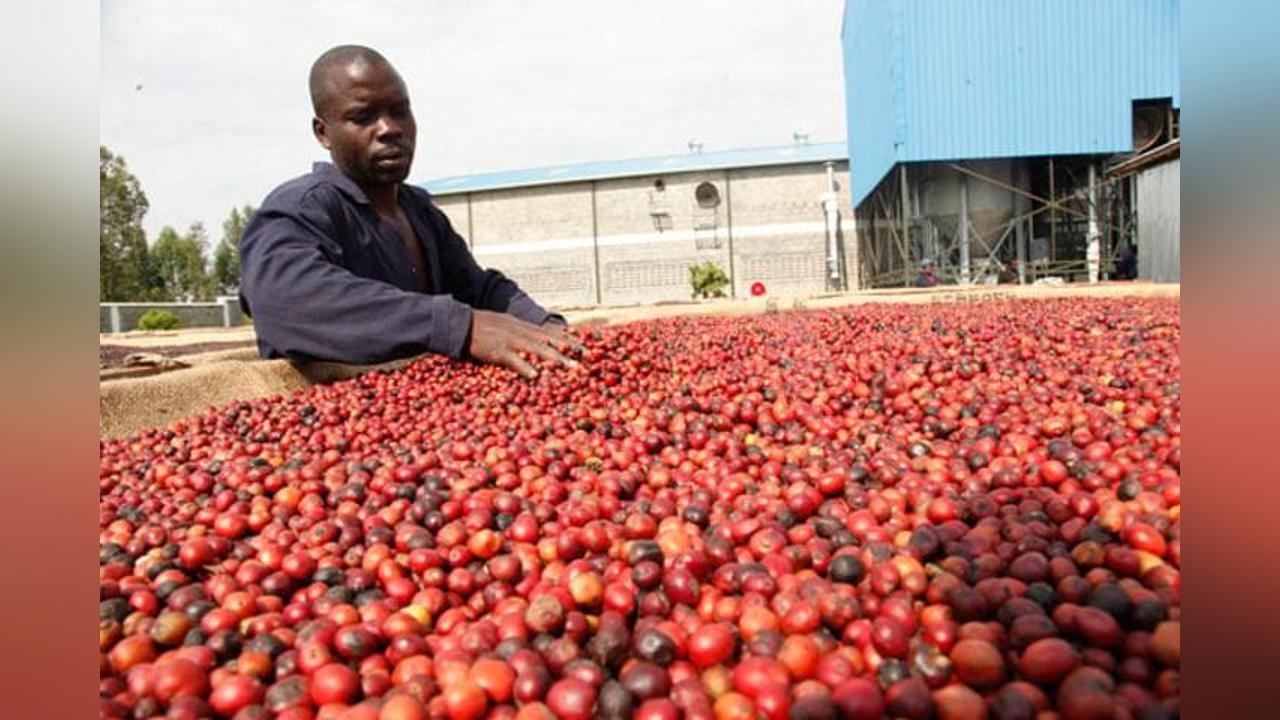
Coffee, which Uganda Coffee Development Authority (UCDA) says is ranked third best in the world, has been identified by the same study as highly vulnerable to TBML given its profile as a high-value crop.
Coffee remains Uganda’s most valuable cash crop and was until recently, the country’s leading export.
Gold has since taken its place, but UCDA indicates that coffee exports continue to grow exponentially, increasing to 6.26 million 60kg bags at the value of $862.28m (about Shs3.2t) in the 12 months ended December 2022. This indicates a 3 percent growth from 6.08 million bags worth $559.16m (about Shs2t) in the same period ended 2021.
Uganda Revenue Authority (URA) intelligence and investigations department reveals that the much-needed growth in the coffee export industry also creates opportunities for money launderers, who use various trade-based techniques to deprive the country of tax revenue.
However, URA seems to have woken up to this reality except the UCDA, the coffee sector regulator, and the Financial Intelligence Authority (FIA), the money laundering prefect.
Prevalence
Cross-border transactions, according to URA investigations, explain the prevalence of TBML in Uganda’s coffee industry.
In an attempt to legitimise illicit origins of the proceeds, TBML manifests itself through trade mis-invoicing, over or under-shipment, multiple invoicing of goods and services or false descriptions of goods.
In Uganda’s case, URA investigations reveal that TBML has a high likelihood in commodities such as coffee on account of being a high-value cash crop.
“Coffee raises limited or no red flags as far as the heavy sums of money involved,” indicates URA exclusive statement, which also reveals that the notion of “ready market” invites limited questions in the frequency and volumes of coffee exports.
For instance, Uganda’s coffee exports in June stood at 530,365 60-kilo bags worth $83.79m (about Shs315b), of which 444,197 bags were Robusta valued at $60.98m (about Shs229b) while 86,168 bags were Arabica valued at $22.82m (about Shs86b).
However, this was a decrease of 14 per cent in quantity but an increase of 43 percent in value compared to the same month last year, which UCDA attributes to a dry spell—and that is the end of story.
The unquestionability of the sector performance beyond the regulator’s declaration contained in the report, coupled with the fact that coffee has an almost “readily available market” for export, makes the cash crop an ideal commodity for money launderers to exploit.
More revelation
The study says trade mis-invoicing stands out as the method deployed to launder. A study by the FATF on the trends and development of TBML placed coffee as a high-risk cash crop that is susceptible to TBML.
It is estimated that just about a dozen or so exporters out of 80 companies, nearly 75 percent export cash crops to Italy, Germany, Sudan, India, and Morocco. Uganda’s coffee exports to Africa stand at an average of 109,506 bags, which is about 21 percent of export volumes.
Tanzania, South Sudan, Somalia and Kenya take the biggest share of Uganda’s coffee, according to the Observatory of Economic Complexity (OEC), a global trade data publication. However, discrepancies in many of the official trade records of the above countries, render Uganda’s coffee highly vulnerable to TBML.
Laundering schemes in Uganda
In the case of over-invoicing, the export value of goods, coffee, for instance, is above the market price, enabling exporters to receive illegal funds from foreign buyers.
However, on the other hand, there have been instances of under-invoicing, where exported products are invoiced below the actual market price making it possible for exporters to transfer excess illegal funds to the foreign jurisdiction.
The key element is the misrepresentation of the price of the goods or services, to transfer value with both the importer and exporter being complicit in the misrepresentation.
For instance, if an exporter enters into a coffee sale contract with an importer in country X for $1m (about Shs3.7b), the exporter might issue an invoice of $1.5m (about Shs5.6b).
If this money is paid into the exporter’s account there will be a payment above the value of $0.5m (about Shs1.8b), which might be transferred to offshore accounts, possibly to a criminal network.
The example above might also apply to under-invoicing with the exporter issuing an invoice that carries a value that is less than the export.
Other methods of TBML include under or over-shipment, in which less or more coffee is shipped below or above the invoice value.
This technique can also include ‘phantom’ or ‘ghost’ shipments where no product is shipped.
TBML is also executed through multiple invoicing, where exporters reuse existing documentation to justify multiple payments for the same shipments.
Losses
According to the Global Financial report, approximately 18 percent of coffee exports from Uganda between 2006 and 2015 were under-invoiced, meaning the country lost an opportunity to collect $3.2m (about Shs12b) in coffee exports. Measures to address the IFFs manifested in all its forms continue to be URA’s priority, according to an interview.
Acquisition and installation of intrusive scanners at various border points to assist in the verification of shipments and detection of any anomalies. Data sharing between agencies through partnerships and exchange of information programmes between Uganda and other countries on trade data to support cross-border investigations.
Beyond this, implementation of cross-border currency declarations at all border points, which guides intelligence on the extent of financial flows, should be undertaken to maintain an institution of a specialised team in the tax Investigations department to conduct investigations on all money laundering and illicit financial flows.
Source: Monitor
For More News And Analysis About Uganda Follow Africa-Press