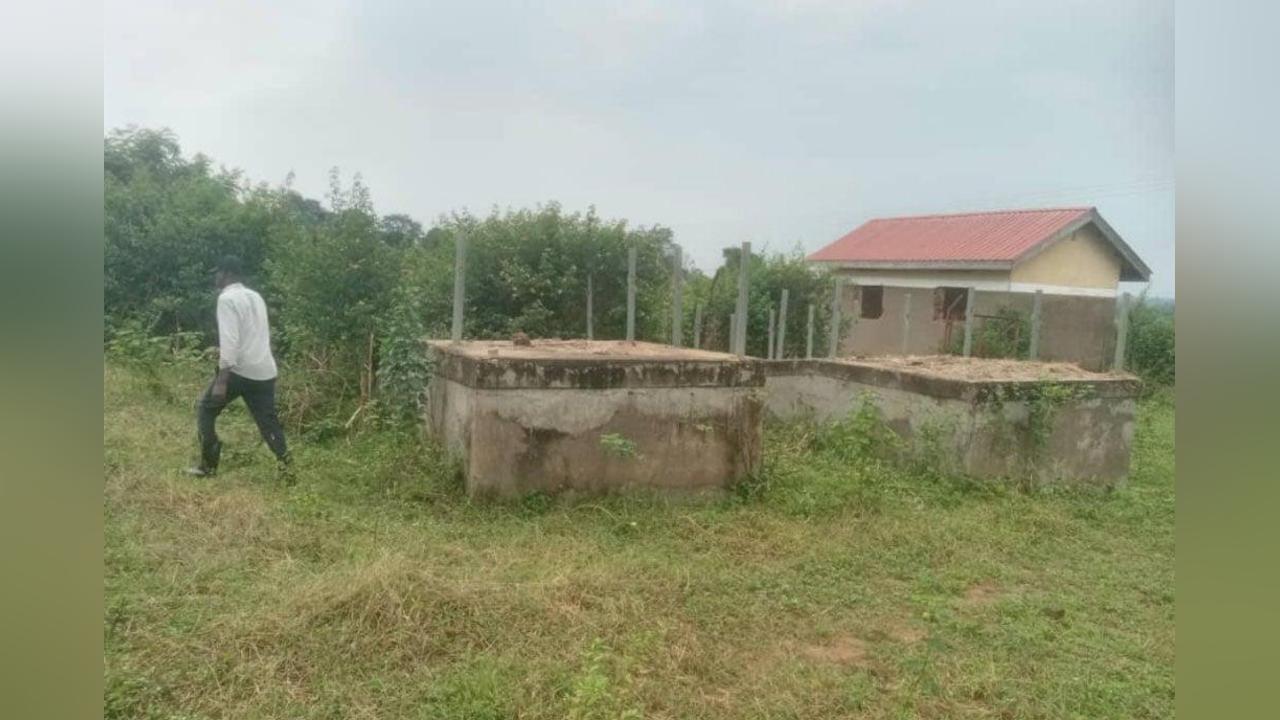
Africa-Press – Uganda. Livestock farmers in Namutumba District are demanding for the functionality of their plunge dip which has been idle for the last 14 years.
The plunge dip was constructed in Nakyere Village, Namutumba Sub-county by the government during the 2007/2008 Financial Year under the Community Agricultural Infrastructure Improvement Programme (CAIIP).
It aimed at eradicating tick fever which was rampant in the area at the time and saw herds of cattle being subjected to free periodic dipping in water-based solutions containing pesticides.
However, the farmers say since the dip stopped functioning, there is increased tick fever among cattle in the area, which has resulted in the death of their animals.
Mr Richard Munyore, a resident of Bulamba Village in Nakyere Parish, who was contracted to man security at the dip, says it stopped working after the government failed to supply pesticides.
“The then Sub-county leadership supervised by the District Veterinary Officer (DVO) contracted individuals to take charge of buying pesticides, who also charged Shs2,000 for every animal which farmers deemed to be a lot of money at the time,” Mr Munyore said at the weekend.
He added: “The dip worked for only one year and seven months, after which the contractor left because he was not realising any profits. Also, the contractor lacked information and did not receive guidance from DVO regarding the recommended dosage of pesticides and administrative guidelines.”
Mr Moses Musota, a resident of Bulyabwita Village, describes cattle dipping as “the best and effective way of treating tick fever among cattle” because it does not “injure” them, unlike injections which are not yielding results.
“Today, if you want to treat parasites which infect cattle skin, you buy separate chemicals which are expensive yet 14 years ago, cattle were immersed in chemicals and all parasites died,” said Mr Musota.
Justification
Mr Mathias Mwidu, another livestock farmer, who resides in Nawansagwa Village, Namutumba Sub-county, says they are now ready to pay for the dipping fees because they know its importance.
“Our appeal goes to the government to forgive those who mismanaged the dip and revamp it for the betterment of livestock farmers. It is not good for government projects to lie idle because it affects the targeted beneficiaries,” Mr Mwidu added.
According to him, the non-functionality of the dip does not only affect livestock farmers, but also the government since it was a source of revenue.
Mr Samuel Gusango, the Namutumba Sub-county LC3 chairperson, says besides the government ceasing to send pesticides, the effectiveness of the dip reduced because it was not managed collectively by leadership at the time.
He said: “Immediately after the dip ceased functioning, people started stealing materials like wire (fence) and timbers which were used in roofing. It is true the dip broke down, but rehabilitating it now costs a lot of money because everything on it was vandalised by the community.”
Mr Gusango further explains that rehabilitating the dip is the work of the Sub-county, which unfortunately lacks money. “Non-functionality of the dip has become a public outcry because of the increased number of cattle in the area,” he says.
Mr Hassan Mbogo, the Parish Councilor representing Nakyere Parish, however, says Nakyere Village has two huge government projects which were constructed under CAIIP, but both collapsed because the government allegedly failed to fund them.
“Besides the plunge dip, we have a milk cooler machine which was constructed a few metres from the dip, but is rusting away. This is taxpayers’ money and there must be value for it,” he said.
The Namutumba District LC5 chairperson, Mr David Mukisa, says the government is aware of all the projects which are not functioning and plans to revamp them according to their need.
According to him, this specific CAIIP project collapsed because of a number of reasons ranging from poor management and few cattle to sustain it.
“We are aware of challenges and hardships livestock farmers are going through to treat tick fever because pesticides are very expensive, but we request them to make the use of the available Veterinary and Agricultural Officers as we wait for the government. It is not the government losing, but them (farmers).”
For More News And Analysis About Uganda Follow Africa-Press