By Faridah N Kulumba
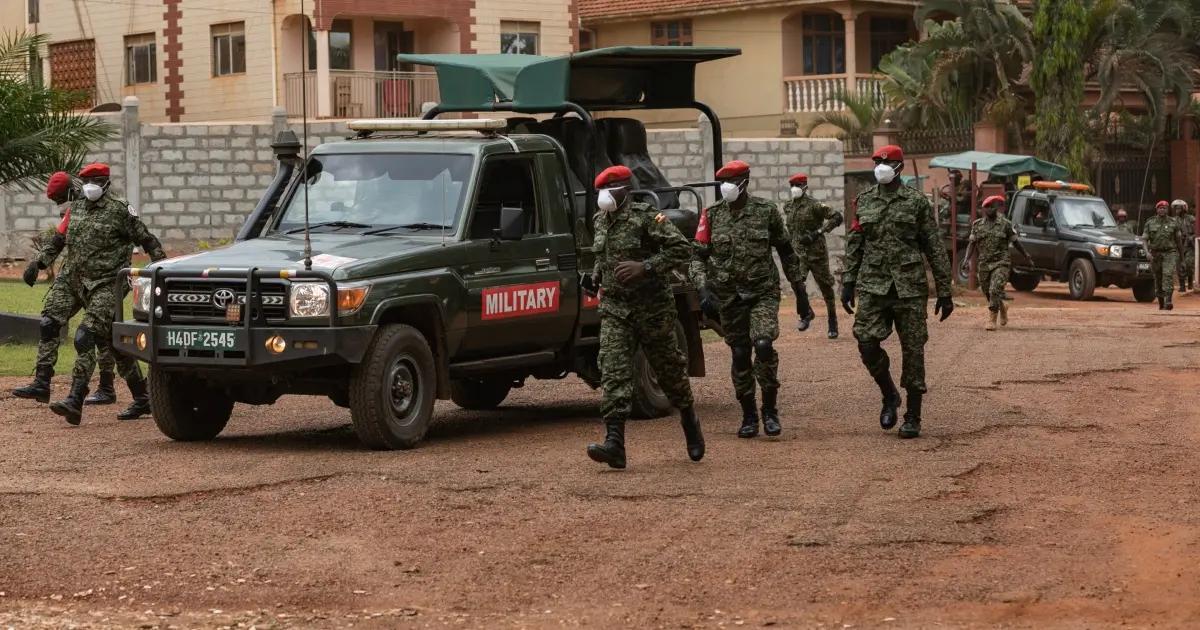
Africa-Press – Uganda. Uganda’s Supreme Court on 31 January 2025, ruled that the General Court Martial (GCM) has no jurisdiction to try civilians, declaring its involvement in such cases unconstitutional. The Supreme Court’s ruling comes in response to an appeal by the Attorney General challenging the Constitutional Court’s 2021 decision, which had declared Sections 2, 119, and 179 of the Uganda People’s Defence Forces (UPDF) Act unconstitutional. The previous provisions had allowed the military court to prosecute civilians under specific circumstances.
Judges statement
The landmark decision, delivered by Chief Justice Alfonse Owiny-Dollo, upholds a Constitutional Court ruling that had nullified military trials of civilians, dealing a blow to the government’s longstanding position on the matter.
“The General Court Martial is a military organ with limited jurisdiction,” Justice Elizabeth Musoke stated in concurrence. “The cases that may be tried there are limited to discipline, and the nature of punishment is confined to disciplinary measures. It does not have general judicial functions.” Justice Percy Night Tuhaise was unequivocal in her stance, asserting that “all prosecution of criminal offenses should be done by the Director of Public Prosecutions (DPP). Justice cannot only be done but must be seen to be done.” She pronounced the GCM incompetent to handle judicial matters, emphasizing that its members lacked the legal qualifications to guarantee fair trials. The decision made by the judges highlighted fundamental concerns over the military court’s lack of independence and impartiality. Justice Catherine Bamugemereire noted that the GCM “is not a subordinate court and lacks essential features such as independence and impartiality.” Justice Musoke added that its jurisdiction “goes beyond the spheres of discipline,” rendering it legally unsound to try civilians.
Historical judgment
According to Uganda’s Supreme Court directive, the General Court Martial can only try members of the UPDF and only in cases of disciplinary offenses. “Where a military court determines that a case requires imprisonment, the file shall be forwarded to the DPP for prosecution in a competent court,” the ruling stated. The ruling is expected to have far-reaching implications, with legal experts urging the government to undertake necessary reforms to align the military justice system with constitutional provisions. Chief Justice Owiny-Dollo also took the opportunity to address public criticism of the judiciary, particularly accusations of judicial inefficiency in politically charged cases. “If you know arithmetic very well, you will see that these have been eight months, not four years,” he said, dismissing claims that the judgment had been unduly delayed. Dolo defended the judiciary’s independence, stating, “Insulting and attacking judicial officers is no way to engage in discourse. Criticism should aim to improve the system, not undermine trust in institutions.
In summary
*No civilian should ever be tried in court martial.
*Court-martial is a disciplinary tribunal only for enforcing discipline.
*Officers and men of UPDF should not be tried in court martial if it’s not an indiscipline case.
*Court-martial has no powers to send someone to prison or convict anyone because its members are not judicial officers.
*Court martial can only give punishments like reducing the rank, dismissal from the army but not acting judiciously.
*All types of cases, save for servicing military officers’ indiscipline, should be handed over to the DPP’s office.
*All people who were convicted by the Court Martial and are still serving, their cases are to be reviewed by competent courts.
*Court Martial cannot be independent because it is composed of military officers, appointed by the Commander in Chief, and in their oath, they swear to protect him.
*But if one was sentenced and completed the punishment, this judgment shall not work retrospectively.
Government’s Defense
Uganda’s Attorney General Kiryowa Kiwanuka, who had defended the government’s position, argued that the GCM’s jurisdiction over civilians was justified for national security reasons. However, the justices found no constitutional basis for this argument.
Opposition reaction
The head of the main opposition party in Uganda the National Unity Platform (NUP) Robert Kyagulanyi alias Bobi Wine issued a statement on his X account that was welcoming the Supreme Court. “We welcome today’s Supreme Court ruling stopping the trial of civilians by the military courts-martial. For years, we have condemned these inherently unfair trials, which have been a key weapon of persecution wielded by the regime against its opponents. Since 2020, over 2,000 NUP supporters have been abducted, tortured and subjected to sham military trials,” said Bobi Wine. He added that the current judgment vindicates the cries of thousands who have been suffering illegal prosecution before these kangaroo courts and reaffirms what we have always said—civilians must be tried by civilians.
Bobi Wine also welcomes the Court’s directive that all pending cases against soldiers, which should rightfully be tried in civil courts, must be transferred to those courts. This issue is critical because even serving army officers deserve fair trials under a transparent and independent judicial system. No one—civilian or soldier—should be subjected to a sham judicial process. He added that they hope that this ruling, which came as a pleasant surprise to the vast majority of citizens, is the first step for the judiciary to cleanse its image, which has been overtime grossly soiled by its inability to hold true to the tenets of judicial independence and impartiality. The judiciary must prove that the Supreme Court’s decision is not an exception to the norm but the beginning of consistent and impartial justice for all Ugandans. According to Bobi Wine, Ugandans deserve a judiciary that upholds constitutional supremacy and the rule of law at all times, regardless of who is going to be affected by the outcome of the decision made. “We reiterate our call for the immediate release of all political prisoners, including Dr. Kizza Besigye and his colleague, Hajj Obeid Lutale Kamulegeya, as well as the National Unity Platform prisoners of conscience who include Agaba Anthony (Bobi Young), Yasin Ssekitoleko (Machete), Kato Umar, Patrick Mwase, Sharif Kalanzi, Joseph Muwonge, Abdallah Kintu, Umar Kato, Kavuma Musa, Jimmy Galukande, Gibusiwa Abdallah and countless others who remain behind bars,” he added. Bobi concluded his statement by saying, “Aluta continua. Uganda will be free! Every small victory along the way matters”. The court ruling came in time when lawyers of the former president of Forum for Democratic Change (FDC) Dr Besigye and his colleague who were abducted from Riverside Apartments in Nairobi, Kenya by Ugandan military personnel, allegedly with the complicity of Kenyan authorities are opposing their clients being tried in the court martial. On 20th November 2024, Besigye appeared before the Uganda People’s Defense Forces (UPDF) General Court Martial on four counts related to security and was remanded to Luzira prison to date.
For More News And Analysis About Uganda Follow Africa-Press