
Africa-Press – Zambia. By Chimwemwe Mwanza
The new year is still in infancy yet the disinformation mill across Zambia’s political divide is already in overdrive showing no signs of abating. Despite the copious amounts of information dominating our discourse, truth is in short supply. As the adage goes, lies have short legs and often carry punitive consequences once uncovered. This old-age aphorism provides the biggest incentive for truth yet politicians serving in both government and the opposition and who supposedly carry a weightier responsibility to truth still feel no compunction for lying.
This reminds of Amilcar Cabral – that doyen of sound leadership whose caution to his peers still finds resonance in contemporary politics. ‘Tell no lies and claim no easy victories,’ was his refrain. Straight to the point, why is Information Minister Chushi Kasanda trying to hoodwink the public to believing that the so-called unbundling or rationalisation of state-owned entities is nothing but an exercise in futility? Far from it, this process has an endgame.
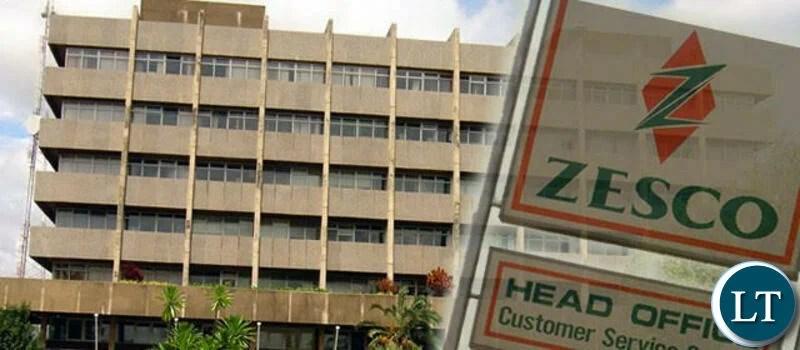
Call it by any other name, privatisation is back. If the state has its way, Zesco and Indeni will soon be on the chopping block in readiness for sale to interested equity partners. Konkola Copper Mines (KCM) will follow suit and so too will Mopani Copper Mines (MCM) among a raft of other ailing parastatals. It’s troubling then that government is failing and lamentably so to articulate a concise position ceding the high moral ground to scaremongers. Is there reason then for government’s spirited attempt to spin the obvious?
It’s true that Zambia’s electorate abhors privatisation cited for eroding the country’s industrial base which in turn resulted in extensive job losses in the early 90’s. Today, odors of unemployment, and poverty characterise most towns on the Copperbelt – once the country’s manufacturing hub. Against the temptation to pronounce on his complicit or innocence there-off, it’s indisputable that the ghost of privatisation and alleged profiteering from sale of state entities still haunt the incumbent President.
This may well explain the state’s lackadaisical approach to facts on the fate of these firms. To what extent then is buttressing the truth helping government? You wonder. The steady erosion in public trust on this issue is largely the result of a yawning gap for truth. This has also created a window for perceptions to fester. Don’t forget. In politics, perceptions equate to reality. It shouldn’t, therefore, surprise if speculations of possible ill-motive or corruption begin to circle this process.
The painful reality though is that these moribund parastatals require fixing. And Finance Minister, Situmbeko Musokotwane ought to be forthright; perhaps he should assume a lead role in communicating the rationale behind the imminent sale of these firms. There is no need to defend the indefensible. A spade is a spade and can’t be called a big spoon by any stretch of imagination.
Some questions. Other than rubbishing a process that could potentially save these companies, have critics thoroughly interrogated the rationale for privatisation or are they merely opposed to the process because a much-maligned global financial lender has asked the state to reign in on these companies’ financial drain to the fiscus?
And so what if the sale of these entities is being instigated by the International Monetary Fund (IMF) as a conformity to the recently signed staff level agreement (SLA). Is it not fact that Zesco, Indeni, KCM and MCM can’t function without cash injections from the state? How sustainable is it for the state to keep pumping money into bottomless pits? Isn’t this hostility a classic example of shooting the messenger and not the message.
Paradoxically, critics of the sale of these firms served in previous governments yet failed to provide tangible solutions to save these companies. Truth is that fundamentals on the demand and supply side have changed. As such, Zesco’s nearly 40-year-old business model in which the power utility owns the entire value chain from generation, transmission and distribution is obsolete.
Forget load-shedding, the generation side of its business is battling to meet demand and even when it has excess capacity from independent producers such as Maamba Collieries, its grid suffering from years of neglect is incapable of carrying excess load. For long, Zesco’s inefficiency has impeded economic development. Is there value in sustaining a monopoly that can barely keep the lights on?
Splitting this company into three independent firms which would be generation, transmission and distribution with the state maintaining a majority stake in each of the new entities is worthy a consideration. Laden with massive debt, this firm is in desperate need of recapitalisation which can only be offered by new investors. Unbundling Zesco will also create competition and allow for new players including those in the renewable energy space to enter the market. Need we explain more?
What purpose has the liquidation of this company served except to decimate more jobs in a town battling severe unemployment? Government should simply hand back the company to its rightful owners and negotiate a new service level agreement (SLA). Vedanta may have breached contractual obligations but the state has no right to appropriate an asset that was rightly paid for by an investor. There is no better opportunity than now for government to re-engage Vedanta on fresh terms. Aside from a few controversies that have dogged the company over the years, Vedanta has some of the best run mining entities spread across the globe – all the state requires is to enforce a win-win SLA.
The prognosis for MCM looks dire which perhaps explains why its majority shareholder Glencore opted to flee this investment after depleting much of the company’s ore body at the Nkana and Mufulira mines. The remnant ores at the two mines, occur at great depth and is too costly to extract. At Mufulira mine alone an unavoidable investment of US$300 million is required to continue with operations.
Against competing needs of the public, does the state have the luxury of spending such money on a single mine? Even a zero-tax rate demanded by mining houses won’t wash away MCM’s liquidity crisis. A similar situation pertains at KCM’s Konkola mine (ore at Nchanga is virtually exhausted). The less written about Indeni the better.
So why should the government keep such cash guzzlers in its fold instead of selling them to investors that are willing to sweat and turn these assets to profitability?
Mwanza is an avid reader of politics and philosophy. A supporter of Liverpool FC and Kabwe Warriors, he now enjoys goat meat. Best wishes of 2022 to you LT bloggers. For feedback, email [email protected]
For More News And Analysis About Zambia Follow Africa-Press