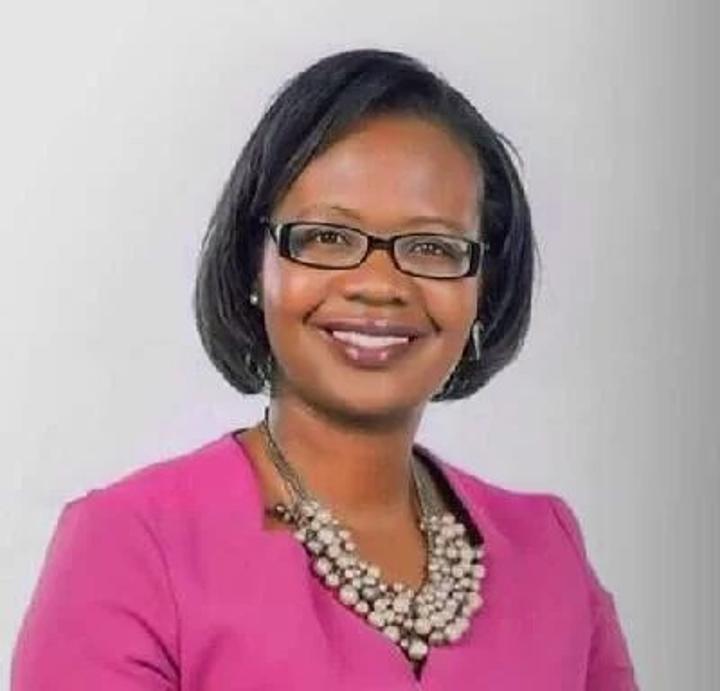
Africa-Press – Zambia. CHAPTER One Foundation says Civil Society Organisations have taken the Zambian government to the African Commission for Human Rights over the Constitutional Court’s dismissal of petition on the lack of equal representation, seeking its opinion. And Chapter One Foundation says lack of diversity in appointments to public office has deteriorated under the UPND government.
Speaking during a joint press briefing by Chapter One Foundation and Young Women in Action in Lusaka yesterday, Chapter One Foundation executive director Linda Kasonde charged that the situation of appointing women, youths and persons with disabilities had deteriorated under the UPND administration.
Kasonde said of the 24 cabinet ministers President Hakainde Hichilema appointed after winning the August general elections, only four were women, while there was no youths and persons with disabilities. She said of the 10 provincial ministers, only one was a woman and no youths or persons with disabilities.
“Zambia’s Constitution presently requires, in Article 259 (1) (b), that any person empowered to nominate or appoint public officials must ensure that fifty per cent of each gender are nominated or appointed from the total available positions unless it is not practicable to do so. Appointing authorities are also required under Article 259 (1)(c) of the Constitution to ensure equitablerepresentation of youths and persons with disabilities where they qualify,” Kasonde said.
She said the Constitution further empowers the President to appoint Cabinet ministers from within Parliament and to nominate eight members of parliament under Article 69 where the President considers it necessary to enhance the representation of special interests, skills, or gender in the National Assembly.
She disclosed that in 2020, Chapter One Foundation, Young Women in Action and another civil society organisation petitioned the Constitutional Court under cause number 2020/CCZ/0013 over the lack of representation of women, youth, and disabled persons appointed to public office by the previous Patriotic Front government.
She said under former president Edgar Lungu, of the 10 provincial ministers he appointed, none were youth, female, or persons with disabilities. She said out of the 30 cabinet ministers, only nine were female, with no youth, and no persons with disabilities.
Kasonde said in the petition, the CSOs highlighted the fact that of the 164 members of parliament, only 29 were women while in President Hichilema’s cabinet of thirty positions, only nine were women, without any youth and person with disability.
She said from the eight nominated members of parliament, Lungu only nominated two women, with no youths or persons with disabilities. Kasonde explained that arising from that, CSOs argued that Lungu in his appointments and nominations failed to uphold his obligation to ensure gender parity and equitable representation of youths and persons with disabilities.
She indicated that on August 18, 2021, the Constitutional Court dismissed the petition. Kasonde explained that the Constitution Court found that the power of the President to appoint members of cabinet was discretionary.
“The Court was of the view that the petitioners bore the burden of proving that it was practical to appoint an equal number of women and men but had failed to do so,” Kasonde said.
She disclosed that the Constitutional Court was the only Court with jurisdiction to interpret the relevant provisions of the constitution and that its decisions on constitutional matters were not appealable as it was a final court. Kasonde said the dismissal of the petition meant that the petitioners had exhausted possible remedies in Zambia.
“We believe that following the interpretation of the provisions of Articles 259 by the Constitutional Court, the current position of the Law in Zambia with regard to diversity in appointments to public office is in breach of Zambia’s treaty obligations under the African Charter on Human and People’s Rights and the Maputo Protocol which guarantee non-discrimination and the rights of all persons to participate freely in the governance of their country,” Kasonde said.
She said the CSOs had referred the matter to the African Commission on Human and People’s Rights for their opinion. She further disclosed that CSOs hoped that the communication to the African Commission would clarify the standards of compliance required by a member state to the aforementioned treaties as regards diversity in representation in public office.
For More News And Analysis About Zambia Follow Africa-Press