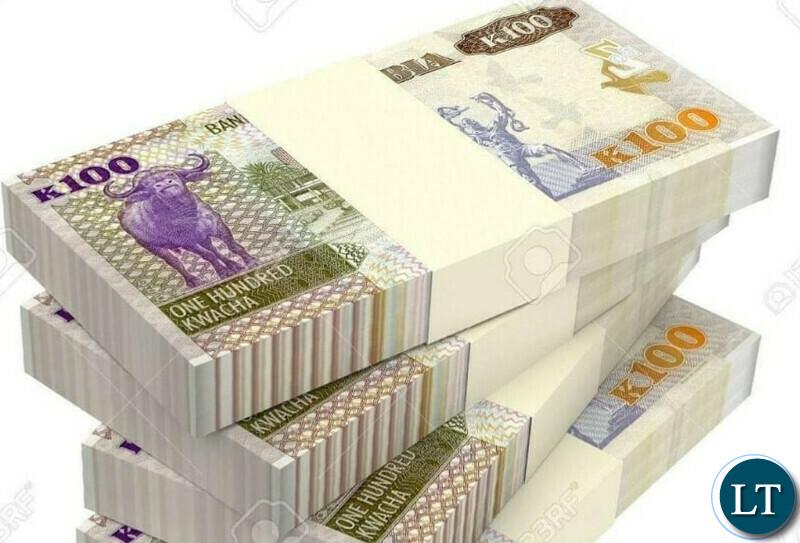
Africa-Press – Zambia. Social Economist and marketing expert Kelvin Chisanga says the Kwacha’s instability and continued depreciation against major world currencies such as the US Dollar can be restrained by increased exports.
According to Absa Bank daily indicative rates, the Kwacha was on Tuesday buying the US Dollar at 18.3087 and selling at 18.6598. Almost around the same period last month, the Kwacha was buying the US Dollar at 16.9709 and selling at 17.2963
The local currency started going down with a significant margin around 14th January when trading between 16.9709 and 17.2963 against the US dollar In a written statement, Mr. Chisanga said trade imbalance is one of the major reasons the Kwacha is losing value as Zambia continues to import more than it exports. He said there is a need to come up with a deliberate policy aimed at boosting exports away from the traditional copper and its by-products.
“The Kwacha’s challenging performances can be moderated by a stronger export-driven policy. Zambia should aspire to formulate an export-led facility growth policy to help on the balance of trade especially targeting strongly on commodities outside copper, if we are to drive a sound diversification in policies, we should firmly centre our focus on promoting non-traditional export especially if we are to put all our arsenals on agricultural products, we can drastically increase the export base to facilitate conducive macroeconomic conditions for this country,” Mr. Chisanga said.
“The proposed policy formula can ultimately stimulate an increase in the domestic production sectors by widening local manufacturing activities with aims to improve on the export market, thereby creating an economic multiplier effect which will eventually push through some good employment numbers and can actually also increase values on the gross domestic product (GDP) though that cannot be taken as an immediate cause but with time it will look a positive undertaking,” he said.
“The main idea behind the IMF pushing most developing economies to embrace their prescription is that countries should aim to maintain a relatively stable or low exchange rate which helps such targets (countries) to build up on foreign reserves, and this can equally serve as a cushion against such futuristic financial shocks,” he said. Mr. Chisanga observed that the depreciation of the Kwacha is further pushing the inflation rate up.
“Kwacha’s current challenges are mainly due to trade differences that are existing between import and export, at the moment the country is seen importing more volumes in terms of numbers of goods compared to the volumes of export moving out of our borders to regional markets. This is the bad case which will always promote inflation to shoot up from the target range especially if it is left unchecked by various stakeholders.”
“However, we can improve the economy by restoring balance of payment equilibrium especially through an increase in the value of our exports, import reduction by using the local industrialization policy to make certain controls, and impose a moderate custom duty for undesirable goods and services in the country through our revenue offices which may be a bit difficult to implement with a poor political will, looking at a slow-pace of some economic activities being experienced,” he said.
Mr. Chisanga said the rise in demand for foreign exchange always exceeds its supply thereby causing the Kwacha to depreciate. “Unfortunately, we are importing mostly finished products with the scarce foreign exchange at slightly higher cost at present. This means that imports and exports are sinking the power of Kwacha, subjecting it to some ‘pressure’ since available foreign exchange is always less than what is required to make on our numerous consumable imports. The export base is so narrow that it can’t be equivalent to the import bill.”
He concluded: “Technically speaking, the rise in demand for foreign exchange always exceeds its supply, and by nature the law of demand and supply, the Kwacha must fall, a case at the moment which can be looked upon with a strong and deep sense of change in policy to steer economic growth and bring about sustainable means.”
For More News And Analysis About Zambia Follow Africa-Press