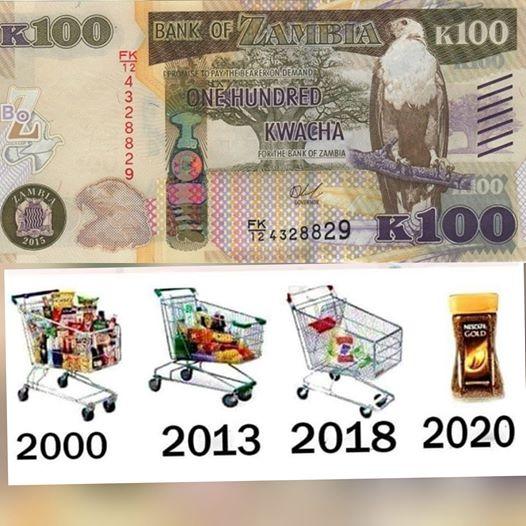
Africa-Press – Zambia. The weakening of the Zambian Kwacha against the US Dollar is causing concern among advocacy groups in the country. The Advocates for National Development and Democracy (ANDD) have noted the negative impact that the depreciation is having on the economy and have expressed their worries publicly. The rise in the cost of doing business and the subsequent increase in the prices of basic commodities have made them unattainable for ordinary citizens. As a result, small businesses are shutting down, leading to mass unemployment and potential further economic struggles.
The Executive Director of ANDD, Samuel Banda, has called on the government to unlock the mining sector, which accounts for a significant portion of the country’s Gross Domestic Product and is its main foreign exchange earner. Mr. Banda stressed the importance of a strong Kwacha, especially in an import-driven economy, as it is necessary to avoid plunging the country into deep poverty and food insecurity. In a statement to the media, Mr. Banda said, “A strong Kwacha is a necessity for the current economy that is import-driven. Without a solution in sight, there is a risk of the country plunging into deep poverty as even food security will be a challenge due to the high costs of agriculture inputs.”
The sharp drop in the Kwacha is putting upward pressure on inflation, with consumer prices rising 9.9% this month compared to 9.8% in November. The depreciation of the currency is partly due to slow progress in debt-restructuring talks with creditors, and this, combined with the uptick in inflation, may prompt the Bank of Zambia to raise interest rates for the first time in over a year at its February meeting. Interim Statistician-General Mulenga Musepa stated, “The cost of transport outpaced other price increases.”
The uptick in inflation and the decline in the currency may persuade the Bank of Zambia to raise borrowing costs at its February meeting after maintaining the benchmark rate at 9% this year because of a downward trend in price growth. Annual inflation, which the MPC expects to average 8.5% next year, has been above the bank’s 6% to 8% target since May 2019. Food inflation decelerated to 11.9% this month from 12.1% in November while non-food price growth accelerated to 7.3% from 6.7%. Monthly inflation quickened to a 10-month high of 1.1%.
The weakening Kwacha is causing serious concern among advocacy groups in Zambia and its impact on the economy and ordinary citizens cannot be underestimated. The government and relevant stakeholders need to act promptly to find a solution and avoid further economic turmoil. The ANDD’s Executive Director, Samuel Banda, summarized the situation best when he said, “The gradual strength of the Dollar against the Kwacha has led to a significant rise in the cost of doing business, mostly due to the rising cost of importing goods and services. This has had a direct effect on the rising prices of basic commodities beyond the reach of ordinary citizens. In addition, the country has witnessed small businesses shutting down leading to mass unemployment, a situation that if left unchecked will lead to untold misery among the populace.”
For More News And Analysis About Zambia Follow Africa-Press