Africa-Press – Zambia. The University of Zambia Students’ Union (UNZASU) has long been a significant voice for students, advocating for their welfare, academic rights, and social issues. However, over the past years, its role has increasingly been politicized.
It now seems that the priority objective of any incoming executive is to ingratiate themselves with the ruling party.
It is therefore, not surprising the first announced act of the newly elected executive is to pay a courtesy call at Community House.
The United Party for National Development (UPND) and its leader has made a lot of noise about youths, taken little action, in terms youth participation in key positions. It is almost as if they believe that after restoring meal allowances, they have locked in youth support not only at universities but countrywide.
UNZASU has historically been a platform for student activism, often engaging in protests and advocacy on issues like education funding, infrastructure, and governance.
Under Hichilema’s leadership, a new dynamic has emerged, where the ruling party has systematically aligned UNZASU with its political objectives, transforming it into a de facto political union.
One of the earliest indicators of UPND’s influence on UNZASU came during Hichilema’s time as an opposition leader. In 2015, former UNZASU President Steven Kyengula, accused Hichilema of sponsoring a protest by former University of Zambia students over unemployment. Kyengula claimed that Hichilema was exploiting unemployed youths to cause unrest, suggesting that the UPND was attempting to use student activism as a tool for political destabilization.
The influence has intensified after Hichilema’s election as Zambia’s president. With the UPND in power, the party has leveraged its influence to align UNZASU’s activities with its political goals. For instance, the UPND’s youth league, has reportedly established strong ties with student leaders at UNZA. Former UNZASU president Dickson Mutambo publicly endorsed Hichilema and offered support for Hichilema’s failed attempt to illegally amend the constitution.
The normal UNZASU that we all have known would have been on the side of the people and not of those working hard to destroy democratic principles. The highest learning institution is a place where future leaders ought to be developed. But what kind of a leader do you expect Dickson Mutambo to be, after presiding over an UNZASU that was largely an extension of the UPND.
Just yesterday his successor UNZASU President elect Mwanto Kabaso popularly known as general Shuwa Shuwa marched to community house. This and many other events show a dangerous pattern of the UPND turning UNZASU into one of their political branches.
Moreover, public events involving UNZASU have occasionally reflected UPND’s influence. For example, as exemplified by the celebratory march.
The transformation of UNZASU into a political union undermines its core mandate of representing student interests. The politicization of UNZASU, whether real or perceived, has significant implications for Zambia’s democratic landscape. Student unions are incubators for future leaders, and their alignment with any political party risks stifling independent thought and activism. The UPND’s influence, if unchecked, could erode UNZASU’s credibility as a neutral advocate for students, turning it into a mouthpiece for the ruling party’s agenda.
UNZASU is losing its independence. There is growing evidence that suggests union leaders are being sponsored using strategic mobilization, and policy-driven co-optation.
The union is increasingly seen as an extension of the UPND’s political machinery. It will be difficult for UNZASU to reclaim its role as an impartial advocate for students, if it does not navigate these political pressures carefully.
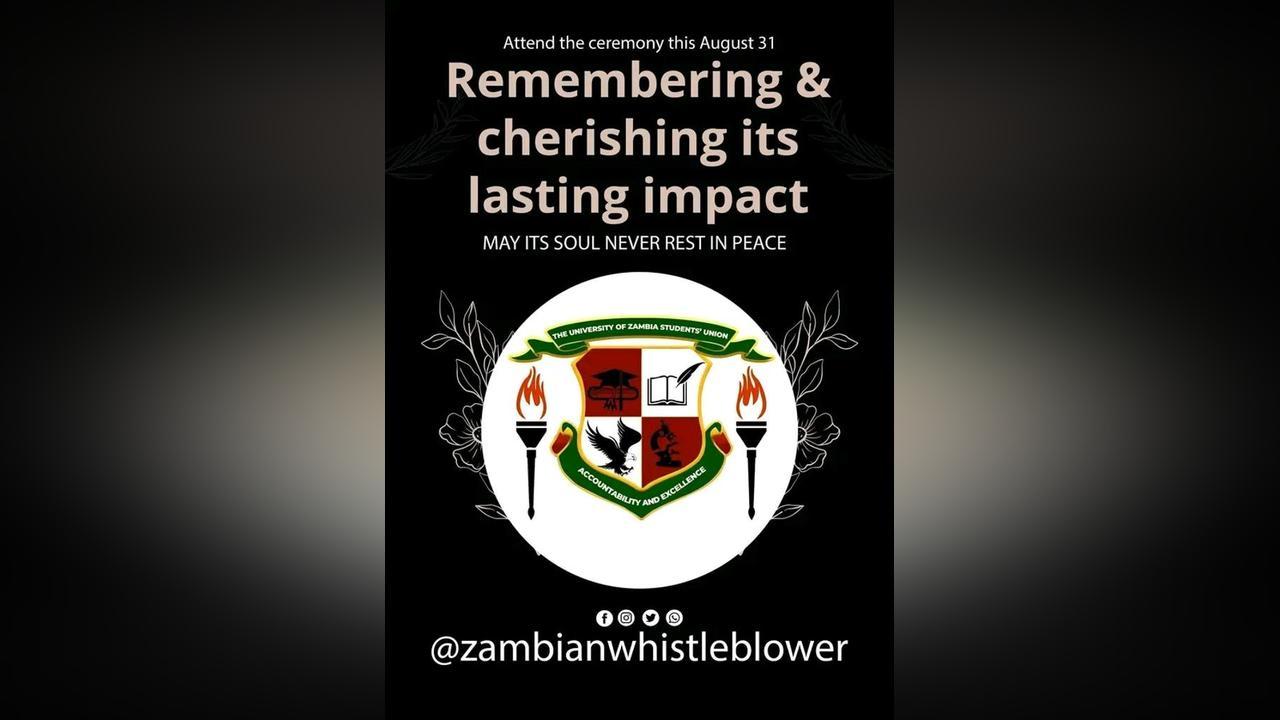
And if these warnings are not taken seriously the death of UNZASU will not just destroy the UNION but also destroy the reputation of the University as the UNION is an integral part of the welfare of students who must air their grievances and advance their interests without political censorship.
UNZASU leaders must ensure that their actions prioritize student welfare over partisan interests. As Zambia approaches the 2026 elections, the relationship between UNZASU and the UPND will remain a critical point of scrutiny, shaping the broader discourse on youth, politics, and governance in the country.
For More News And Analysis About Zambia Follow Africa-Press