Africa-Press – Zambia. The United States, under the administration of Donald Trump, has moved to re-engage Zambia with a proposed grant package of up to two billion dollars over the next five years, anchored on the principle of reciprocity rather than dependency. The offer signals a major shift in Washington’s Africa strategy toward transactional development tied to reforms, markets, and private capital.
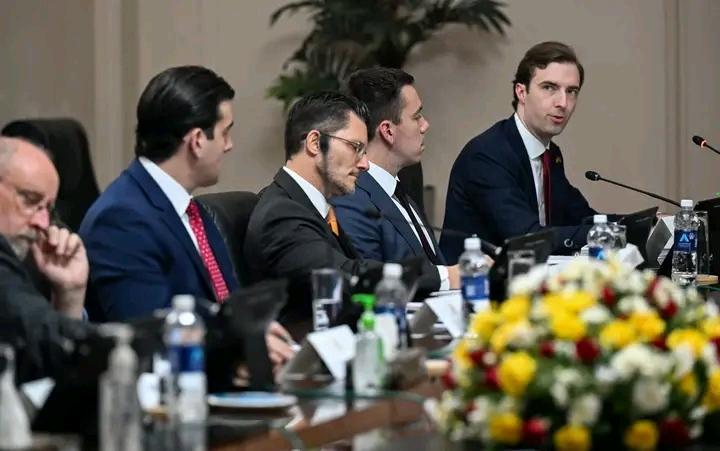
The announcement was made at State House during talks between President Hakainde Hichilema and visiting U.S. Assistant Secretary for Economic, Energy and Business Affairs Caleb Orr. Orr said the new assistance model is designed to “lock in systemic reforms and strengthen health service delivery in ways that permanently reduce reliance on foreign aid.”
At the centre of the package is a redesigned compact under the Millennium Challenge Corporation. Orr said the new framework will target agriculture productivity, farm-to-market road networks, mining logistics, and value-addition industries, with the goal of turning Zambia into a regional production and export hub rather than a raw-material supplier.
Crucially, the U.S. is tying the grants to Zambia’s ability to maintain a stable investment climate that attracts American private-sector capital. “We seek countries that create predictable conditions for U.S. businesses to invest, so growth becomes mutual, not one-sided,” Orr said, framing the new relationship as commercial diplomacy built on shared profit and system reform.
President Hichilema welcomed the shift, saying Zambia is “ready to reset relations with the United States on the basis of investment, growth and long-term economic transformation.” He said the government is eager to conclude arrangements that position Zambia as a competitive destination for capital in energy, agriculture, mining, and manufacturing.
The move is politically notable because Zambia was among African countries affected when Washington previously suspended or reassessed portions of its aid under Trump-era policy reviews. The new offer effectively reverses that freeze, but under tighter performance-driven conditions tied to reforms and market access.
For Zambia, the proposed $2 billion framework represents more than budget support. It signals restored credibility in Washington after years of debt distress, fiscal instability, and strained donor confidence. It also places Zambia squarely inside the new U.S. strategy of countering Chinese economic dominance in Africa through private-sector leverage rather than state-led aid.
What now follows is a high-stakes negotiation phase. The grants are not automatic, and disbursement will depend on Zambia hitting reform benchmarks, safeguarding investor confidence, and maintaining macroeconomic discipline.
The message from Washington is clear: aid is no longer charity. It is a contract tied to performance, profit, and power alignment.
© The People’s Brief | Tracey Shumba
For More News And Analysis About Zambia Follow Africa-Press