By zambianobserver
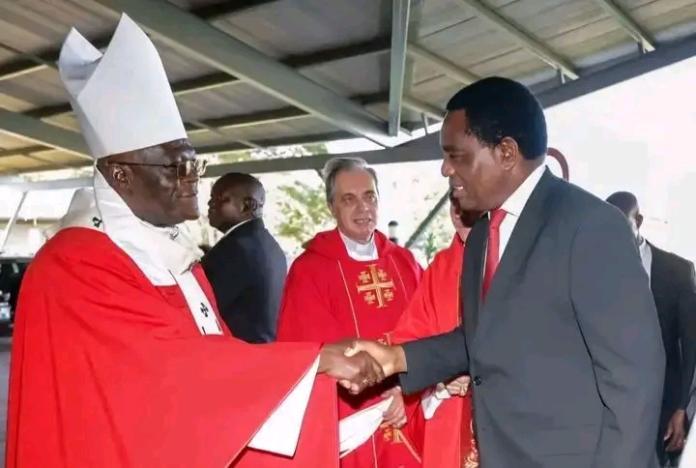
Africa-Press – Zambia. Zambia is drifting into a dangerous argument, one that confuses institutions with individuals and accountability with oppression. The summoning of Archbishop Alick Banda by the Drug Enforcement Commission has now been framed by sections of the opposition as a full-scale war by President Hakainde Hichilema against the Catholic Church.
This framing is not only inaccurate, it is intellectually dishonest and politically reckless.
Let us begin with the facts. The DEC has summoned Archbishop Banda in connection with a specific matter: a motor vehicle belonging to the Zambia Revenue Authority that was irregularly disposed of and later found in his possession. The Commission has stated, on record, that the summon is procedural, investigative, and not a charge. It is issued to a named individual whose name appears in official records, not to the Catholic Church as an institution. The vehicle is in DEC custody. The paper trail exists. These are verifiable facts, not political opinions.
What the opposition has done since is to deliberately blur this line. Statements from Fred M’membe, Harry Kalaba, and others recast a legal process into a religious crusade. Language such as “Calvary,” “carrying the cross,” and “war against the Catholic Church” is emotionally powerful but analytically hollow. It shifts the conversation from evidence to symbolism, from law to mobilisation. This is not accidental. It is strategy.
This is where the framing collapses. The Catholic Church is not Archbishop Alick Banda. No church, Catholic or otherwise, enjoys immunity from the law through its clerics. Across the world, Catholic priests, bishops, and even cardinals have been investigated, prosecuted, and convicted for financial crimes, abuse, and corruption.
The Vatican itself prosecuted Cardinal Angelo Becciu, once a powerful papal adviser, and sentenced him to prison. No one claimed the Vatican was persecuting the Catholic Church. Accountability of a cleric was treated as accountability of a person.
Zambia is not an exception to this global reality. Pentecostal pastors, prophets, and church founders have appeared in Zambian courts, some convicted and jailed. At no point did the nation erupt into claims that Christianity itself was under attack. The silence then, contrasted with the outrage now, exposes the inconsistency. If the principle is that summoning a cleric equals persecution, then every prosecution of a religious figure in Zambia’s history becomes suspect. This position is untenable.
The opposition’s narrative also suffers from selective memory. The Patriotic Front, now loudest in accusing the State of persecution, presided over an era in which public institutions were looted, assets irregularly disposed of, and state property handed out as patronage.
It was under PF that vehicles from ZRA and other agencies found their way into private hands. It is those very transactions that are now under scrutiny. To demand accountability while in power, then cry persecution when accountability arrives out of power, is not moral consistency. It is political convenience.
What is happening now mirrors an older PF habit: framing every challenge through identity. When Hichilema was in opposition, it was tribe. Tonga versus the rest. That framing poisoned national politics and permanently damaged PF’s standing in large parts of Southern Province and beyond. Today, the same logic is being repurposed. Not tribe, but religion. Not Tonga, but Catholic. It is the same tactic, dressed differently. And it carries the same risk of backlash.
The truth is simpler and less dramatic. Archbishop Alick Banda is a Zambian citizen. He has rights. He also has obligations. If his name appears in records relating to irregular disposal of public assets, the law requires explanation. Appearing before investigators does not strip him of his priesthood, nor does it diminish the Church’s prophetic role. It affirms a basic democratic principle: no one is above the law, and no one is beneath its protection.
Turning a summons into a street procession may energise supporters, but it does not answer questions. It also risks dragging the Church into partisan warfare, something the Catholic Church itself has historically resisted, even while speaking boldly on governance. The Church’s moral authority is strongest when it stands above political games, not when it is conscripted into them.
Zambia needs clarity, not confusion. The DEC must follow the law professionally and transparently. Archbishop Banda must be treated with dignity and fairness. And the opposition must stop weaponising faith to shield individuals from scrutiny. A church is an institution. A cleric is a person. Accountability is not persecution.
At The People’s Brief, our position is simple. Facts matter. Context matters. History matters. And truth is not improved by noise.
© The People’s Brief | Editor-in-Chief
Source: The Zambian Observer – The Zambian Observer
For More News And Analysis About Zambia Follow Africa-Press