Africa-Press – Zambia. THE ENERGY SECTOR BETRAYAL:
HOW PRESIDENT HAKAINDE HICHILEMA HAS FAILED WHERE HE ONCE MOCKED
By Michael Zephaniah Phiri Political Activist
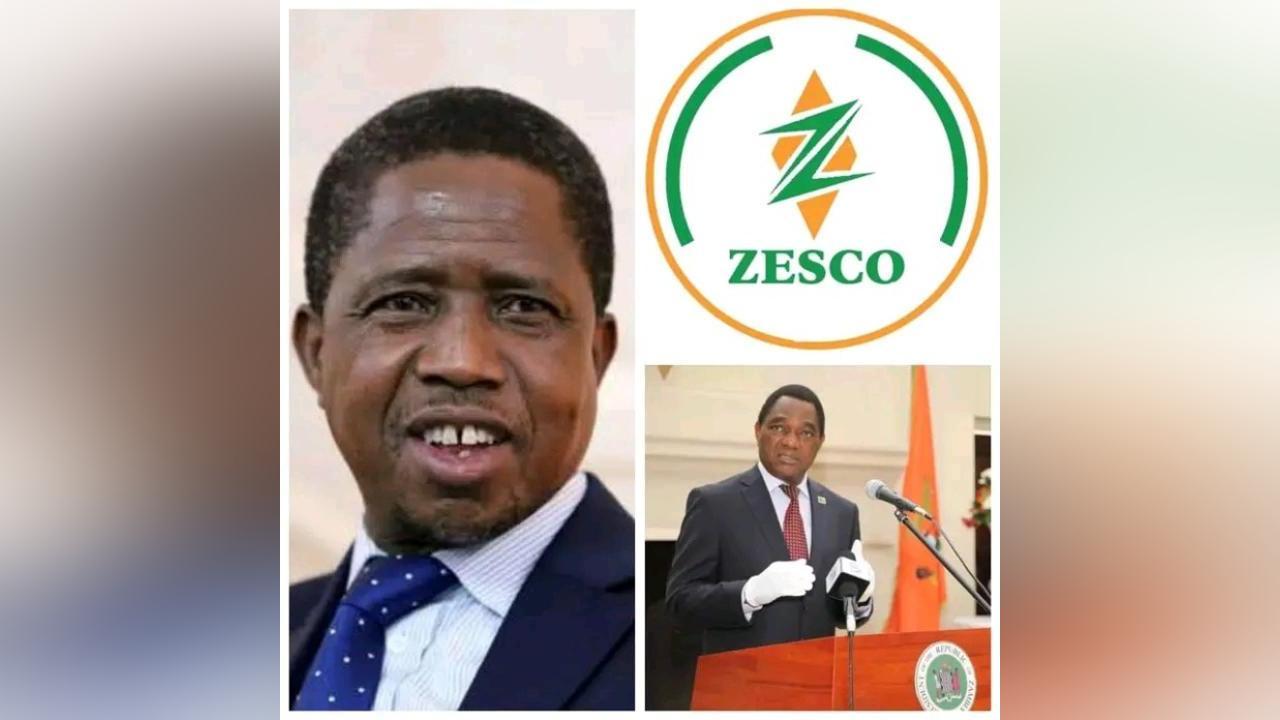
For years, President Hakainde Hichilema ridiculed his predecessor, the late President Edgar Chagwa Lungu, branding him a “visionless leader.” Today, history is judging harshly, and it is President Hichilema himself who stands exposed, particularly in the *energy sector,* where policy failures have plunged ordinary Zambians into deeper misery.
Under the Patriotic Front (PF) government led by President Edgar Lungu, Zambia certainly faced challenges. However, electricity remained *relatively affordable,* and tariffs were managed with an understanding of the *real lives of citizens,* especially small businesses, informal traders, and low-income households. Power supply disruptions existed, but they were not *prolonged for years,* nor were they accompanied by crushing tariffs that strangled productivity.
Fast forward to the UPND government.
For *four years and some months,* Zambians have endured *persistent load-shedding,* crippling Small and Medium Enterprises (SMEs) that form the backbone of the economy. Salons, barber shops, welders, tailors, small-scale farmers, poultry producers, internet cafés, and market traders have watched their businesses collapse not because they lack ideas or work ethic, but because *energy has been turned into a luxury instead of a public good.*
Today, the government boasts of “partially controlling” load-shedding. But at what cost?
ZESCO tariffs have become *punitive.* Electricity units are now so expensive that even when power is available, many citizens *cannot afford to use it.* What kind of success is this, where supply exists, but people are priced out?
This is not pro-poor governance.
This is economic exclusion.
Under PF, *K100 bought more electricity units.* Under UPND, the same K100 disappears quickly, while businesses remain idle, machines silent, and workers laid off. SMEs cannot grow. Some cannot even survive. When electricity becomes a burden rather than an enabler, development becomes impossible.
President Hichilema’s administration claims economic growth, pointing to stabilised exchange rates and improved macro-economic indicators. *But growth on paper is not growth in people’s pockets.* GDP figures do not cook nshima, pay rent, or keep a salon running during load-shedding. A strong kwacha means nothing when citizens survive on *less than two dollars a day.*
True economic growth gives *relief.*
It creates *opportunity.*
It allows citizens to do *business, expand, employ, and live with dignity.*
By these measures, the UPND government has failed.
Energy policy should empower production, not punish it. Yet today, Zambia has a government that lectures citizens about patience while ignoring the daily reality of suffering households and collapsing enterprises. This is not leadership with vision. It is leadership disconnected from the ground.
Ironically, the very president who called Edgar Lungu “visionless” now risks being remembered as *worse than all the last six presidents,* not because of rhetoric, but because of *results or the lack of them.* Vision is not found in speeches or statistics. Vision is found in whether people can work, trade, and survive.
As the nation moves toward *August 2026,* the message from the streets is growing louder:
Zambians are tired.
Tired of excuses.
Tired of suffering.
Tired of policies that benefit reports instead of people.
Many citizens are already saying it plainly:
Come August 2026, President Hakainde Hichilema *should go to the farm and rest* , because Zambia deserves leadership that understands that *energy is life, and without affordable,* reliable power, there can be no development only misery.
History will judge.
And it will judge by how people lived, not by what was claimed.
For More News And Analysis About Zambia Follow Africa-Press