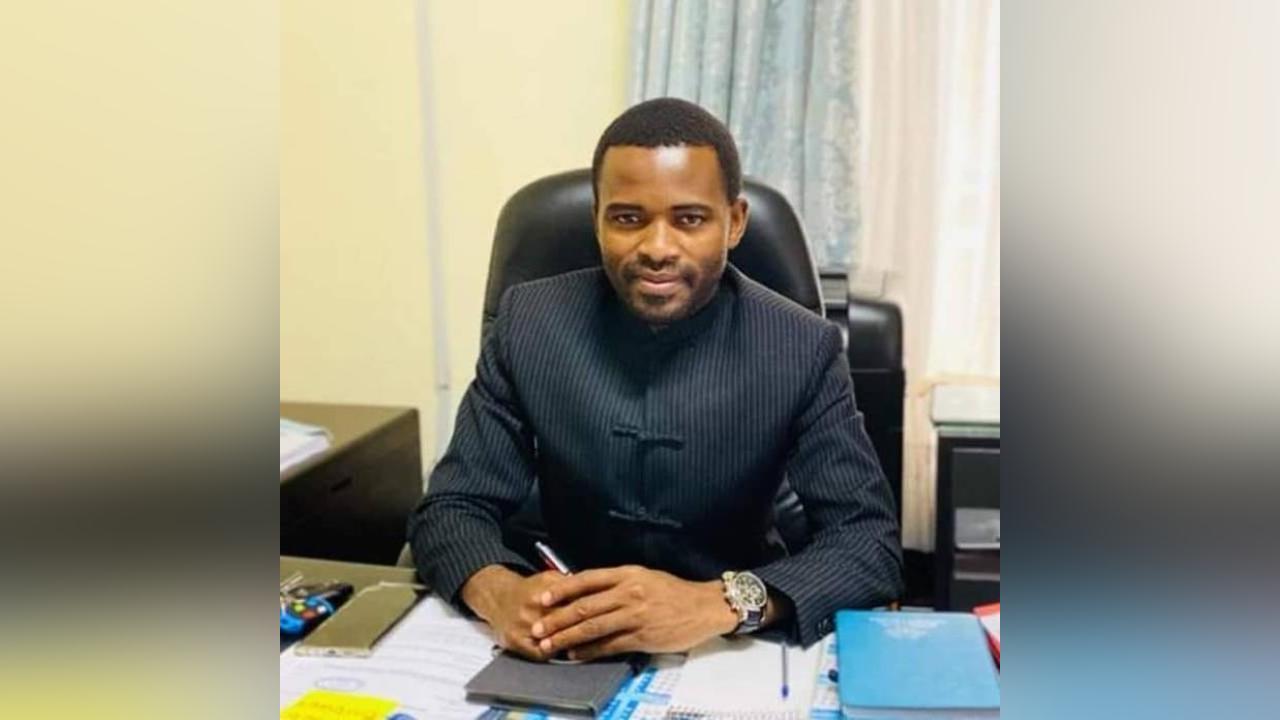
Africa-Press – Zambia. Dr. Chris Zumani Zimba’s appearance on the KBN Big Hour programme last night was not a routine interview. It was a sweeping political autopsy of the Patriotic Front, delivered by a man who once sat close to Edgar Lungu and now speaks from inside the Tonse Alliance faction led by Brian Mundubile, at a moment when the opposition has fractured into competing centres of authority.
Zimba’s message was blunt: PF did not merely lose power in 2021. In his telling, it lost itself.
He framed the former president’s final years as emotionally defined by what he called political treachery. “The Lungu family are among the most traumatized family as we speak today,” he said, arguing that betrayal and internal collapse drained the former leader long before his death. He returned repeatedly to one theme: Lungu could not accept losing PF to UPND, describing it as “one of the most political painful things for ECL.”
Zimba then presented what he called Lungu’s “Plan B” as a strategic escape route from PF’s legal and factional crisis. He claimed the former president had decided that Tonse Alliance would become the vehicle for 2026. “In May he confirmed that he had decided on plan B… and he said when I come back I’ll come and announce and we shall win 2026 on Tonse Alliance,” Zimba said.
The interview’s most striking passages were reserved for Miles Sampa, whom Zimba portrayed as the central villain in PF’s unraveling. He described him as “the man who sold PF from the hands of PF members,” adding: “How can a political Judas who transacted PF to UPND now become Tonse?”
Zimba argued that Sampa’s actions left Lungu politically stranded. “He never died as a PF as a happy PF president because PF was not given to him,” he said, insisting that the party machinery was already lost in factional warfare and court battles..
This is where Zimba’s narrative intersects with Zambia’s larger opposition problem: legitimacy.
He contrasted aspirants with Mundubile, claiming the Tonse leader now stands above the pack because he is no longer merely seeking leadership. “He’s a duly and a democratically elected presidential candidate,” Zimba said. He also suggested Mundubile carried implicit endorsement from Lungu himself, noting that on a hospital bed in South Africa, Lungu appointed him parliamentary affairs chairperson for Tonse. “The trust in BM… is coming from President Lungu before he died,” he said.
Zimba dismissed the Lubinda-led PF faction in unusually personal language, arguing that its expulsions and suspensions no longer carry institutional force. “Nobody takes them serious,” he said, calling them “political comedians and spoilers,” and portraying the faction as issuing commands that no one obeys.
The interview also advanced a controversial claim at the heart of Tonse’s internal dispute: that the alliance was built around a
n “ECL PF movement” rather than the PF party itself. “It was ECL himself in his individual capacity… as well as his movement,” Zimba argued, insisting Tonse was designed as a tailor-made platform once PF became compromised.
This is a politically consequential argument, because it attempts to shift legitimacy away from party structures and toward Lungu’s personal political estate. It is also precisely where Tonse’s contradictions widen.
Zambia’s alliances remain unregistered entities, often operating through borrowed party vehicles such as FDD or smaller partners. Zimba’s insistence that Tonse is owned by its founders, not anchored in formal party authority, highlights the unresolved legal question: who controls adoption papers, ballot access, and enforceable structures when elections arrive.
Zimba’s interview, in effect, was not just a defence of Mundubile. It was an attempt to rewrite the PF collapse as a moral story: betrayal on one side, succession planning on the other, and Tonse as Lungu’s unfinished rescue project.
But the political reality remains harsher than the rhetoric. Tonse itself is now split into rival conferences and competing claims. PF remains tied up in injunctions and factional control battles. Each camp invokes Lungu’s name as if proximity to his memory equals authority in the present.
Zimba spoke with certainty, but his certainty also exposes the deeper vacuum: Zambia’s opposition is still fighting over inheritance, not offering a settled alternative programme of government.
The interview was powerful, emotional, and politically loaded. It also revealed the core truth of this season: the opposition is no longer arguing only against UPND. It is arguing over who owns the ruins of PF, who inherits Lungu’s shadow, and whether Tonse is a solution or simply the next arena of fragmentation.
For More News And Analysis About Zambia Follow Africa-Press