Africa-Press – Zambia. For the past few years, Zambia and Lusaka in particular has experienced massive infrastructure development ranging from road construction to housing infrastructure to shopping villages to story buildings to airports to hospitals etc.
Lusaka being the capital city has by far, experienced a greater share of rapid infrastructure developed than any other province. This has not only changed the face of the city but also promoted social economic development. In fact, there is efficiency in conducting business.
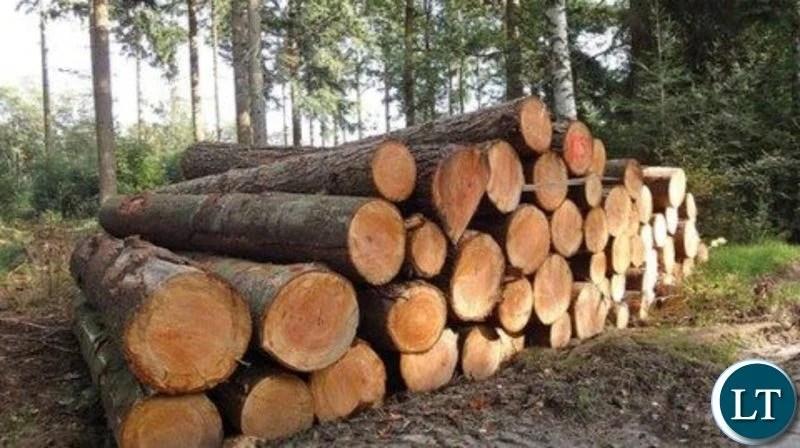
To reach to such an extent of infrastructure development on one hand, there is high demand for resources such as labor, finance and time including knowledge and information whether imported or not which has to be available. On the other hand, there is high need for raw materials such as cement, quarry, wire, steel etc. Even when all these raw materials matter, the allegedly favorable, common and hence priority construction material in Zambia is timber which supersedes all others in infrastructure development in Zambia. As long as there is construction taking place timber is a prerequisite raw construction material. Its demand is unprecedented. The increase in infrastructure development has drastically seen the increase in demand for softwood construction timber.
ZAFFICO being the major supplier of exotic softwood has run out of stocks to satisfy the huge market demand in the country. From about 2008 to 2014, ZAFFICO’s exotic timber replanting plan, pine in particular, was overrun by harvesting. This means that the company harvested more than it could replant. This formed a huge forest rotation imbalance which also created a huge shortage of timber on the market. As such, ZAFFICO decided to reduce the harvesting quantities of softwood trees to its customers and failed to satisfy the market demand of softwood which occured during the period of massive infrastructure development.
As a result, this prompted by then PF government to highly recapitalize ZAFFICO and embark on massive replanting of exotic trees by establishing exotic pine plantation and diversify to other products such as Jatropha in Mongu District and tea in Kawambwa District. This was done in an effort to improve the cash flow highly dominated by low revenues generated from low timber sales due to lack of timber stocks which also resulted from non-replanting of trees after harvesting. Poor forest management ravaged the tree stocking. This has a direct effect on infrastructure development.
Currently, the shortage of construction timber is not being felt because there is a cover from timber imports from Tanzania and Malawi acting as equalizers between demand and supply of softwood. Some timber traders and saw-millers have resorted to importing softwood wood from Tanzania and Malawi in order to keep their businesses afloat due to that ZAFICO reduced the quantity volumes of timber to supply to saw-millers and traders.
This is twofold effect in that; (1) Timber traders and saw-millers need to continue doing business to earn a living even in the absence of timber from ZAFFICO as a supplier (2) There is a huge market demand for timber and when ZAFFICO fail to satisfy the market, other sources such as Malawi and Tanzania supply chains become important and can jump in the loop and equalize demand and supply in both short and long term in order to avoid timber shortages. Without these import alternatives, there shall be serious shortages of exotic construction timber hence, infrastructure development will be crippled in Zambia.
My message to Saw-Millers Association of Zambia is that, please do not undermine and destroy the pine wood supply chains from Malawi and Tanzania as they are acting as market equalizers of softwood construction timber due to the fact that ZAFFICO alone cannot satisfy the current market of softwood. Saw-millers Association of Zambia must promote timber trade between Zambia and Malawi and also Tanzania so that the country can continue to have sufficient timber supplies for at least the next 15 – 20 years required for ZAFFICO to stabilize and be able to satisfy softwood timber demand on the market. It is disappointing to learn that the association is actually trying to disturb the good timber trade between Zambia and Malawi and Tanzania because of what I can call selfish interest. ZAFFICO in its current capacity has few timber stocks to give to all timber traders who apply for felling slots. The questions which we must ask are that where will the rest of saw-millers and timber traders who cannot be accommodated at ZAFFICO go? what will their businesses be? and what do they do to keep the timber industry vibrant? The only viable solution is to resort to timber imports from neighboring countries.
In fact, its high time the government reduced duty on softwood imports so that the price of timber can go down. This is for the fact that imported timber has to a greater extent contributed to skyrocketing prices of pine timber for construction due to the duty charged at the border. I strongly believe when duty is reduced or removed where possible, the price of softwood timber will be automatically adjusted downwards and this will trigger a positive effect on the construction industry as the cost of raw material will reduce. The author is a consultant: Water Resources and Environmental Management For comments and contributions: [email protected], 0977185727
For More News And Analysis About Zambia Follow Africa-Press