
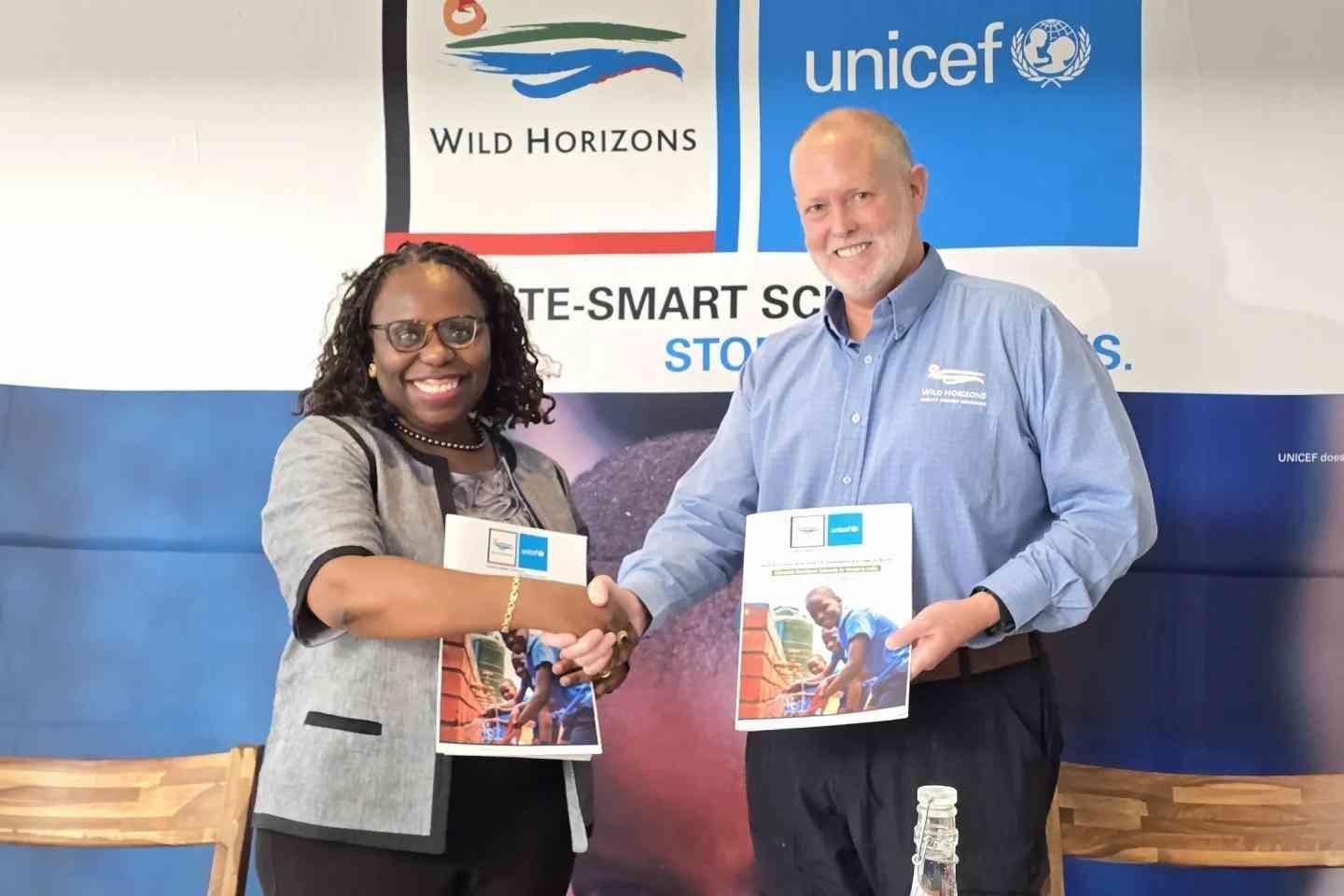
Africa-Press – Zimbabwe. UNICEF Zimbabwe and Wild Horizons have signed a Memorandum of Understanding (MOU) to implement climate-resilient solutions in schools near Victoria Falls.
The collaboration will bring clean water, renewable energy, and climate-smart infrastructure to children, teachers, and surrounding communities.
“This partnership is a powerful example of how business and development can come together to create sustainable solutions for children and their communities.
“By combining UNICEF’s child-focused programming with Wild Horizons’ commitment to protecting the environment and empowering communities, we are building models of climate resilience that can be scaled across Zimbabwe,” said Etona Ekole, UNICEF Zimbabwe Representative.
The partnership will implement solar-powered, multi-sectoral water systems in three schools: Mkhosana Adventist, Ndlovu, and Sizinda — with direct benefits for education, health, nutrition, and employment.
Building on Wild Horizons’ Corporate Social Responsibility programmes, which already supports 44 local schools, and UNICEF’s expertise in advancing children’s rights to education, health, safe water, and protection, the partnership is a game changer for learning centers in Victoria Falls.
Why This Partnership Matters
Schools in Victoria Falls face multiple challenges linked to water scarcity, climate change, and fragile infrastructure.
By introducing renewable energy-driven water systems, this collaboration will deliver far-reaching benefits across sectors.
By strengthening education and WASH, children will gain access to clean water, which will improve hygiene and menstrual health management, and reduce absenteeism, particularly among girls.
Improved water connections to nearby health facilities, including the Ndlovu maternity ward, will enhance maternal and child health outcomes.
At the same time, school gardens irrigated through solar-powered water systems will boost food security and promote climate-smart agriculture, equipping learners with practical knowledge on resilience.
The initiative will also create pathways for youth employment, as Wild Horizons provides training in solar and water technologies, empowering young people with skills for sustainable livelihoods.
“Wild Horizons is built on the foundation of community. This partnership with UNICEF allows us to expand that commitment—ensuring healthier schools, stronger families, and a greener future,” said Wild Horizons chief executive officer, Gary Archer.
“We are combining our resources and expertise to improve the lives of children and families while also contributing to environmental sustainability. Together we can create a model of resilience that inspires far beyond Victoria Falls.”
Broader Impact and Scale-Up Potential
This initiative supports the Ministry of Primary and Secondary Education’s Clean Green Zimbabwe Initiative and contributes to the national climate adaptation agenda.
It aligns with the Zambezi River Basin regional initiative, which spans eight countries and impacts over 41 million people.
If successful, this model could be scaled up to the 44 schools already supported by Wild Horizons and replicated across other provinces, complementing UNICEF’s ongoing collaboration with KOICA, FCDO, TUI Care Foundation, and Welthungerhilfe (WHH).
For More News And Analysis About Zimbabwe Follow Africa-Press