
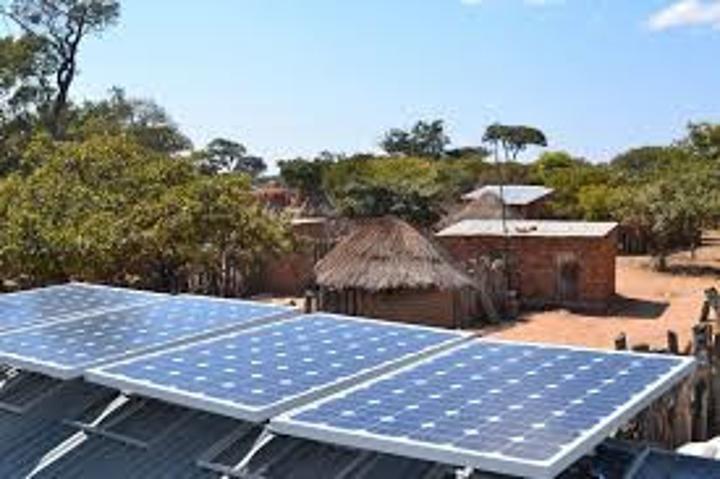
Africa-Press – Zimbabwe. CASES of gender-based violence have decreased within Chipinge district, particularly in Hakwata village, as the community is benefiting from projects implemented by the government in partnership with United Nations Development Programme and the UK Foreign Commonwealth Development Office.
The projects, bankrolled under the Climate Adaptation Water and Energy Infrastructure Programme (CAWEP) banner, have seen men and women equally benefiting reducing financial constraints.
Speaking to NewsDay, Privilege Sithole (25) said ever since she started participating in the loan facility bankrolled under CAWEP, life has taken a new twist.
“Domestic violence in my home is a story of the past. I and my husband are now able to have level-headed conversations since I now also contribute financially to the needs in our home,” she said.
Sithole said she started a small business that helped in paying fees for their school-going children.
For Betty Simango (42), the biogas project has brought peace in her home.
“Now I no longer tussle with my husband over household chores. Equality is slowly creeping in,” she said.
“Sometimes I come back tired from the fields and I find that my husband has already cooked since we now have gas stove in the house.
“We used to argue a lot over the time taken to prepare food, but now, we gladly help each other.”
Lovemore Hakwata (42), a welder, echoed similar
sentiments.
“It is now a different scenario from the past where men were left with the burden of caring for the family,” he said.
“Our women are now able to participate in various projects within the community
thereby bringing in streams of income.
“Poverty is slowly drifting away, therefore, we no longer fight over issues of provision.”
Over the years, there has been an escalation of gender-based violence against women in both rural and urban areas.
However, the incidence of GBV is widely considered to be underestimated globally, particularly in rural settings due to limited awareness of support mechanisms and lack of trust in service providers.
For More News And Analysis About Zimbabwe Follow Africa-Press