
Africa-Press – Zimbabwe. THE City of Harare has appealed part of a High Court judgment in which Kuimba Shiri (Pvt) Ltd was awarded US$86 240 in damages over pollution at Lake Chivero that devastated its business.
The damages were granted against the City of Harare, the Environmental Management Agency, the Zimbabwe National Water Authority (Zinwa) and the Zimbabwe Parks and Wildlife Management Authority following an environmental pollution incident that crippled tourism activities at the lake.
The High Court struck out opposition from the City of Harare and Zinwa ruling their points in limine invalid and allowing the matter to proceed unopposed.
However, the City of Harare appealed the judgment handed down by Justice Priscilla Munangati-Manongwa on March 8 this year.
The city fathers are arguing that they are exempted from paying security costs in terms of Rule 61(4) of the Supreme Court Rules, 2025.
However, council undertook to pay costs for the preparation of the record in full saying such costs have been determined by the registrar.
In its appeal, the city contends that the High Court misdirected itself at law by concluding that Harare town clerk lacked authority to sign the founding affidavit without a council resolution. It said the town clerk had such power under the Urban Councils Act.
Council further argued that having made a finding that the City of Harare’s resolution was mandatory and defective, the High Court grossly erred at law by invalidating its notice of opposition without affording it an opportunity to regularise the resolution.
The City of Harare is seeking the Supreme Court to grant its appeal and the setting aside of the judgment of the High Court.
It is also seeking the court to remit the matter back to the High Court for arguments on the merits before a different judge.
At the centre of the case is a staggering environmental crisis, with evidence showing that more than 250 million litres of raw sewage was being discharged into Lake Chivero daily, contaminating the water body and crippling tourism and wildlife.
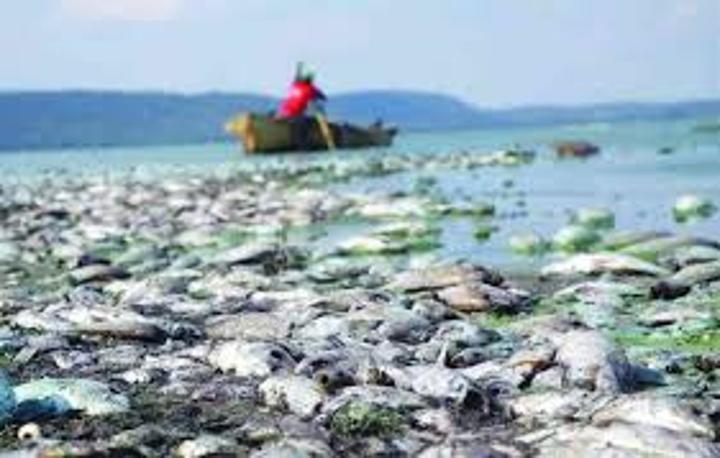
The legal battle followed a 2024 toxic pollution that triggered massive deaths of fish and animals in the lake.
In December 2024, a deadly algal bloom killed rhinos, zebras, wildebeests, fish eagles and more than 1 000 fish, forcing the Zimbabwe Parks and Wildlife Management Authority to close the lake to the public, cutting off tourism activities.
Kuimba Shiri (Pvt) Ltd, which operates a bird park and lakeside resort, told the court that the shutdown wiped out key income streams including its restaurant, bar, accommodation, camping, boat cruises and white rhino viewing.
Financial records show the scale of the hit: the business recorded a net profit of US$107 297 in 2024 before plunging to a loss of US$21 057 within the first two months of 2025 as bookings collapsed and visitors disappeared.
The company argues that the pollution directly caused the losses and is seeking compensation alongside a declaration that the ongoing sewage discharge violates environmental laws.
In its ruling, the High Court found that the city’s legal challenge was not properly authorised.
“This court finds that there is no valid authorisation,” ruled Justice Munangati-Manongwa, noting that the city’s board resolution lacked signatures and did not meet legal requirements.
The court also dismissed the defence of Zinwa, ruling that its reliance on an outdated board resolution was “a nullity” and could not justify its participation in the case. The appeal is pending.
For More News And Analysis About Zimbabwe Follow Africa-Press