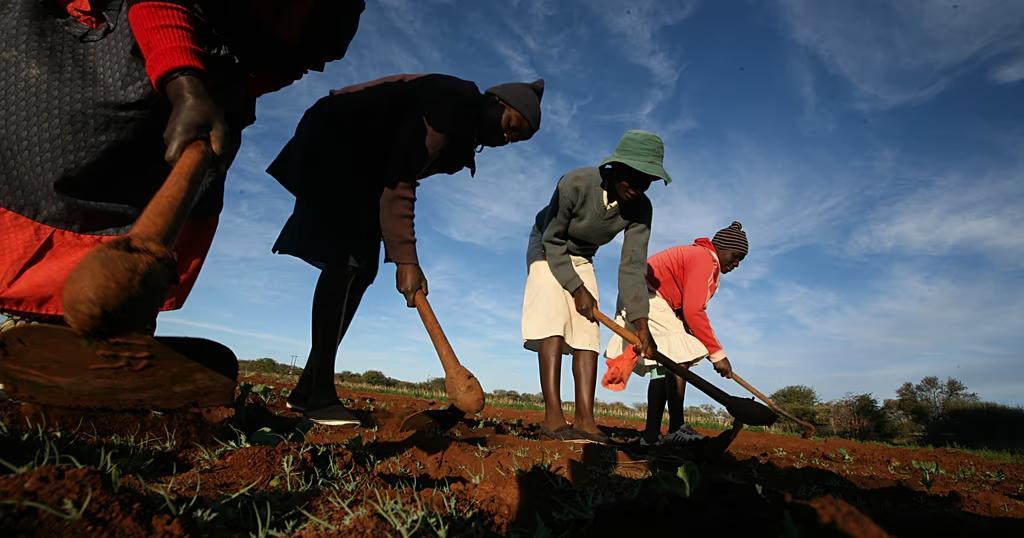
Africa-Press – Zimbabwe. Zimbabwe has announced that it will return 67 farms previously seized from foreigners from four European countries, as part of its efforts to repair relations with Western nations while seeking debt relief.
The Minister of Agriculture, Anxious Masuka, stated that the government has begun the process of returning the farms to their “owners” from Denmark, Switzerland, Germany, and the Netherlands, as their properties were covered by bilateral investment protection agreements.
Zimbabwe began seizing white-owned farms in 2000 during the rule of Robert Mugabe, a move the government claimed aimed to resettle landless black citizens and address land ownership imbalances inherited from the colonial era.
However, these seizures led to the collapse of commercial agriculture and contributed to a severe economic crisis that resulted in the currency’s collapse in 2008, leaving the country struggling to achieve food security.
Since taking office, President Emmerson Mnangagwa has sought to improve relations with Western governments, which imposed sanctions due to land seizures and broader human rights violations.
The land restitution process is part of the government’s efforts to secure debt relief, having been isolated from the global financial system for over two decades after defaulting on debts owed to international lending institutions.
The country’s external debt reached $13.6 billion in September 2025, with $7.7 billion in overdue payments. International lenders have conditioned debt relief on the implementation of reforms, including resolving land disputes.
Masuka stated in parliament on Wednesday, “We are in the process of returning those farms to them,” in response to a question from a member of parliament.
The concerned European countries are part of a group of Western nations discussing debt relief with Zimbabwe and are among the country’s main donors.
In a related development, the International Monetary Fund approved a ten-month monitoring program for Zimbabwe, aimed at supporting its record in implementing economic reforms, although the program does not include direct funding.
Mnangagwa, a long-time ally of Mugabe who succeeded him after a coup in 2017, agreed in 2020 to a compensation deal worth $3.5 billion with around four thousand white farmers, but his financially strained government has struggled to pay significant amounts of compensation.