Africa-Press – Angola. The Executive reiterated Friday, in Luanda, the need to maintain the contributions in fines, as well as in revenues and costs, to avoid “chaos” at the level of the civil service.
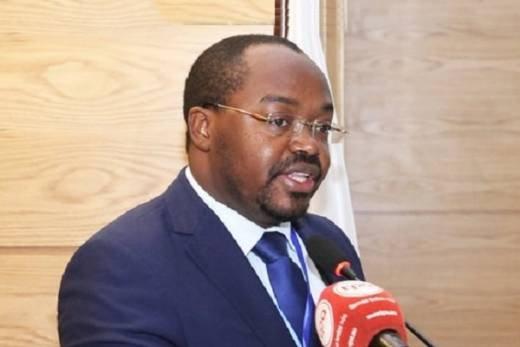
The announcement was made by the Secretary of State for the Civil Service, Vânio Americano, during the parliamentary session that approved, in the specialty and unanimously, the report-opinion of the Basic Law Proposal for the Civil Service, which must be present for global approval. final at the plenary session on Thursday next week.
“If the Civil Service Basic Law is approved, in the plenary session of the next 21st, without the co-payments in fines being approved, we could have a very big chaos at the level of the civil service”, indicated the minister.
“By withdrawing the co-payment for the fines to which the traffic agent is entitled, we are saying that he will be able to continue with the practice of the famous soda, since the fine as such will not be worth it”, he exemplified.
Vânio Americano said that he agrees with equity and wage equality, stressing that acquired rights should not be taken away from citizens, but seek to extend them to others.
Yesterday’s discussions focused essentially on articles referring to the regime for civil servants holding political positions, the inclusion of the enjoyment of protection for people who care for children with special needs or infants who have lost their parents, as well as remuneration and fines.
According to deputy-rapporteur Vigílio Tyova, these matters were only voted on yesterday, because they needed better consultation and reflection.
The fact that civil servants holding political positions weighed heavily on the regime of civil servants in their careers when they returned from these functions.
The consensus reached in the current regime is for political office holders to be promoted in their careers, as long as they meet the legal requirements and presuppositions for that purpose.
In the chapter on remunerations and fines, both the deputies and the members of the Executive concluded the need to improve the wording of article 110, which was “very laconic”, in the opinion of some parliamentarians.
A wording was adopted that better expresses the remuneration system, resulting not only from the Civil Service Law, but also from the Organic Law of the OGE, and other legislation that establishes the components of the country’s remuneration system.
The majority of parliamentarians defended the adequacy in the present Civil Service Basic Law of the defining elements and basic concepts of the components of the remuneration system of the previous Law 17|90 (from the time of the single party), as in this they are “better established” .
“These definitions should be made very clear in the current Basic Law, so that there is no disparity in the application of the Angolan remuneration system”, advised deputy Vigílio Tyova.
In yesterday’s parliamentary session, there was also a consensus, among deputies and members of the Executive, the maintenance, in the current Law, of the contributions that result from the fines, not as a component of the remuneration system, but as a complementary element.
Vigílio Tyova announced, by the way, for the near future, the creation of a “specific article” in the country, for the contributory issues of the Civil Service.
Advantages Of The Degree
The Secretary of State for Public Administration, Vânio Americano, considered yesterday’s debate “very interesting”, praising the deputies for making “valuable contributions” on all the matters under discussion, which resulted in the unanimous approval of the Proposal for a Basic Law on Civil Service.
He underlined that, with the entry into force of the Basic Law on Civil Service, there will be substantial improvements for civil servants, regarding their rights, freedoms and guarantees.
Entry into the civil service no longer by public tender, the institution of the public employment contract regime, the elimination of the maximum age limit of 35 years for entering the civil service, the increase of up to seven working days of exclusive parental leave to the father who will receive another member in his household, are some of the novelties of the new Civil Service Basic Law, cited by the Secretary of State.
Vânio Americano said that the new law also contemplates exclusive parental leave for the mother, in situations of multiple births. It gives the possibility of adding another 30 days for each twinning, in addition to the 90 days of leave in force.
She explained that the public employee who has a multiple birth (triplets), in addition to the 90 days of maternity leave, will be granted 30 days of leave for each twin.
During this period, he added, the employer must promote working conditions in the sense that the same (employee) after taking parental leave can return to work, but on a telework basis.
Retirement Age Remains At 60
The Secretary of State for Public Administration denied, on Friday, rumors circulating in some press and social networks about an alleged intention of the Executive to increase the time for reform in the Civil Service to 65 years.
“The increase in the retirement age in the Civil Service to 65 years was ventilated a lot at the level of some press. This is not true. This matter remains and is not intended to change, at least in the near future”, explained Vânio Americano. .
To the press, the official declared that, with the approval of the Basic Law for the Civil Service, it is not intended, in any way, to change the assumptions related to the retirement pension, indicating that the basic premises for the regulation of this matter are created in the Basic Law of Mandatory Social Protection.
He recalled that the maximum age for a man to retire is 60 years old, but in the case of a woman with five children, she may have access to an ordinary pension after 30 years of service, with one year of service being reduced for each child. that comes into the world, with a maximum limit of five years.
A woman civil servant, if she has five children and a current contributory career, will be able to benefit from a retirement pension at age 55, while a man at age 60: “We are talking about 420 months of contribution, which corresponds to 35 years of service as a ceiling maximum”.
He mentioned that workers aged 60, who have not added up to 420 months of contributions, but who have a contributory career of 15 years, may qualify for the retirement pension as such.
The civil servant with a limit of 10 years of work assumes the old age allowance, indicated the minister, for whom these assumptions remain in force and will not be changed with the approval of the Basic Law for Civil Service.
For More News And Analysis About Angola Follow Africa-Press