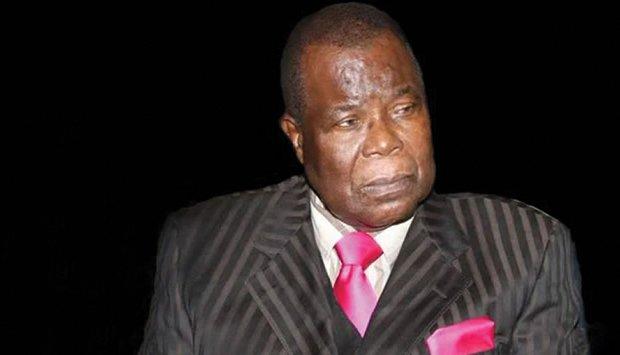
Africa-Press – Angola. The Minister of Foreign Affairs, Téte António, acknowledged that the nationalist Miguel Maria N’Zau Puna, who died Sunday in Luanda, served diplomacy with pride and selflessness, as Angola’s extraordinary and plenipotentiary ambassador to Canada.
According to the condolence note from the Ministry of Foreign Affairs, which Jornal de Angola had access to, Téte António underlines that it was with deep pain and dismay that he learned of the physical passing of N’Zau Puna, at the age of 90.
“In this moment of pain and mourning, I bow before this figure who wrote his name in the annals of Angolan history, and I convey to the bereaved family, on my behalf, and that of the Ministry officials, my deepest feelings of sorrow”, reads up on the note.
MPLA Parliamentary Group
The MPLA parliamentary group was dismayed by the death of deputy N’Zau Puna, who had been in office since 2008. In a condolence message, signed by the president of the parliamentary group, Virgílio de Fontes Pereira, the figure of the deceased is praised, as a prominent Angolan nationalist who, from a very early age, embraced the cause of the freedom of the Angolan people.
The politician N’Zau Puna, according to the document, participated in the struggle for National Independence, whose proclamation took place on November 11, 1975. “The nationalist Miguel N’Zau Puna has been a MPLA deputy since 2008, and currently had the his mandate suspended for health reasons”, highlighted the MPLA parliamentary group.
“It was with great regret and consternation that the MPLA parliamentary group received the sad news of the death of the nationalist and deputy to the National Assembly, by the MPLA, Miguel Maria N’ Zau Puna”, concludes the note.
Historical Route
Miguel Maria N’Zau Puna was born in 1932, in Cabinda. Persecuted by colonialism, he went into exile in Congo-Leopoldville (now DRC) in 1961 and joined the UPA. He spent the next few years studying, as a fellow, at the Moghrane School of Agriculture, Tunisia, and at the Higher School of Cooperation, having received military training in China.
N’Zau Puna fought with weapons in his hand from the first moment, for the independence of Angola, in the ranks of UNITA, the party of which he was secretary general. He was also political commissar-general of FALA (former UNITA military organization). He was present in the agreements between the MPLA and UNITA of 1974, headed the delegation of this party in the inauguration of the Transitional Government and participated in the Bicesse Accords.
In 1992, he left UNITA and founded the TRD (Trend of Democratic Reflection). He later became ambassador to Canada and general (three-star) in the reserve. Until the date of his death, he was a deputy to the National Assembly for the MPLA parliamentary group.
In July 2019, the nationalist presented his autobiography to the public entitled “Mal me quer – The history of Angola in the voice of those who made it, a testimony without mincing words”. The book, with more than 250 pages, addresses the long excursions, still as a former UNITA militant, experienced from the town of Jamba (Cuando Cubango province) to Luanda, passing through Zambia, Tunisia and China.
N’Zau Puna’s autobiography also reveals “the dramas, massacres and dreams of a better world – the birth pains of a Nation”. height, that the work, not being a compendium of history, brings important and unavoidable subsidies that can be rationally used for the historiographical research affected to the Angolan specialists.
For More News And Analysis About Angola Follow Africa-Press