Africa-Press – Angola. The Catholic Church announced, Thursday (21), when reacting to the admission as an observer, that it will carry out work that meets the demands of the General Elections of August 24, thus placing itself in the line of action of the other authorized institutions. by the National Electoral Commission to cover the process.
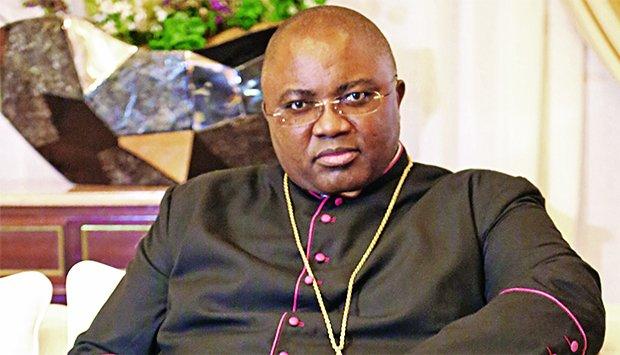
The spokesman for the Episcopal Conference of Angola and São Tomé and Príncipe (CEAST), Dom Belmiro Chissengueti, who presented the commitment to the Nation, in a press conference, underlined that the 32 Catholic observers, associated with the others, will do a job, which, in the end, will produce a report, slightly more amplified, on the way in which the election took place.
Bishop Belmiro Chissengueti, who commented on the matter on the sidelines of the closing of the Second Annual Assembly of CEAST, which took place from the 14th to the 21st of this month, made it known that it is not up to the Catholic Church to determine the number of observers, nor the CNE. “The number of observers is determined by the Organic Law of Elections”, he clarified.
The CEAST spokesperson responded to a question about the number of observers admitted to follow the electoral process. The National Electoral Commission accredited 36 Catholic observers, integrating the group of 2,000 nationals, coming from other civil society platforms, who intend to monitor compliance with the law and the political procedures of competing forces during the General Elections.
“If we compare the number of observers from the two previous elections (2012 and 2017), this time, for us, there was an increase of around 100 percent, taking into account that in the last two elections only 18 had been accredited,” he said. the spokesperson for CEAST.
Regarding political activity, the bishop recognized that there is a slight improvement in the treatment of the activities of political parties, which is why he encourages the media to promote a culture of contradictory and impartial information, for the good of citizenship and democracy. .
Bishop Belmiro Chissengue condemned the various pre-electoral instability fires, where signs of physical and verbal violence between party formations were visible. “It is necessary to safeguard peace and reconciliation, within the legitimate difference”, he emphasized.
He added that, regarding the social situation in the country, it is felt that there is a will on the part of the Executive to improve the lives of citizens, on the one hand, and on the other hand, there are people who seek to do evil. “It is necessary to have supervision of works designed for the benefit of the citizen, in order to reflect directly on the lives of families”, said the bishop, stressing that young people should receive decent remuneration.
In turn, the chairman of the Justice and Peace Commission of CEAST, Dom Gabriel Mbilingi, said that the intention of the Angolan Electoral Observatory (OBEA) to raise awareness among citizens, as well as observe the elections, has the sole objective of contributing and defending democracy.
According to the prelate, it is necessary to ensure and encourage the democratic participation of citizens and civil society in the resolution of national problems, having mentioned that Angola is a democratic and lawful State based on popular sovereignty.
Archbishop Gabriel Mbilingi said that separation of powers, interdependence of functions, national unity, pluralism of expression and political organization, as well as representative and participatory democracy, make Angola a one and indivisible sovereignty.
For More News And Analysis About Angola Follow Africa-Press