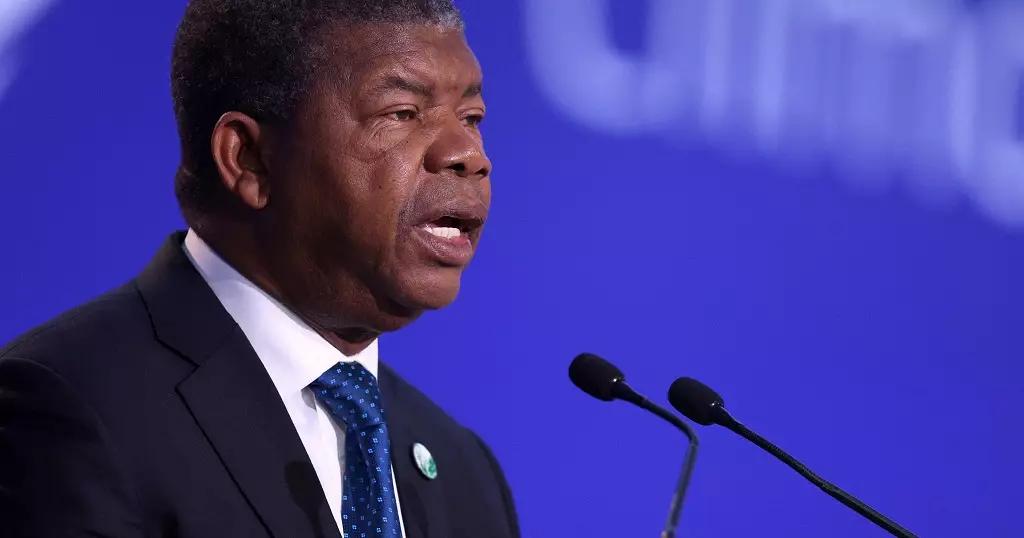
Africa-Press – Angola. The President of the Republic, João Lourenço, is expected today in Kinshasa, capital of the Democratic Republic of Congo (DRC), for a working visit as part of the diplomatic mediation efforts he has been carrying out, in order to resolve the atmosphere of tension prevailing, at the moment, between the DRC and Rwanda.
The Angolan statesman leaves, today, from Kigali, Republic of Rwanda, where he traveled, Friday (11), to work with his counterpart Paul Kagame, around the implementation of the Roadmap of the International Conference on the Great Lakes Region (CIRGL ), on the East DRC Pacification Process, adopted in Luanda on 6 July this year by the Tripartite Summit that brought together Angola, DRC and Rwanda at the same table.
In Kinshasa, João Lourenço, who is currently the president of CIRGL and “Champion for Reconciliation and Peace in Africa”, the latter title being awarded by the African Union, in recognition of his commitment to pacification on the continent, with emphasis on for the Great Lakes Region, he will also hold a meeting with his counterpart Félix Tshisekedi, during which matters related to the tense climate that the country is experiencing with neighboring Rwanda will also be discussed.
The climate of tension between the DRC and Rwanda has resumed, on the eastern border, between the two countries in recent months, after the resumption, in March, of the fighting between the DRC army and the rebel group Movimento 23 de Março. , better known as M23.
The two countries accuse each other of supporting the military insurrection to destabilize each other, with Kinshasa denouncing an alleged military support of Kigali for the M23, a charge denied by Rwanda. The level of tension between the two countries rose even further, after the expulsion of the ambassador of Rwanda from the DRC.
Since assuming the role of acting president of the International Conference on the Great Lakes Region, in November 2020, President João Lourenço has been carrying out several actions aimed at the stability of relations between the DRC and Rwanda.
The last action taken in this regard was the tripartite ministerial meeting that brought together, in Luanda, the heads of diplomacy from Angola, Téte António, from Congo, Christophe Lutundula Apala Pen’Apala, and from Rwanda, Vicent Biruta, to analyze the climate tension between the two countries.
The tripartite ministerial meeting in Luanda proposed maintaining the mechanism of dialogue and political consultation between the authorities of the two countries as a way to resolve the political crisis that opposes the parties, in addition to defining a timetable for accelerating the implementation of the aforementioned roadmap and the commitments assumed by the parties, within the framework of the meeting of the Permanent Joint Commission between the DRC and Rwanda, held in Luanda, on the 20th and 21st of July this year.
It was also agreed the immediate deployment of the Ad-Hoc verification mechanisms, in Goma, DRC, and the heads of the Intelligence Services should continue with the discussions, in order to implement the maintenance of the mechanism of dialogue and political consultation between the authorities of the two countries.
“The ministers pledged to continue the efforts for an encouraging evolution on the ground and prepare the next tripartite summit”, stressed Téte António, at the end of the meeting. The tripartite meeting also proposed holding coordination meetings at all levels between the Luanda and Nairobi processes and recommended mediation to carry out the necessary steps in this regard.
The meeting, which lasted all day, was held at the invitation of the Government of Angola, as part of the Angolan mediation for the normalization of bilateral relations, following the deterioration emanating from the security crisis in the East of the DRC, as well as the restoration of a climate of trust between the two countries.
As a prelude to the tripartite meeting, the Head of State João Lourenço granted a joint audience to the ministers of Foreign Affairs of the DRC and Rwanda, at the Presidential Palace, with whom he analyzed the atmosphere of tension prevailing, at the moment, between the two countries.
It was preceded by the joint meeting of the Foreign Intelligence and Military Security Services, with the main objective of relaunching the dialogue between the authorities of the DRC and Rwanda, as well as resuming the process of implementing the Luanda Roadmap, of 6 July this year.
Dialogue is the way out of the conflict
When intervening at the Board Meeting of the Assembly of the African Union (AU), held by videoconference, President João Lourenço considered the latest events on the border between the DRC and Rwanda worrying and insisted that the dialogue it is the only way for the parties to overcome the current climate of tension.
President João Lourenço appealed, at this meeting, for the joint efforts to put an end to the growing tension that has been taking place in recent weeks between the two countries.
“The door to dialogue must always be open at all levels (intelligence services, military, diplomacy and the Heads of State themselves)”, said the Angolan statesman at the time.
Angola presides over the International Conference on the Great Lakes Region (CIRGL), a geographic block to which the Democratic Congo belongs. In this capacity, the Angolan Head of State has carried out several initiatives to achieve peace in various parts of the continent.
Sister countries
The Angolan ambassador to the Democratic Republic of Congo said yesterday, in an interview with the Angolan press that he traveled to this country to cover the visit of the Head of State, that the DRC and Rwanda are two sister countries that “have always lived together”, having underlined that, as a result, “it makes no sense that they are, today, divided and in conflict”.
Miguel da Costa stressed that the effort made by Angola, at the highest level, is aimed at restoring good relations between the two countries. “Our objective, as Angola, is to support the two countries, in the sense of having understanding at all levels, whether political or diplomatic, as well as the population level in general. We have to support them”, stressed the Angolan diplomat. , remembering that, given the experience with the war, Angola would never support any option that leads to destruction.
“It is for this reason that our President has been working to bring about peace here in the region”, he concluded.
For More News And Analysis About Angola Follow Africa-Press