Africa-Press – Angola. The application of the General Amnesty Law for common crimes, with sentences of up to 8 years, reinforces the principle of preserving the dignity of the human person, allows the reintegration and restructuring of families and relieves the State’s costs with prisoners, defended, this Saturday, jurists Veloso Malavo Issenguel and Alentejo Pedro, specialists in Human Rights and Public Law, respectively.
The lawyers, who were speaking to press in the wake of the entry into force of the diploma, Friday, after publication in Diário da República, highlighted the importance of the law in the challenges assumed by the State, of providing new opportunities to detained citizens , through the creation of a specific legal environment.
“All Law is made to serve man, based on his dignity. And the intention of the Head of State, in proposing the approval of this law to Parliament, was certainly to preserve the dignity of the human person”, considered the jurist Veloso Malavo Issenguel.
Reinforced, Alentejo Pedro, in the same vein, that Amnesty is “an opportunity that the State is giving to citizens, who walked outside the law, so that they can be socially reintegrated”, having praised the particularity of “forgiveness” not covering intentional crimes committed with violence, corruption, money laundering and embezzlement.
The specialist in Human Rights defended, on the other hand, that the aforementioned diploma can be understood as one of the ways for the State to “avoid flooding in prisons”, because “it loses a lot with the inmates”, insofar as “it always needs to more effective”, for the prison services, for the Public Order Police or for the Rapid Intervention Police.
“All these are issues that increase State expenses. In order to reduce or mitigate the burden of these expenses, the Amnesty Law may be the best way found”, he said.
The fact that with the entry into force of the Amnesty Law, more than two thousand prisoners, of the approximately 20 thousand inmates, can be released, added Veloso Issenguel, there will also be a provision of space and the jails will no longer register overcrowding .
“The overcrowding of jails is not good for a Democratic and Law State, where the authorities are more voted for a public interest, founded on human dignity. Therefore, what must be done is to take advantage of the effects of the Amnesty Law”, he observed .
Veloso Issenguel also underlined that the law has effects on the Angolan legal system and on the lives of all citizens, given the fact that Criminal Law is a “gross instrument of the State” and of “non-immediate use”, which must be used in the latter cases, “when the other instruments of social policy have failed”.
Reintegration process
For Alentejo lawyer Pedro, families and society will have to be prepared for the process of reintegration of these individuals returned to the condition of free.
“By receiving these individuals, society has to help them and there can be no stigma”, defended the specialist in Public Law, having underlined the imperative need for amnestyed criminal agents to be very well accompanied.
“There are cases of families that lost their members or the father who was their only source of support. But the State is a good person and provides this amnesty, so that those who have already served half the sentence can automatically be released and those he has not fulfilled part of it yet, he has half the sentence”, he highlighted.
In the same vein, jurist Veloso Issenguel understands that the main lesson that citizens covered by amnesty need to learn is that they must “correct their acts” and understand that life in society has limits. better conduct”, he said, to clarify that “the individual who benefits from this forgiveness, must mentalize that he cannot commit again”.
Alentejo Pedro also warned that when the criminal community becomes aware of this recurrent conduct, “the individual is completely marginalized”, which is why, he advised them to agree “for a correct conduct, judging by the forgiveness they had”. In fact, he added, “during their stay in jail, inmates undergo a re-education process, with a view to reintegrating into society”.
Return of goods
The possibility of the Amnesty Law safeguarding the restitution of seized assets to citizens who demonstrate and recognize legibility for the purpose is analyzed by jurists as being one of the expectations of citizens placed in the situation of victims.
“No one will fail to pay what they have to pay.
Veloso Issenguel did not rule out, however, the likelihood that, with amnesty crimes, some victims, “in the materialization of the principle of victimology”, will try to appeal to a Court of Civil jurisdiction, “to see their damages compensated”, but recalled that the Amnesty Law “does not rule out the possibility of repairing damages”.
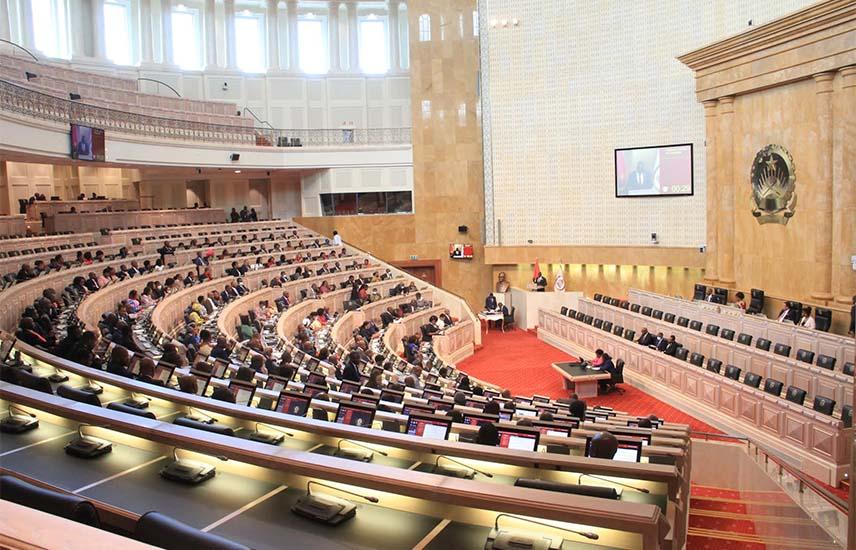
It should be recalled that the Amnesty Law, approved by Parliament on the 15th of the current month and published in the Diário da República, in the 1st series, no 244, of Law 35/22, of December 23 of the current year, establishes, in general, new political and social opportunities for the personal and family reintegration of citizens who have committed crimes, as long as they are covered by the legal coverage field.
For More News And Analysis About Angola Follow Africa-Press