Africa-Press – Angola. The Kwanza – legal tender currency in Angola, marks 45 years since its entry into circulation in national territory, on January 8, 1977, replacing the colonial currency, the Portuguese Escudo.
Created on November 11, 1976, under the terms of articles 8 and 30 of the Constitutional Law – the Kwanza (Kz), the name chosen by the founder of the Angolan nation Dr. António Agostinho Neto, named after the River Kwanza that crosses almost the entire country, entered circulation a year after its creation.
At the time, Kz 20, Kz 50, Kz 100, Kz 500 and Kz 1000 face value notes were issued, and coins worth Kz 1, Kz 2, Kz 5 and Kz 10.
Between 1977 and 1990, the currency only circulated with the designation “Kwanza”, however, the economic vicissitudes, typical of a country that had just left a secular and non-industrialized colonization, led the local government to change the designation, maintaining the matrix (Kwanza).
Thus, the “New Kwanza” (AON) appears, which was in force between 1990 and 1995, created by Law no 12/90 of 22 September. Despite the equality in relation to the previous Kwanza, Angolans were only able to exchange around 5% of the old banknotes for the new ones. The rest would have to be exchanged for government bonds.
Not even the “New Kwanza” responded to the Government’s economic and exchange expectations, raised in 1995. Thus, the Readjusted Kwanza (AOR) was introduced in the national market, which circulated between 1995 and 1999.
In the process of exchanging New Kwanza for Readjusted Kwanza, the Government of Angola avoided issuing coins. Both banknotes bore the name of the currency on paper in red, vertically, in a white area, for the new from the old.
Like the Novo Kwanza, the Kwanza Reajustado, an initiative of the National Bank of Angola (BNA), also failed. The exchange rate for the Readjusted Kwanza, at the time, was 1000 to 1 and it was evident that the value of the national currency was small.
With the failure of the Readjusted Kwanza, launched on July 3, 1995, the BNA was forced to change the currency unit, bringing the Kwanza (AOA) back to the market, which has been in circulation since December 1999 until now.
The Readjusted Kwanza cohabited with the Kwanza until September 1, 2000. The latter, when launched into circulation in 1999, registered a slight inflation, but then stabilized.
At the time, the National Director of Issuance and Credits of the BNA (BNA), Jorge Leão Peres, justified the substitution for the Kwanza, saying that the “corrosion of the purchasing power of the currency led to the need to carry out a new monetary readjustment, in order to adapt banknotes in circulation to the volume of transactions carried out”.
“Previously, there was talk of billions, but in real terms it meant nothing, and this became difficulties in the accounting process of companies. Hence the need for readjustment, which consisted of cutting the six zeros, in order to adapt the currency to the volume of transactions”, he explained”.
Holders of Readjusted Kwanza banknotes, after their replacement, could only exchange them at BNA branches in the provinces of Luanda, Cabinda, Huíla and Benguela, within a period of five years.
After the resurgence on February 18, 2000, the Kwanza recorded moments of stability, as the Angolan economy showed a remarkable pace of growth, especially since 2002, the year in which the country won peace and obtained financing for its reconstruction.
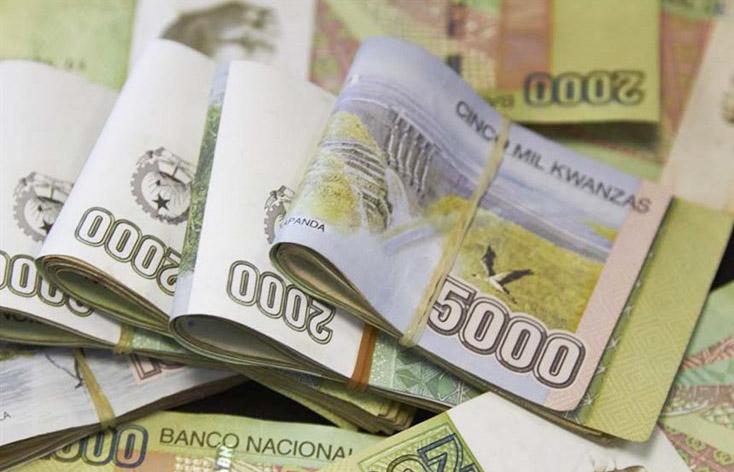
This growth provided an environment for the introduction of a new Kwanza family in 2013. In a first phase (February 18th), the BNA made metal coins of 50 cents, 1Kz, 5Kz and 10 Kz available to society. Then, from March 22 to June 2013, banknotes with a face value of 50,100, 200, 500, 1000, 2000 and 5000 Kwanzas were placed.
The banknote series currently in use has been in circulation since July 2020. The 200 kwanza (Kz) note has been circulating since July 30, Kz 500, September 17, Kz 1000, October 1, and the 2000 note on the 11th of November 2020.
The 5000 kwanza banknote was the last to enter circulation, in January 2021.
The governor of the BNA, José de Lima Massano, justified at the time that, in addition to the growth in commercial activity, which led to greater circulation of the Kwanza and its wear and tear, the currency had already been circulating for over 14 years and had ceased to have the its features in line with modern safety standards.
Kwanza’s current stability
Since the exchange of the currency until the present day, many have been the vicissitudes of the national currency (Kwanza) against other stronger ones, but today, it enjoys some exchange rate stability.
For example, today, to buy one (1) Euro it takes Kz 540 and Kz 503 to buy one (1), currencies considered strong. Over the last few years, the foreign exchange market has registered stability in the trading of these currencies.
Regarding the current stability of the Kwanza (Kz), the National Bank of Angola (BNA) has been adopting several policies such as the “Floating Exchange” system, in force since 2018, in which the market sets the exchange rate values.
However, the “surprising” rise in the price of a barrel of oil, which reached values above USD 125 in 2022, influenced by the Russia/Ukraine conflict, is identified as the main factor, as it allowed the State to collect, in oil revenues, 7, 07 billion kwanzas, more than 69% of the country’s total tax revenue.
Security elements
According to the BNA, the Kwanza family in circulation presents significant improvements in terms of security, placing it within current international standards and reinforcing the sense of appreciation of the national currency.
Among the banknotes’ various security elements, the most visible to the unaided eye, such as the embossed texture, the watermark, the metallic thread, the color removal strip (HMC) and the quality of the paper.
The visible ones, with special equipment, are namely the reaction to ultraviolet light, the reaction to infrared and the magnification to microtexts.
The new Kwanza family or series brings a lot of novelty and one of them is the fact that it is made of plastic, with the exception of the 5000 note which is made of cotton.
Banks are involved in the process of security measures because the machines are adjusted to the new currency material.
Like the other kwanzas, the current one brings elements of national culture such as the Effigy of the first President of the Republic, Dr. António Agostinho Neto, Pedras Negras de Pungu A Ndongo (Malanje), Fenda da Tundavala (Huíla), Morro Luvili (Huambo), Kissanje (musical instrument), Serra da Leba (Namibe), Omakola (musical instrument), Kulumbimbi – Ruins of Old Cathedral (Zaire) and Bakama Mask (traditional artifact).
For More News And Analysis About Angola Follow Africa-Press