Africa-Press – Angola. The informal economy is a present reality in many countries, including Angola. While it can offer employment and income generation opportunities to many people, it can also bring challenges and problems for society and the economy.
In this opinion article, we will discuss the importance of restructuring the informal economy in Angola and how this can contribute to the sustainable development of the country.
By: Mário Munto Ndala, professor at the Faculty of Economics at Agostinho Neto University (UAN)
Throughout the article, we will examine the causes and consequences of the informal economy in Angola, as well as the strategies that can be implemented to help reverse the current situation. In addition, we will discuss how restructuring the informal economy can bring significant benefits to the country’s economy, including tax collection, economic growth and the creation of formal jobs.
If the dear reader is interested in understanding the importance of restructuring the informal economy in Angola and how it can contribute to the sustainable development of the country, continue reading this opinion article. Restructuring the informal economy is a critical issue that requires the attention and commitment of all sectors of society to ensure a more promising future for Angola.
According to statistical data presented by the International Labor Organization (ILO), in 2018, the informal employment rate in Angola was 94.1%, higher than in other regional blocs, including Central Africa (91%). , the Southern African Development Community (SADC, with 77%), sub-Saharan Africa (89.2%) and Africa as a whole (85.8%).
The report highlighted a significant difference of 17.1% compared to SADC, based on data from just eight (8) countries in the region, including Botswana (65.6%) and South Africa (34%).
When it came to informal employment in informal economic units, Angola’s rate (77.1%) surpassed only that of SADC (64.8%), being lower than other comparable blocks, including Central Africa (83.5%). , sub-Saharan Africa (79.2%) and Africa as a whole (76.0%). Chad had the highest percentage value (92%), while South Africa had the lowest percentage value among the countries mentioned in the ILO (21.8%).
According to the World Bank, in 2020, around 60% of Angola’s economically active population was involved in the informal economy. In 2018, this rate was 72.4%. This indicates that the majority of the country’s population depended on these activities for their survival. However, the lack of regulation and social protection for these workers is a matter of concern.
In addition, the informal economy also has negative impacts on the country’s formal economy. For example, the lack of regulation also leads to unfair competition with formal companies, which undermines the competitiveness of these businesses. In addition, the informal economy also limits the Government’s ability to collect taxes and other fiscal resources, which may affect the country’s ability to invest in infrastructure and other sectors.
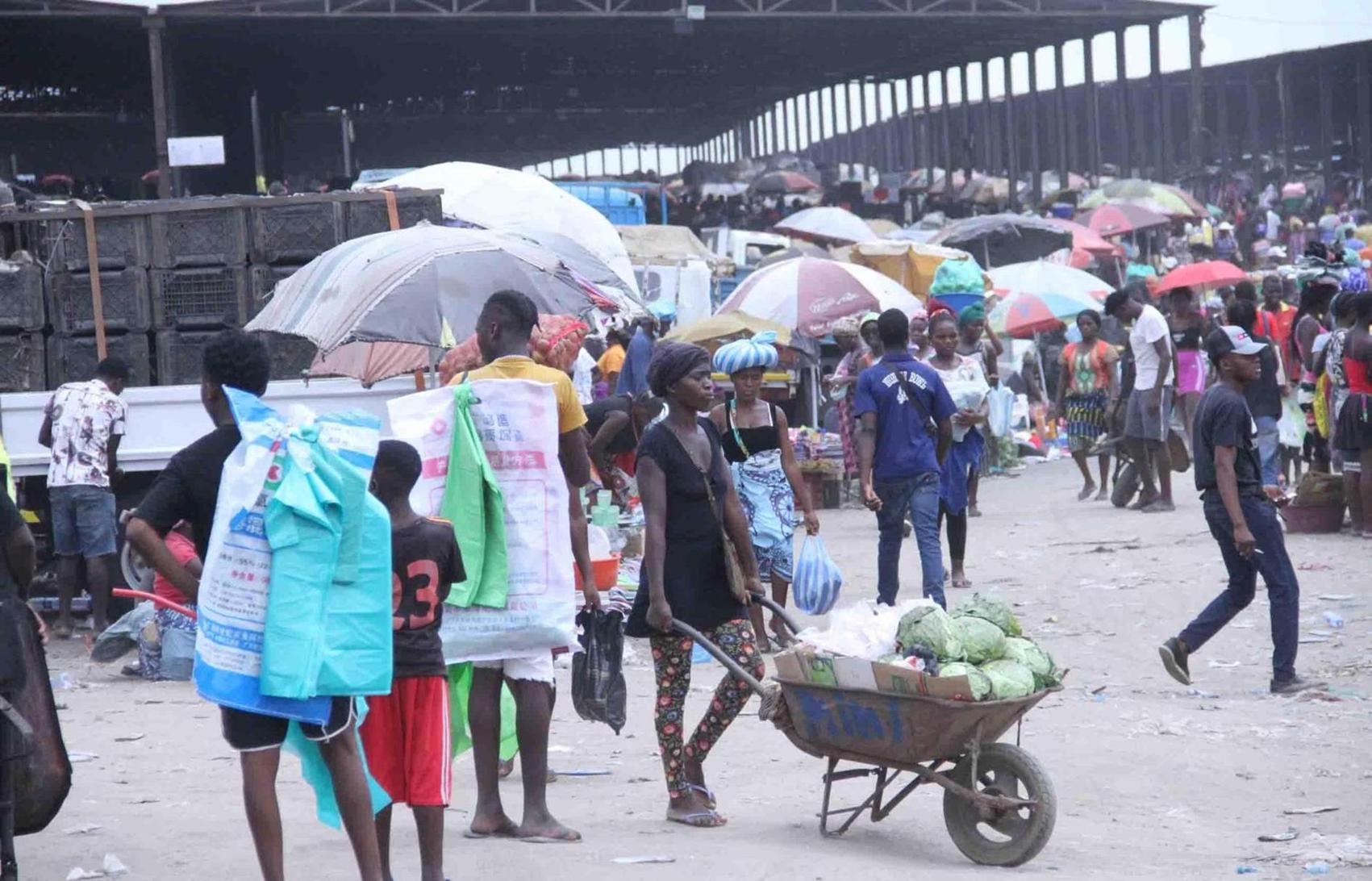
For example, in the sector selling food products, the informal economy is strongly represented by small street vendors, who sell fruit, vegetables, meat and other fresh products on the streets. While this sector can be beneficial for retailers, it also has a number of challenges, including lack of regulation, lack of sanitation enforcement, lack of access to finance and competition from large supermarkets.
In the transport sector, the informal economy is represented by private taxis and motorcycle taxis, which offer low-cost transport for the population. While this sector can be a good source of income for drivers, it also has its challenges, including a lack of regulation, a lack of safety for passengers and a lack of investment in transport infrastructure.
In the construction sector, the informal economy is represented by small contractors who build houses and buildings without following the proper building standards. While this sector can be a good source of income for contractors, it also has its challenges, including a lack of regulation, a lack of quality enforcement and a lack of investment in construction infrastructure.
An empirical observation allows us to conclude that the provinces of Angola that have a higher prevalence of informal activities include:
Luanda: The capital of Angola, Luanda is one of the places with the highest prevalence of informal activities. The lack of formal employment and the lack of work options lead many people to start informal businesses, such as street vendors and small businesses.
Benguela: The province of Benguela is known for its informal markets, where people sell various products, with emphasis on fruits, vegetables and clothes. In addition, many people work as taxi drivers or informal taxi drivers in the province.
Huambo: The province of Huambo is also known for its markets, where people sell various agricultural products. The work of motorcycle taxis is also predominant in the universe of informal economic activities.
Huíla: The province of Huíla is another that presents a high prevalence of informal activities. In addition to small businesses and street vendors, many people also work as informal service providers, such as seamstresses, barbers and mechanics.
Uíge: The province of Uíge is known for its large number of informal farmers, who sell their products at fairs and local markets. In addition, many people work as street vendors in the province.
These are just some of the provinces in Angola where the informal economy is most prevalent. It is important to highlight that the informal economy is a reality throughout the country and that the prevalence of these activities varies according to the region.
In summary, the informal economy in Angola has a significant impact on the country’s society and economy, despite also having its challenges and disadvantages. In order to maximize the benefits and minimize the risks of the informal economy, it is important that policies and regulations are implemented that help to regulate and formalize these sectors, guaranteeing the safety and quality of the products and services offered and the protection of workers and consumers.
In order to reverse the framework of the informal economy in Angola, it is important that effective measures are implemented. This includes creating clear laws and regulations to protect the rights of informal workers, as well as making financial resources available to help them start and expand their businesses. In addition, it is important to invest in infrastructure and training to help people get jobs and start formal businesses.
Restructuring the informal economy in Angola is crucial to ensure the country’s sustainable development. This process must involve protecting the rights of informal workers, making financial resources available and investing in infrastructure and training, as described above. These measures can help create a stronger and more balanced economy, aiming at the economic prosperity of the country.
However, it is important to highlight that the restructuring of the informal economy in Angola cannot be done abruptly or without considering the needs of informal workers and the country’s economic conditions. A balance needs to be found between protecting workers’ rights and encouraging economic growth.
Implementing effective policies for restructuring the informal economy in Angola can also bring significant benefits to the country’s economy. For example, regulating the informal economy can lead to better collection of taxes and other fiscal resources, increasing the Government’s capacity to invest in infrastructure and other sectors. In addition, restructuring the informal economy can help create formal jobs and increase the competitiveness of companies, which can lead to more sustainable economic growth.
Finally, the restructuring of the informal economy in Angola is a critical issue for the sustainable development of the country. Effective policies need to be put in place that can protect the rights of informal workers and encourage economic growth. With the collaboration of all sectors of society, it is possible to transform the informal economy in Angola into a positive force for the country’s development.
For More News And Analysis About Angola Follow Africa-Press