Africa-Press – Angola. Benguela province needs at least 150 inspectors to monitor the activity of operators in the fishing sector along the more than 200 kilometers of the region’s coastline.
These data were advanced by the director of the Benguela Provincial Office for Agriculture, Livestock and Fisheries, José Gomes da Silva, in an interview, informing that, at the moment, there are only 25 inspectors.
A number that, according to the source, is making it difficult for operators to monitor industrial, semi-industrial and artisanal fishing in the district.
The official said that there is an urgent need to reverse the situation, to increase the inspection capacity of the extensive coastline of Benguela province, from Egipto-Praia to Lucira.
“We would be satisfied if we had 150 inspectors. If we had maximum inspection capacity, we would put an end to these problems of illegal fishing, mainly in the artisanal fishing sector”, admits the director.
But he also complains about the lack of means of inspection, since, as he said, only two small vessels are working in that direction, while two frigates are inoperative, due to damage.
Given the shortage of inspectors in fishing areas, whether at sea or on land, the interviewee highlighted some joint patrols, namely with the Captaincy of the Port of Lobito and the Angolan Navy (MGA).
At sea level, these patrols have provided some support in combating irregularities detected in industrial, semi-industrial and artisanal fishing.
Irregularities in artisanal fishing
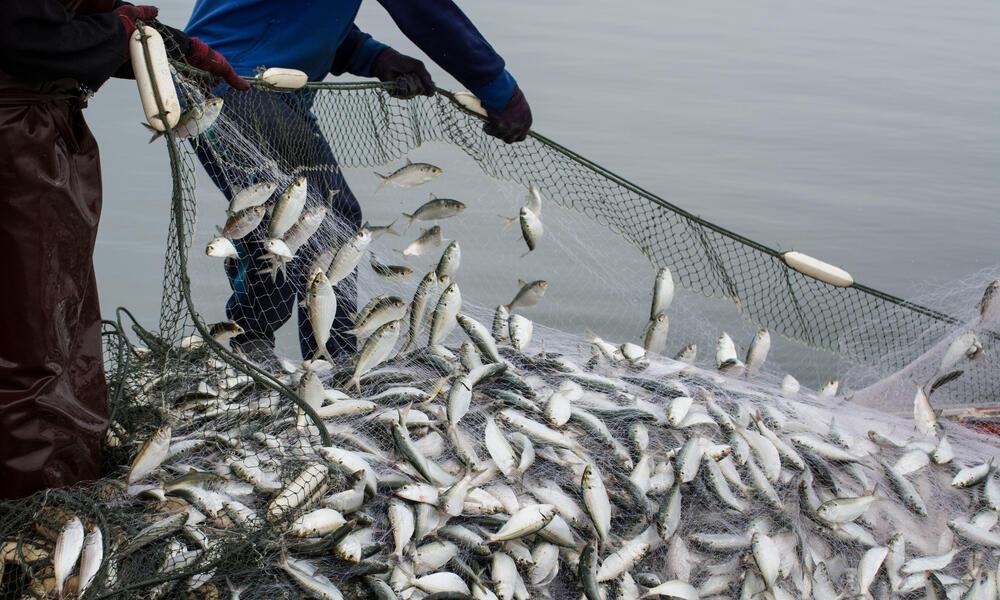
Although prohibited by law, band-and-band fishing continues to be practiced in certain areas of Benguela by artisanal fishermen, similarly to rapa – a fencing art in a small vessel.
By the way, the Director of Fisheries pointed out that rapa is also prohibited because this small vessel has all the capacity to fish or seize ten meters from the coast and, generally, in the dead of night, it fishes in prohibited areas, capturing immatures.
“They use an inappropriate net and, many times, direct the fishing towards immatures. There are large numbers of immature fish that fish and this does not give continuity for the springs to reproduce, ”she warned.
Another infraction has to do with the fact that many of the 2,500 vessels licensed in Benguela province with gear of mesh and line do not carry out fishing activity according to the licensed gear.
Instead, he said, small artisanal fishermen transform the barge into more profitable gear, such as rapa and fish in spawning areas (bays) capturing immatures.
“But the problem is the lack of human resources. Today, we have a very large deficit, especially in the inspection area”, she stresses.
Hence the belief that, with increased inspection, these problems of illegal fishing, mainly in the artisanal fishing sector, would have their days numbered.
Benguela province has 61 artisanal fishing cooperatives and only 47 are legal.
For More News And Analysis About Angola Follow Africa-Press