Africa-Press – Angola. Work on the second phase of the Sonangol project, “Falcão 2”, being carried out in Soyo province, Zaire, is 74% advanced, with completion expected this year.
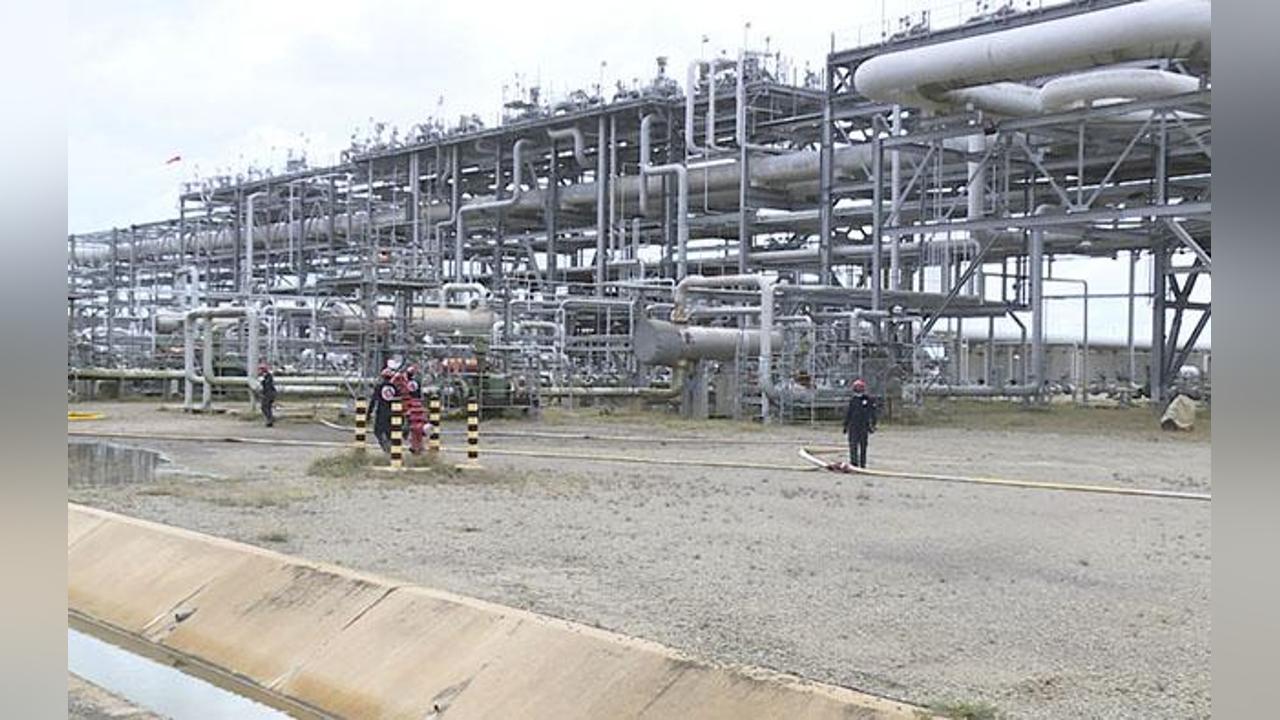
This is the construction of an onshore infrastructure for the reception, transport and distribution of natural gas from the Angola LNG (liquefied natural gas) factory for the combined cycle power plant (Soyo), in a global investment of 36 million dollars from the national oil company, Sonangol.
According to the Chairman of the Board of Directors of Sonangol, Gaspar Martins, who was speaking at the press conference for the presentation of the provisional results for the year 2022 of the company, the finalization of the detailed engineering of the equipment for the construction of the infrastructure of reception, transport and distribution of natural gas.
The project, he added, will make it possible to have additional gas available for the Soyo fertilizer industrial complex, one under construction within the framework of the consortium between the national oil company and the Angolan business group Opaia.
The “Falcão 2” project will make it possible to increase the reception and conditioning capacity from 75 million to 125 million cubic feet of natural gas, to be distributed to industries such as electricity generation, in addition to the fertilizer industrial complex in Soyo.
The initiative is being implemented in the perimeter adjacent to the Soyo combined cycle plant, in an area of ten thousand square metres.
The project is part of a broader initiative to develop the natural gas industry in the country, using oil and natural gas as a source of raw material.
Inside the Complex
The first stone for the construction of the Soyo Fertilizer Industrial Complex, with a production capacity of 3,500 tons of granulated urea/day, was laid in mid-2022 by the Minister of Mineral Resources, Oil and Gas, Diamantino Azevedo.
Scheduled for completion in 2026, the project is financed by US$2.2 billion from Afreximbank-African Bank for Exports and Imports.
With the technical assistance of the company Saipem, it is expected that the construction of the complex will contribute to the promotion of national agricultural production, in addition to improving the standard of living and well-being of the local population.
In view of the existence of a gap between consumption and production of urea of 1,200,000 tons in Southern and Central Africa, the project plans to give priority to the national market in supplying fertilizer needs.
The surplus will be exported to the African Free Trade Zone and region and to other countries on a global scale.
Urea is a chemical compound in the form of white crystals and has several advantages, such as containing a higher nitrogen content, 46%, and soluble in water, providing rapid growth of the vegetative mass.
For More News And Analysis About Angola Follow Africa-Press