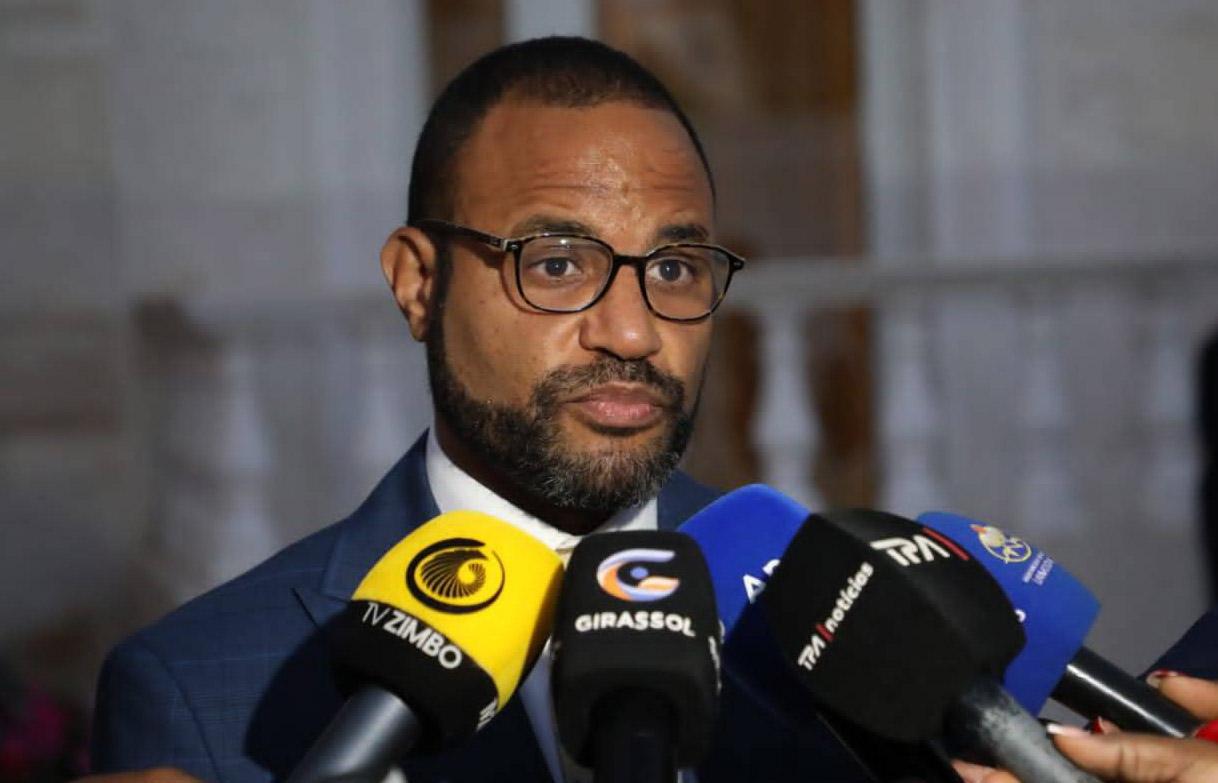
Africa-Press – Angola. The Minister of Economy and Planning, Mário Caetano João, said, in Doha (Qatar), that Angola is working with the United Nations for the process of Graduating from a Low-Income Country, or Least Advanced Country for Middle Income Country, change scheduled for 2024.
For this change, which entails the most diverse challenges and opportunities, as I said, the work with the United Nations is intended to better assess the necessary requirements.
The minister was speaking to the press, in Doha, on the sidelines of his participation in the work of the 5th United Nations Conference on Least Developed Countries, which takes place between 5 and 9 March.
He explained that in situations of non-compliance with the minimum requirement in two of the three indicators, as long as the Average Per Capita Income is double what is needed, that is, instead of having 2,400 dollars instead of 1,200 dollars, it can counterbalance the other two indicators and the country has this condition.
Another indicator, according to the minister, is the Human Capital Index, or multiple, whose requirements, like the Economic Vulnerability Index, still require some challenges, whose obligations the country was unable to fulfill.
Meanwhile, the minister assured that work is being done so that these indicators can help in the graduation of Angola.
On the advantages and disadvantages of change, he clarified that Middle-Income Countries have some qualities, mainly with regard to institutional capacity, with regard to the socio-economic development index.
According to Mário Caetano João, when moving from a Less Advanced Country, generally, where it is more difficult to access international financial markets, as it is seen as a vulnerable country, moving to a Middle Income Country must demonstrate an institutional capacity to honor all previous commitments.
“Therefore, these are the challenges, for us to be up to the task of honoring the most diverse commitments, which obliges us to be prepared to no longer receive donations”, he declared.
Mário Caetano said that when the country decided to graduate, in 2012, the Average Per Capita Income was over US$3,500, and Angola, along with other indicators, could graduate.
“Since 2012 we have been going through an economic and financial crisis, as well as the Covid-19 pandemic that eroded the gains we had”, he underlined.
In his view, such facts have influenced the Consumer Price Index of imported products, also importing some inflation, which leads to being as rational as possible to effectively understand the degree of development of Angola .
The minister recalled that in 2012 GDP was US$120 billion and today it has returned to this figure, after a crisis. However, he said, the population has grown to about 10 million more, impacting socio-economic indicators.
“We shouldn’t be too focused on whether we’re going to graduate or not. The most important thing is to be able to reflect all our challenges in the National Development Plan, which will dictate whether we will be graduating or not”, advised the minister.
For Mário Caetano, above all, it is to the indicators of the last ten years that one should pay maximum attention.
For More News And Analysis About Angola Follow Africa-Press