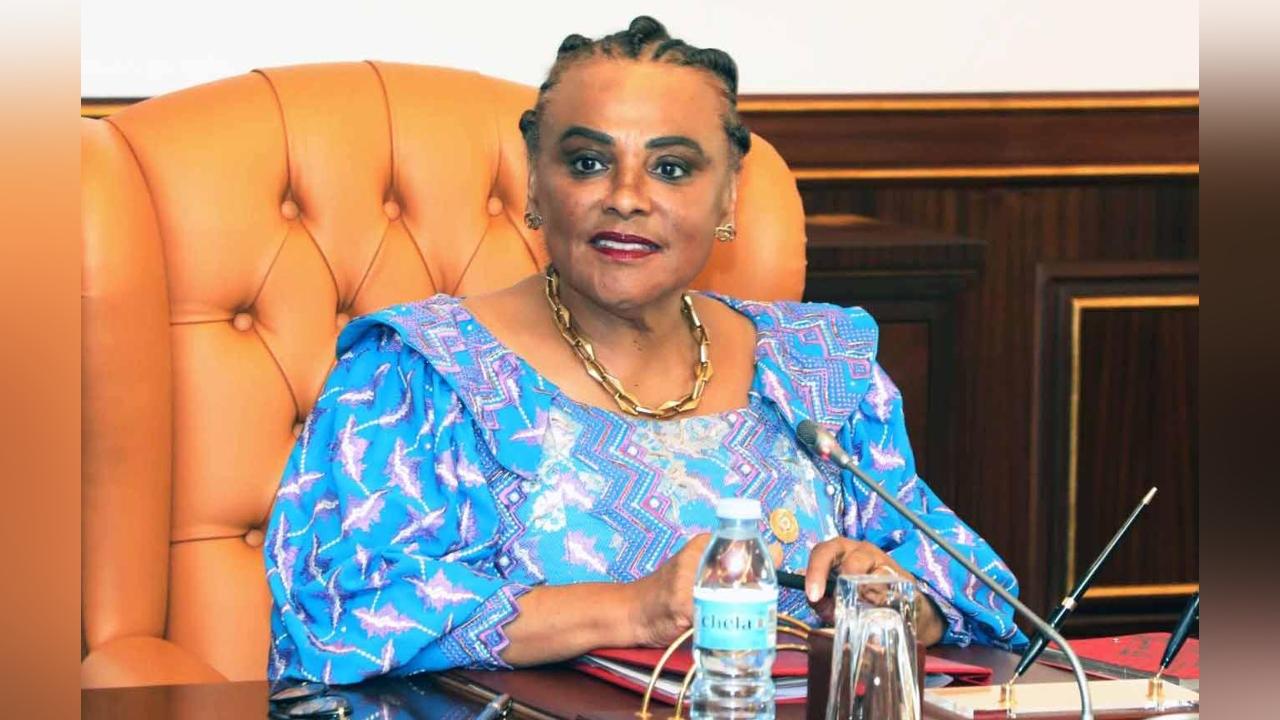
Africa-Press – Angola. The President of the National Assembly, Carolina Cerqueira, pointed out, this Monday, the commitment to education to change mentalities about the role and place of women in society, education for equality and gender equity.
Carolina Cerqueira, who was speaking at the opening of the conference on violence against women and human rights, said that women’s empowerment must occur through the integration of the theme into the teaching programs of the different education systems and the promotion of a frank, open and inclusive, among all social actors, on violence against women, the advantages of women’s participation in decision-making and the mechanisms for inhibiting acts of violence.
According to the official, the promotion of institutional dialogue and collaboration between NGOs and State institutions must be a constant, since civil society organizations are the eyes and ears of society’s outcry, which allow global solutions to be found more suitable for the local problems they detect.
Carolina Cerqueira points out as risk factors for violence against women their low level of education and, although they make up 52% of the Angolan population, 47% of Angolan women did not have access to school or have a low level of education.
“Exposure to violence in childhood, a complacent attitude towards violence, the lack of a culture of reporting and the lack of preparation of police and judicial bodies to deal with complaints are other risk factors for domestic violence among us. ”, he asserted.
In today’s world, he added, a new form of violence is severely affecting the lives of women and girls, due to phenomena that are linked to the climate crisis and disasters, whose impact is devastating, especially for the most vulnerable (children and women ).
Carolina Cerqueira advanced that this framework exposes the increase in poverty and inequalities against women and children, evident in the lack of health and safety facilities, school dropout and poor access to basic health services, such as drinking water, vaccines, identity, legal advice, employment or loans, depriving themselves of adequate protection and running the risk of sexual violence and mistreatment.
For Carolina Cerqueira, the victims must deserve humanitarian support and permanent help for an effective participation in the reconstruction of their lives and in the process of social inclusion, which means guaranteeing girls and women equal access to information, employment opportunities, training, loans and financial aid mechanisms to achieve stability and community integration, to help solve their families’ problems.
“It is unavoidable, as a basic principle of modern societies, equality between men and women, de iure and de facto, of participation in the economy, politics and in the various sectors of the country’s life, in equal circumstances, where they can feel broadly carried out as human beings, without discrimination of any kind, or barriers imposed by violence. It is necessary to revisit the criminal framework and verify whether the crime of domestic violence actually exists as an autonomous type of offence, since the new penal code makes no reference to it and the law against domestic violence does not provide sufficiently precisely ”, he advanced.
In his view, it is necessary to look further into actions to increase the effectiveness of the authorities’ action, such as increasing preventive arrests and effective arrests for domestic violence aggressors, as well as considering the creation of a multidisciplinary team that has the responsibility to improve the quality and communication of information between the various public entities.
Carolina Cerqueira also points to the need for organizations to define measures for an immediate response after the presentation of a complaint or denouncement, to create functional action guides for agents, integrated prevention guides aimed at children and young people, as well as to improve the training of professionals from various sectors, so that a faster and more effective response can be given to victims, avoiding the so-called “secondary victimization” or the disincentive at police stations for women who have the courage to file a complaint, or are ashamed to complain about having been victims of crime.
According to the official, while domestic violence processes are carried out in the crime rooms, those of parental authority regulation are carried out in the family and minors’ rooms, generating absurd situations in which they can assign regulation of parental responsibilities to the aggressors.
He noted that in the country there are only 14 family counseling rooms and about 9 shelters for victims, considering it to be too little to meet the needs.
He stressed that domestic violence also impacts the economic life of the victims and the environment in which they are inserted, causing a loss for the economy of the countries due to the deterioration of the mental health and the productive capacity of the victims, depreciates the human capital of the woman and makes her economically dependent on the aggressor, perpetuating the vicious cycle of violence.
He reiterated the encouragement to the Executive for the institutionalization of mechanisms for the defense and monitoring of human rights, through local human rights committees, for the implementation of the national system for denouncing human rights violations and the system of human rights indicators in Angola.
In this way, he said, it will be possible to make a more objective assessment of the numbers, incidence, causes and measures to combat violence against women, in particular, and against all human rights, in general.
In Angola, by legislative initiative of the National Assembly, Law No. 25/11 was approved, on the legal regime for the prevention of domestic violence, protection and assistance to victims.
The new Penal Code increased the penalties for crimes of domestic violence, in order to discourage its commission.
For More News And Analysis About Angola Follow Africa-Press