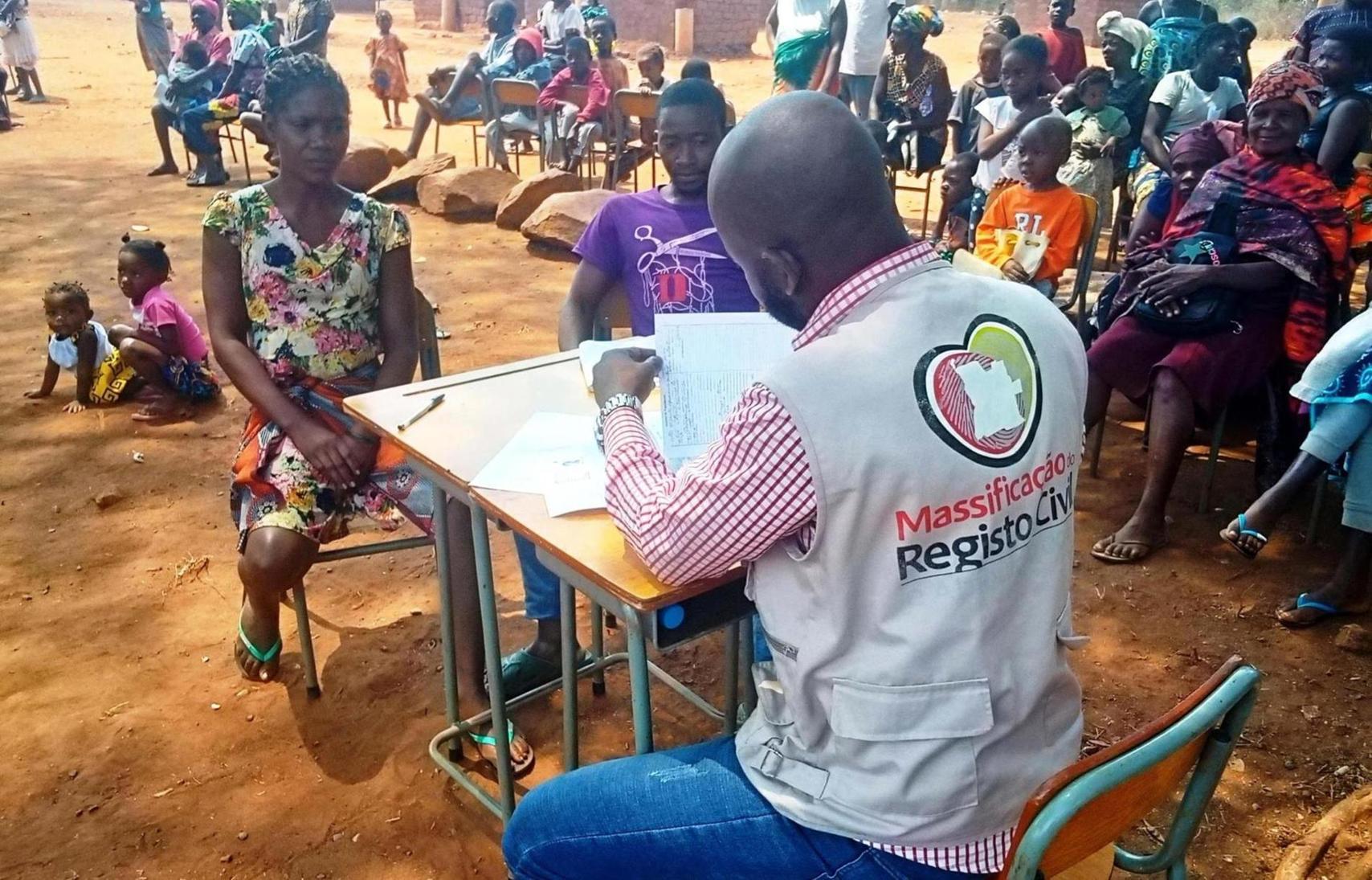
Africa-Press – Angola. Eight hundred and 69 citizens from zero to 100 years old, in the municipality of Cazengo, province of Cuanza Norte, benefited from free birth registration and identity cards, within the scope of the massification campaign of the Ministry of Justice and Human Rights.
The campaign, which ran from the 11th to the 29th of September, was promoted by the Municipal Administration of Cazengo, in partnership with the Provincial Delegation of Justice and Human Rights.
Speaking to the press, the campaign coordinator, Dorivaldo Ferreira, reported that it aimed to respond to the concerns of local traditional authorities about the high number of citizens in communities without personal identification documents.
It aimed to bring these services closer to communities, with emphasis on those located in more remote areas of the district, where the population faces numerous difficulties in accessing these services, due to a lack of means of transport.
The campaign covered the sectors of Zavula, Zanga, Luinha and Cazondo, where it ended.
He clarified that the action involved the registration and delivery of birth certificates, as well as the collection of citizens’ biometric data, which will later be downloaded onto a digital platform, for issuing the ID card.
Technicians from the Municipal Administration, Identification and Civil Registry Office participated in the campaign.
During the process, attempts to double register by some citizens were detected.
Some wanted to register for a second time because they had lost their documents and others wanted to change their ages.
To guard against these cases, technicians subjected beneficiaries to a pre-interview to detect attempts to duplicate registration.
Citizens in these conditions were advised to go to the offices where they first registered to collect a duplicate of their birth certificate and issue their identity card.
The chief of the town of Cazondo, Norberto dos Santos, considered that the Municipal Administration’s initiative facilitated citizens with transportation difficulties.
“Many people did not register because they did not have the opportunity to go to the registry office, now the registration came to us and the population adhered satisfactorily”, he observed.
The soba believes that there are still citizens who did not register for this campaign because they were absent on campaign days and therefore called for the continuation of similar actions to enable the entire population to have birth registration and ID.
Who also praised the initiative was citizen Benedito da Silva, who accompanied by his wife, went to the post set up in the village to register his three children aged 12, seven and six.
He said he did not register his children beforehand, due to a lack of financial resources to travel to Ndalatando.
The village of Cazondo is 20 kilometers from the municipal headquarters.
He highlighted that the campaign was of “great value” for community members by allowing the population to access these services without having to travel.
Who also expressed satisfaction with the project was citizen Filomena João Manuel, who went to the post to register and process her seven-year-old son’s identity card.
He said he did not register his son before because he was unable to pay for the taxi.
The price of a taxi ticket from Ndalatando to Cazondo costs 500 kwanzas and, as a rule, birth registration requires the presence of both parents.
For More News And Analysis About Angola Follow Africa-Press