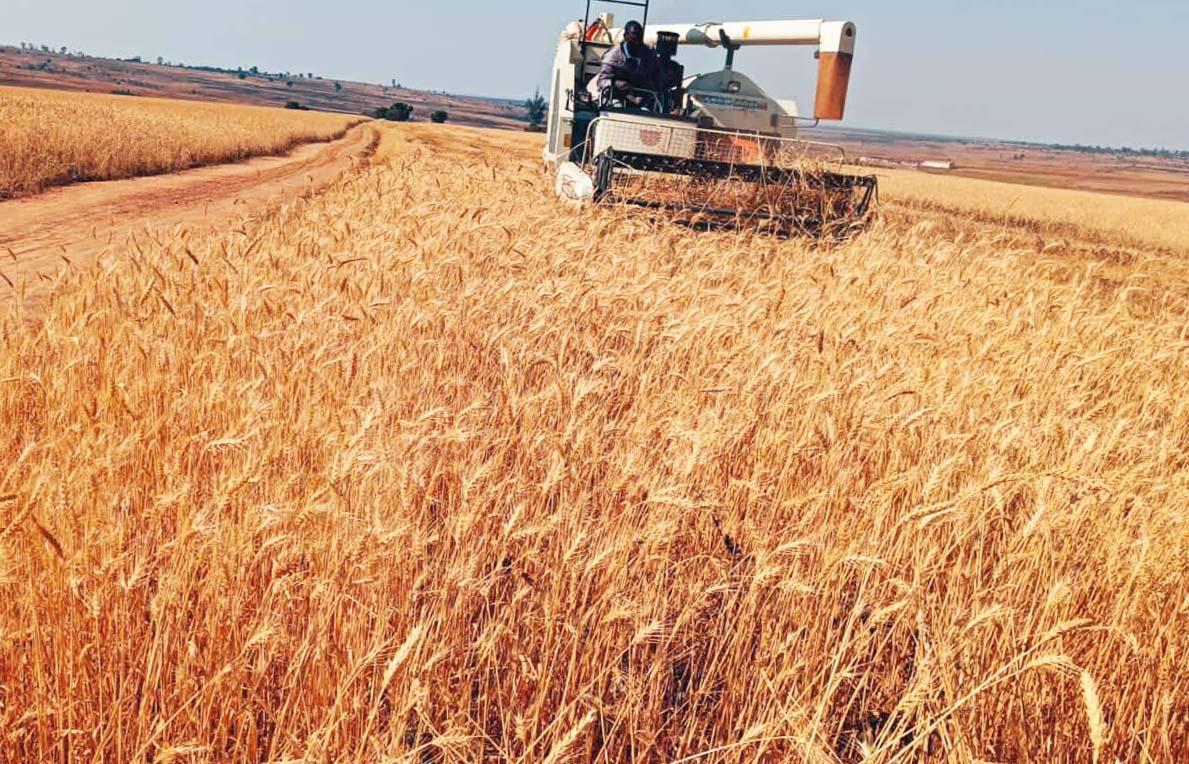
Africa-Press – Angola. Angola currently has 10 mills that guarantee the transformation of one million 300 thousand tons of wheat flour, a production above the needs of the domestic market, estimated at 700 thousand tons/year.
The fact was revealed this Tuesday, in Luanda, by the president of the Angolan Wheat Flour Producers Association (APFTA), César Rasgado, during the meeting between the Angolan Government and the business class of the productive sector and distributors of wheat widespread consumption.
“We have 10 mills operating and with product available, although their distribution does not depend only on producers, but on other stakeholders, such as distributors. Therefore, I reiterate the existence of sufficient wheat flour production with the desired quality to supply the national market and, perhaps, export the surplus”, he highlighted.
According to the businessman, most of this product can be used to serve the bakery and pastry market nationwide, at a reasonable cost that guarantees the production of bread, for example, without constraints.
However, at the time, César Rasgado reported some resistance on the part of some traders/importers in purchasing national wheat flour.
In the same vein, the general director of Induve S. A, Kidy Aragão, said that, along with wheat flour, the installed capacity for processing corn into cornmeal is around 800 thousand metric tons/year, with an annual consumption of around of 400 thousand tons.
On the other hand, he pointed to the import of raw materials for the manufacture of flour, for example, as one of the reasons for the rise in the price of this product on the national market.
Regarding the meeting led by the Minister of Industry and Commerce, Rui Miguêns de Oliveira, the person responsible considered it positive, as it allowed reflection on the main concerns that concern producers and distributors, having predicted a possible change in the current Customs Tariff, with a view to provide greater comfort to operators.
Government and businesspeople aligned on food security
According to the Minister of Industry and Commerce, Rui Miguêns de Oliveira, the Angolan Government and businesspeople in the productive area are aligned in the interest of guaranteeing food security in the country, essentially based on the exploitation of existing production capacity and the encouraging the cultivation of new products.
He mentioned that encouraging the exploration of new productive areas also involves the continuity and stability of national production, as well as the import of goods that are less produced or insufficient to meet the country’s real needs.
Regarding the constant increase in prices for widely consumed products, the minister pointed to the variations that occur in the international market as one of the reasons that make raw materials and food items, whether national or imported, more expensive.
Given this scenario, he said, there is an urgent need to continue increasing production and gradually replacing imports of raw materials, to reduce exposure factors in the international market and reduce price volatility.
“The stability of national production, to ensure the reduction in prices of the main food products will not be achieved in the short term, as it requires the engagement of all operators in the production chain, whose implementation of this process is on track, taking into account the commitment of most entrepreneurs with national production”, he highlighted.
According to the minister, the Government intends for existing production units in the country to guarantee essential goods to meet the real needs of the national market. Among these products, the most important are agricultural and industrialized goods for widespread consumption, such as rice, wheat, sugar, vegetable oil, among others.
As a result, he continued, it is expected that part of the food products will be provided by national producers, a process that must count on the contribution and participation of distribution companies.
The meeting between members of the Government and businesspeople aimed to identify the insufficiencies or gaps that exist in the national production chain, industrialization and distribution of the main basic food products in Angola.
With this, the aim is to find the best solutions to resolve the constraints that operators have faced in their production activity.
For More News And Analysis About Angola Follow Africa-Press