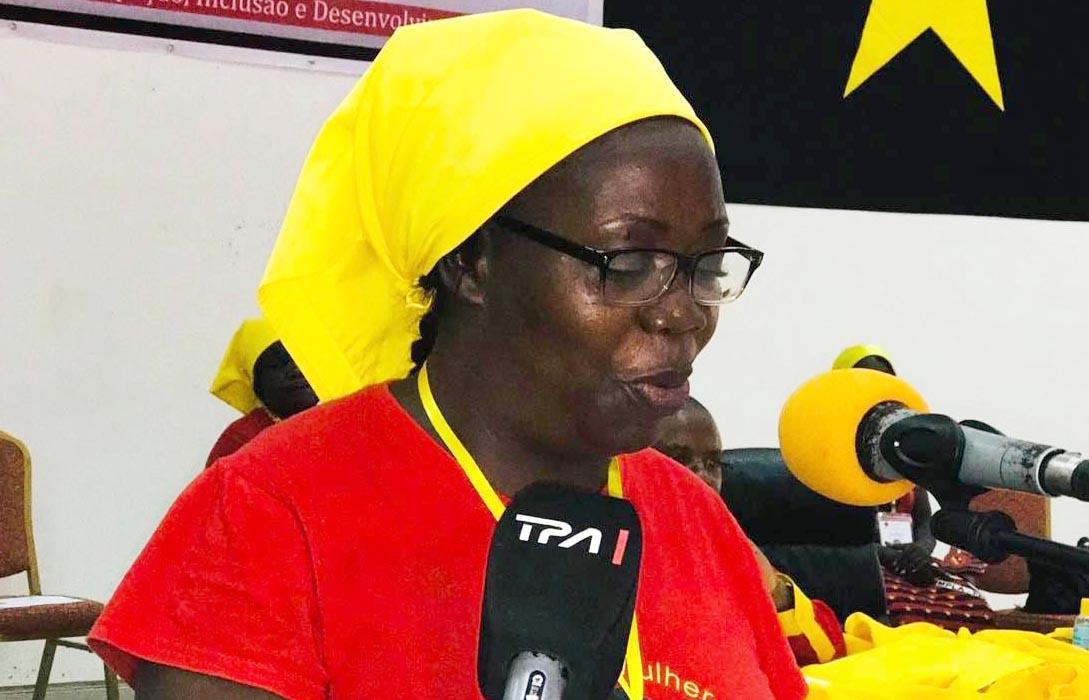
Africa-Press – Angola. The provincial secretary of the Angolan Women’s Organization (OMA), Anita Paulo Júnior, in this city, urged women from different social strata to unite in actions aimed at combating breast cancer.
He highlighted that the fight against this social phenomenon, although it is a reality, requires the continued and reinforced participation of women in this task, as cancer has been taking many lives around the world and in Angola, particularly.
Speaking at the opening of the “Pink October” days, celebrating World Day to Fight Breast Cancer, October 13th, the leader highlighted that women affiliated and not affiliated with the organization should not be indifferent to this and other problems health problems that mostly affect women.
On the occasion, the internal doctor at the Malanje Provincial Maternity, Elsa Clemente, highlighted that cancer is a disease characterized by the growth of abnormal cells in the body in the affected organ, and which has the capacity to spread across various regions of the human body.
When giving a lecture on “Breast and cervical cancer”, the doctor highlighted the causes, risk factors, prevention and treatment of the disease, which affects with greater incidence the upper quadrant of the breast, with women being the people of black race and over the age of 35, who are most likely to contract cancer.
Meanwhile, he reiterated the appeal to women to make regular consultations at the breast forum, especially when they notice any anomaly in this region of the body, with a view to early diagnosis of cancer, if they are affected, taking into account its severity and probability of resulting in death.
Some participants considered the information received during the lecture relevant, especially that men are also subject to contracting breast cancer, although women are the most vulnerable due to their more developed breast tissue.
Cancer is a disease characterized by a set of cells that reproduce in an abnormal and uncontrolled way, evolving into cancerous masses, abnormal bleeding, prolonged coughing, unexplained weight loss, changes in intestinal functions, among other signs.
For More News And Analysis About Angola Follow Africa-Press